
Economic Prosperity and Government Policies
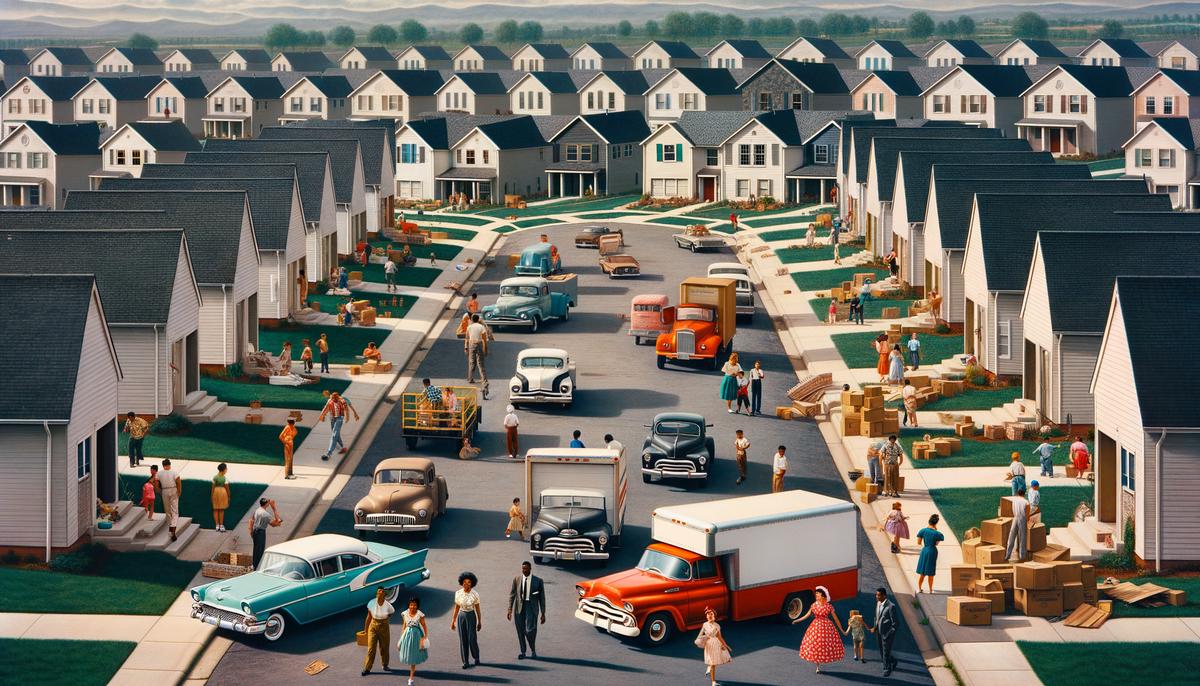
The 1950s saw a boom in suburban living, fueled by post-World War II prosperity and government policies. The GI Bill offered veterans sweet loan deals, while the Federal Housing Administration worked with banks to make loans more accessible. Housing developments popped up around cities, with companies like Levitt Brothers turning fields into neighborhoods at record speed.
Suburban life promised space and security for families looking to escape crowded city apartments. The new interstate highways, courtesy of Eisenhower's plans, connected suburbs to city centers, making commuting a breeze. Gas was cheap, cars were snazzy, and folks were ready to hit the road.
But this suburban dream wasn't perfect. Racial disparity was a big issue, with housing agreements often excluding minority families. For many, though, 1950s suburban life represented comfort and prosperity after years of wartime rationing.
The Role of Automobile and Infrastructure
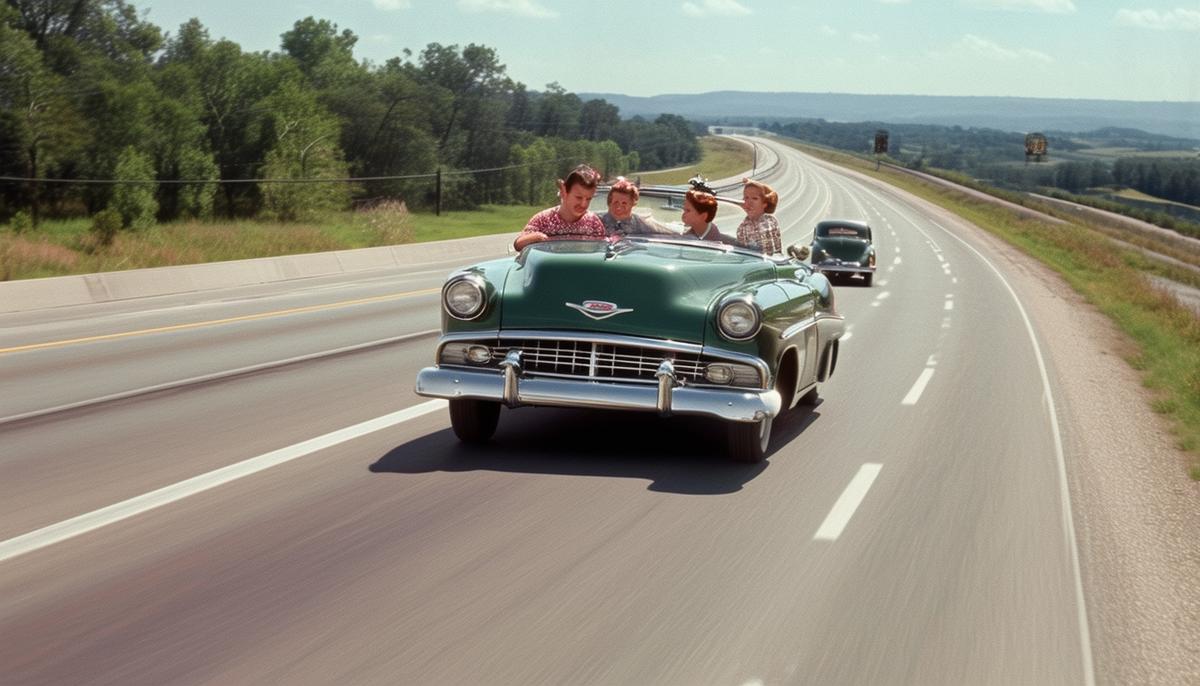
The post-war era ushered in the age of the automobile. Suddenly, every family seemed to have a set of wheels, symbolizing freedom and a ticket to suburban living. The Interstate Highway System, thanks to President Eisenhower, created a web of roads connecting suburbs to cities.
This new infrastructure made commuting and day trips a breeze. Gas was cheap, and the open road beckoned with promise. Car culture boomed, giving birth to drive-thrus and turning every driveway into a mini car show.
But it wasn't all smooth sailing. Traffic jams became a regular headache, and the mass exodus to homes far from work had its downsides. Still, for millions of Americans, the open road represented possibility and a new way of family life.
Cultural and Societal Shifts
The 1950s suburban lifestyle wasn't just about new homes – it was a cultural shift. These suburbs became stages for a new version of the American family, complete with wide-open spaces and fresh-cut lawns.
Suburban life became a cultural script. Mothers balanced homemaking with mastering new appliances, while fathers found refuge in yard work after a day at the office. The "American Dream" now included not just opportunity, but a picture-perfect life with a white picket fence.
But it wasn't all rosy. Women often found themselves torn between housekeeping expectations and their own dreams. The idealization of suburban life was tightly linked to the concept of the nuclear family, which didn't always match reality.
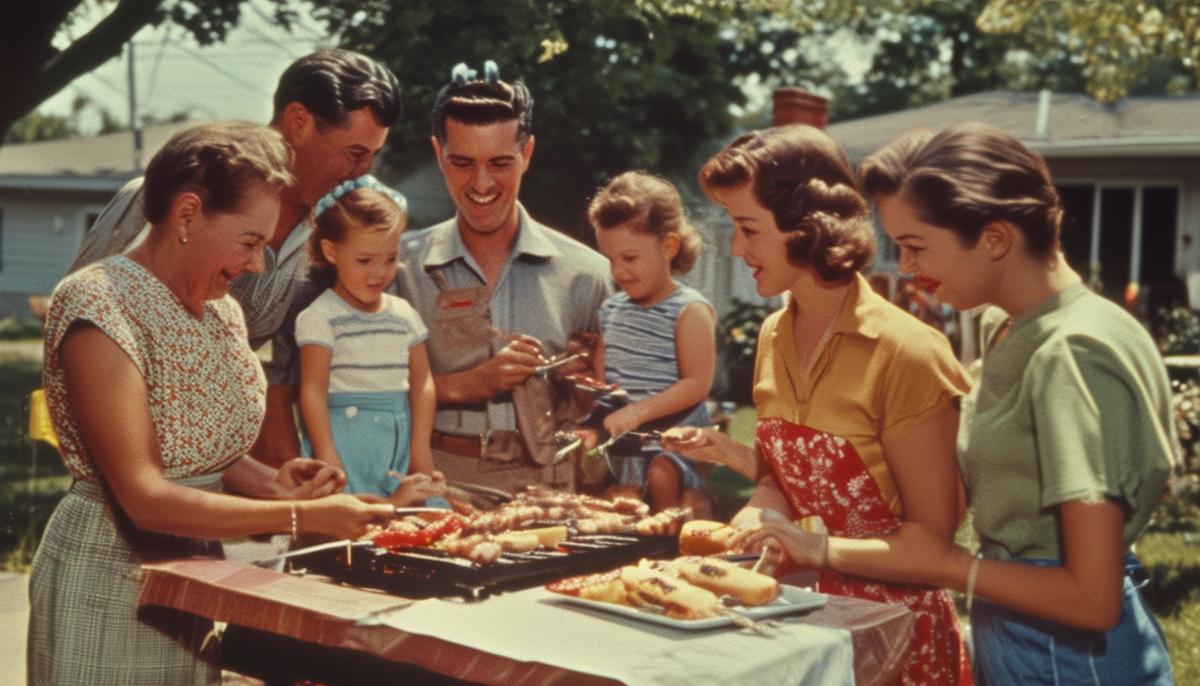
Despite the pressures, many saw their cul-de-sacs as communities full of potential. Neighbors formed friendships, carpools became morning comedies, and weekend BBQs lit up the twilight. The 1950s' embrace of suburban living carved out a space where aspiration met reality, becoming a vivid chapter in the story of modern American life.
Challenges and Criticisms of Suburbia
The dreamy suburban symphony of the 1950s hit a few sour notes. Racial segregation was a major issue, with many housing developments unofficially "whites only." This exclusion laid bare the racial fractures hidden beneath America's suburban facade.
Environmental concerns grew as suburban sprawl ate up land and resources. The expansion gobbled up fields and woods, triggering worries about land use and increased automobile reliance.
- Financially, the infrastructure costs of sprawling suburbs became a headache for local governments.
- For those on the outside looking in, suburbia's promise sometimes felt out of reach.
- Critics argued that suburbia lacked diversity and vibrancy, describing it as monotonous and cookie-cutter.
While folks tried to liven things up with neighborhood get-togethers and garage bands, voices of discontent called for more inclusiveness and variety.
In the end, the suburban sprawl of the 1950s was a mixed bag – full of hope and opportunity, but also latent challenges that would demand a more inclusive vision of the American dream in years to come.
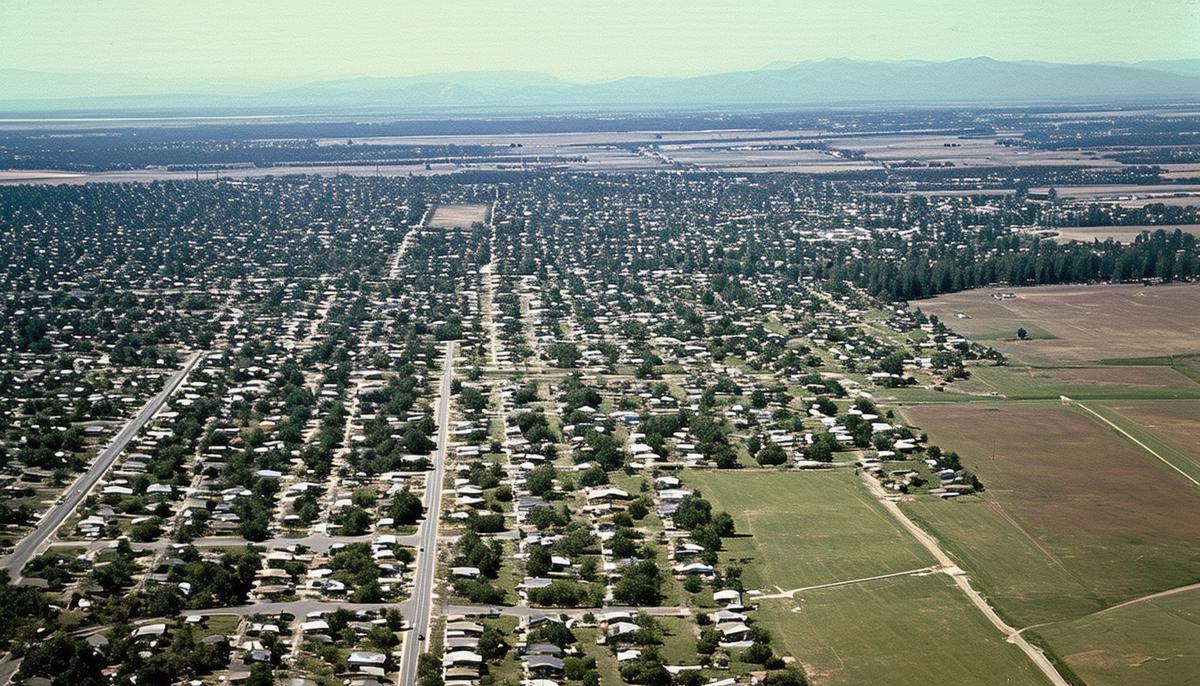
In the 1950s, the American dream found a home in suburbia. This era wasn't just about prosperity; it was about a generation's vision of creating a brighter future, one backyard at a time.
- Jackson KT. Crabgrass Frontier: The Suburbanization of the United States. Oxford University Press; 1985.
- Cohen L. A Consumers' Republic: The Politics of Mass Consumption in Postwar America. Knopf; 2003.
- Levitt W. Levittown: Documents of an Ideal American Suburb. Art Gallery of Ontario; 1993.