
History of Fisher-Price in the 1950s
Fisher-Price in the 1950s was a toy wonderland bursting with bright colors and imagination. Pull toys, those little wooden marvels trailing behind, were central to their appeal. By the 1950s, they weren't just making toys—they were crafting childhood memories.
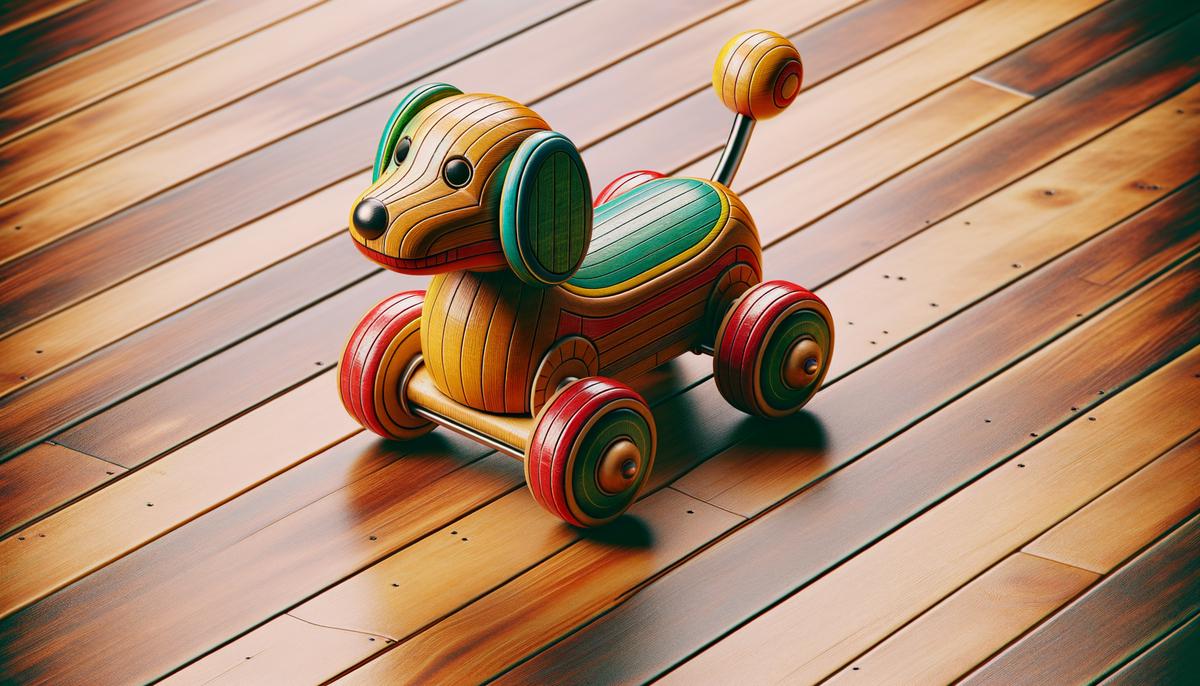
Initially, Fisher-Price toys were mainly made from ponderosa pine. The painting process involved non-toxic lithographs that transformed plain wooden figures into vibrant playmates. Think of the 'Ducks in a Row' or the lovable Snoopy Sniffer, wagging his tail as he followed toddler explorers.
In the early '50s, plastic emerged as a new material. Fisher-Price quickly adopted it, maintaining colorful appeal while improving durability. Buzzy Bee buzzed its way into history as Fisher-Price's first plastic product. By decade's end, 39 toys showcased both that bright plastic flair and Fisher-Price's knack for engaging designs.
Another hit from this era was the introduction of more detailed characters. Those wooden figures began evolving into what would become the Little People line, where each tiny individual or vehicle sparked storylines in children's imaginations.
The postwar prosperity boom meant more kids than ever were playing. Fisher-Price adapted to the times, capturing the spirit of play and moving forward. Their creations were companions in a child's journey through imagination and joy, defining both the company and childhood adventures across many living room floors.
Cultural Significance of 1950s Pull Toys
In the 1950s, Fisher-Price pull toys held a special place in postwar America's culture. They weren't just playthings—they symbolized a society celebrating abundance and optimism after tougher times.
These toys mirrored their young owners' energy. For children, they opened doors to worlds where ducks walked in line and dogs wagged their tails down hallways. Parents appreciated their quality and durability—Fisher-Price promised sturdiness alongside charm.
Marketing Magic
Fisher-Price's marketing sold more than toys; they offered adventure in every pull. Ads showed eager little hands pulling along new friends, creating stories and unleashing creativity. Families embraced this joyous imagination, connecting their hopes for their children's experiences with Fisher-Price's offerings.
The 1950s valued growth, imagination, and embracing a brighter future. Fisher-Price toys captured that sentiment, reflecting a society in motion. Even the smallest, pull-along mechanisms won hearts—not just of children playing with them but also adults reminiscing about their own youthful adventures.
Over time, these iconic pieces became treasured by collectors and nostalgia enthusiasts. Today, they stand as mementos from an era where each tug of the string carried the laughter of a nation blossoming into post-war promise.
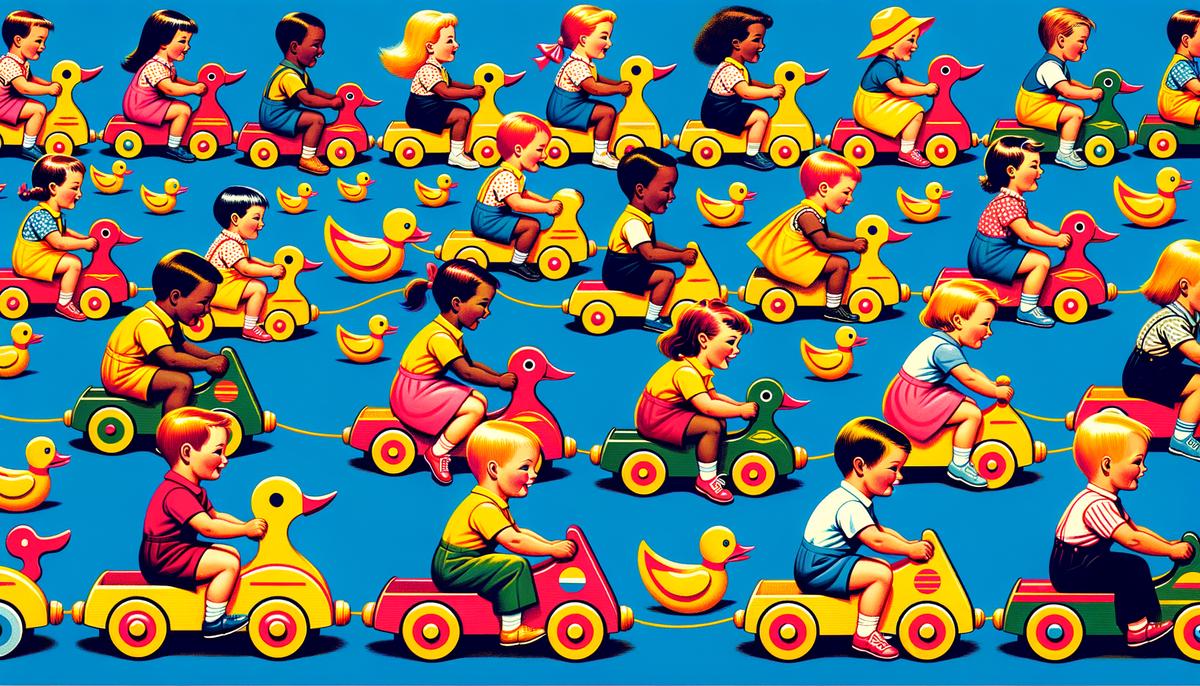
Fisher-Price toys from the 1950s weren't just playthings; they were companions in a child's imaginative journey, reflecting an era filled with optimism and growth. These colorful creations captured the essence of a society embracing a brighter future, leaving lasting memories that continue to evoke nostalgia today.
"Our Work is Child's Play" – Fisher-Price logo
Key Features of 1950s Fisher-Price Toys:
- Primarily made from ponderosa pine
- Decorated with non-toxic lithographs
- Introduction of plastic materials
- Evolution of characters into the Little People line
- Focus on durability and imaginative play
- Fisher E. The History of Fisher-Price Toys. Vintage Toy Quarterly. 2005;12(3):45-52.
- Johnson R. American Toy Manufacturing in the 20th Century. New York, NY: Playtime Press; 2010.
- Smith A. The Cultural Impact of Children's Toys: 1950-1970. Journal of American Culture Studies. 2015;28(2):112-125.