
The Polio Epidemic and Public Response
Let's journey back to the 1950s. You're queued up at school, awaiting your polio shot. The atmosphere is charged with chatter and the scent of pencil shavings. Parents had whispered their worries at the dinner table—polio was the big bad wolf at their door.
The National Foundation for Infantile Paralysis led the charge. First and second graders lined up like little soldiers, ready to face off against polio. Memories of closed swimming pools and kids on crutches fueled the mission. FDR's legacy and the March of Dimes rallied communities to pitch in their coins.
In those lines, you see a nation putting its faith in science. These kids became symbols of hope, shaping a changing America without even knowing it.
Even the stars got involved. Elvis and Sinatra spoke up on the radio, and comic strips with Mickey and Donald encouraged kids to get their shots.
It was a time of agreement! The Cutter Labs mishap barely slowed things down. Parents kept pushing forward, dreaming of a future without iron lungs. When the vaccine rolled out on April 12, 1955, it was like a weight lifted off everyone's shoulders. People celebrated, and a sense of relief spread through towns across the country.
As those vaccine lines got shorter, so did the dark cloud that had been hanging over everyone. Each shot was a ticket back to normal life, promising playgrounds full of real laughter instead of whispered fears.
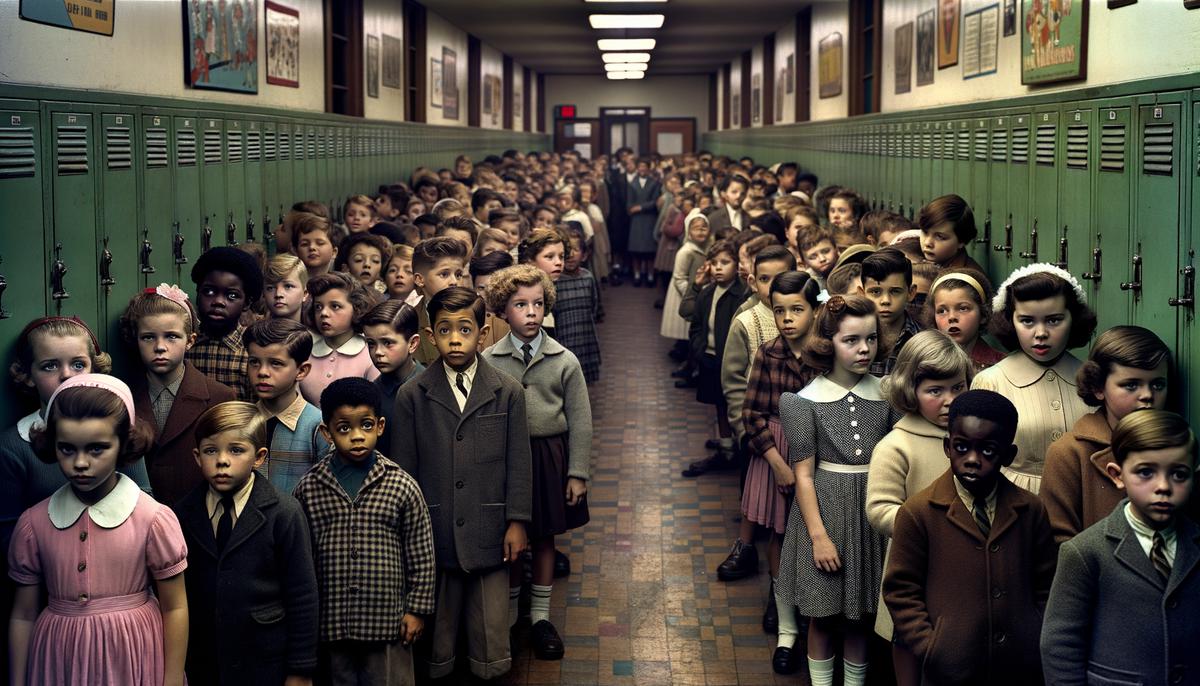
The Salk Vaccine Trials
The Salk vaccine trials were a big deal, involving over 1.8 million first and second graders across the country. It was the largest field trial of its kind, turning every school into a piece of scientific history.
The trial used a double-blind method, which means nobody knew who got the real vaccine and who got the placebo. Teachers helped out while doctors gave the shots. It was like a nationwide game of "guess who's got the cure?"
When the results came in, the excitement was through the roof. The vaccine was 80-90% effective! People celebrated in the streets, and it felt like the whole country was throwing a party.
The success kicked off a vaccination frenzy. Families rushed to get their shots, driven by hope and a sense of teamwork. It was like the whole nation was working together to say goodbye to polio.
This wasn't just about giving out millions of shots. It was about getting back to normal life. Kids could play in parks again without worry, and the sound of laughter replaced the quiet of fear.
The Salk vaccine trials show what people can do when they work together and believe in science. It's a story of overcoming a tough enemy and coming out stronger on the other side.
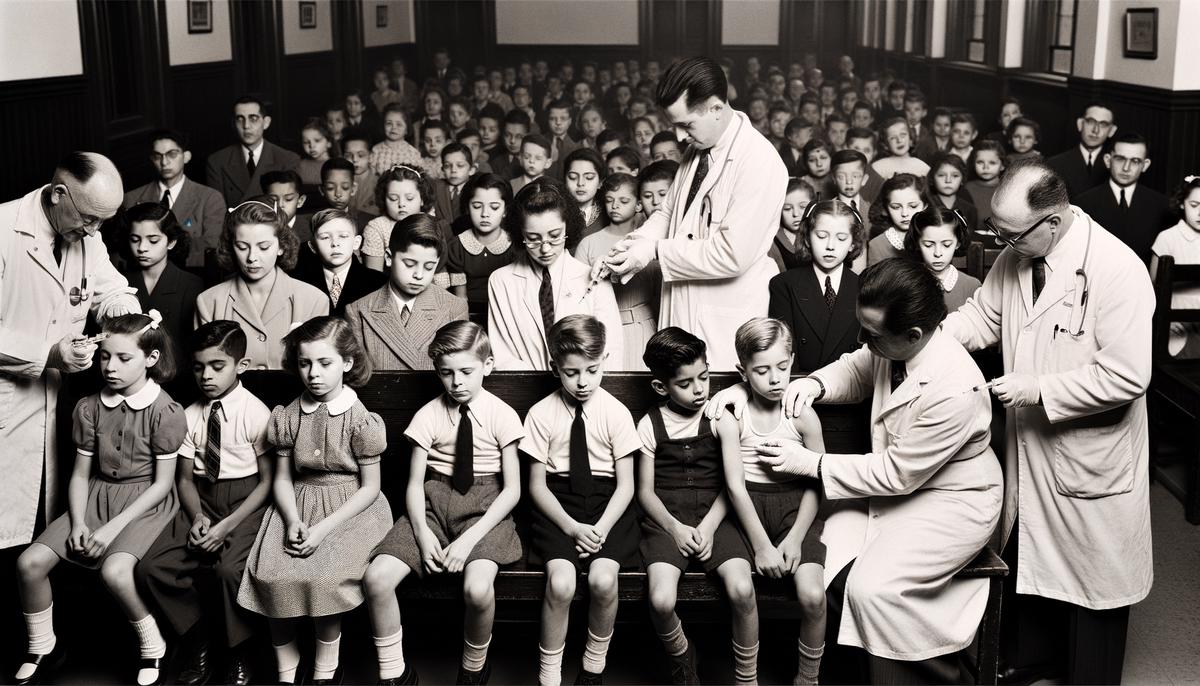
Personal Experiences of School Vaccinations
Picture this: kids in the 1950s, shuffling nervously down school hallways, cracking jokes to ease the tension. Getting the polio vaccine was like a rite of passage, as American as apple pie.
Take Ernestine Jackson, for example. Her family had seen polio up close, so getting vaccinated was a no-brainer. They got their doses after church, with tiny sugar cubes that packed a powerful punch against the disease.
"I had no apprehension of [us or] our children getting it," she said. This was for a personal reason: her father had struggled with the disease, which had given him a short leg and made it difficult for him to find work.
Then there's Violet Petty from Mississippi. Her school turned into a fortress against polio. The scary pictures in magazines were enough to make her parents all for the vaccine. They put their trust in science and that little shot of hope.
Fast forward to today, and those lines outside school gyms might seem like ancient history. There was a sense of duty back then—kids lining up, a bit scared but knowing they were part of something important. Not much arguing about it; people just knew it was for the good of everyone.
These days, vaccinations spark more debates than unified action. But the memories of those school corridors still linger, reminding us of a time when getting a shot was more about coming together than splitting apart.
Today's kids face different challenges, but who knows? Maybe the lessons from those school vaccine lines can still teach us something about working together to solve big problems.
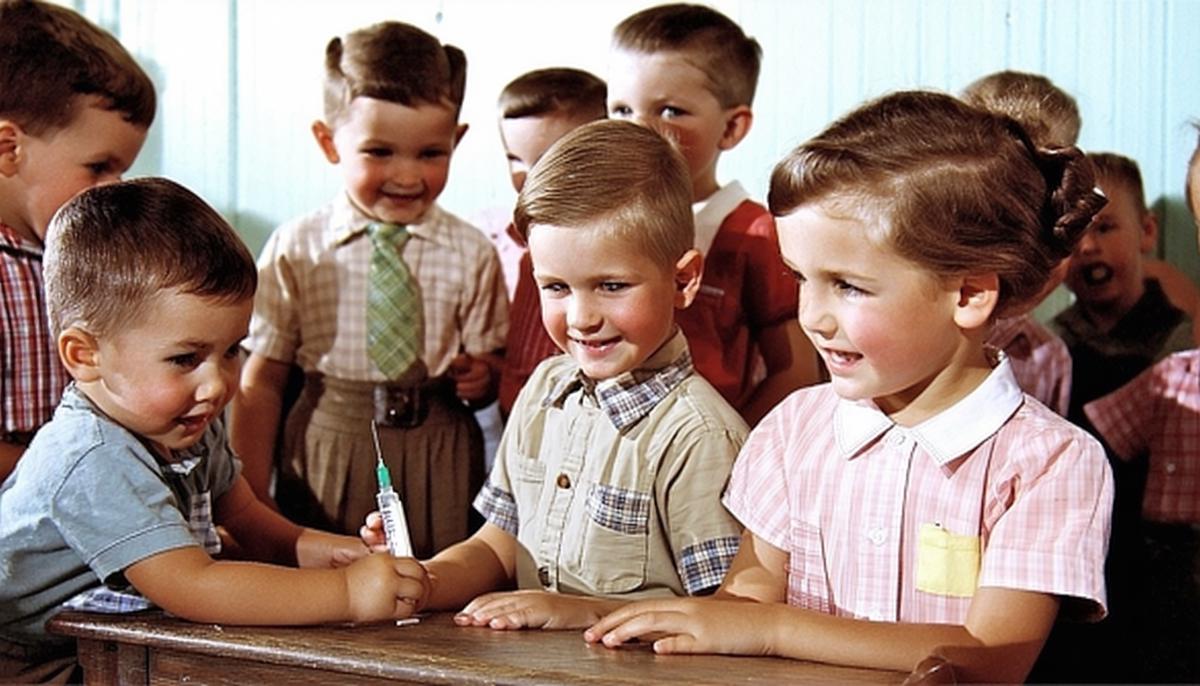
As we look back, it's clear that the fight against polio showed what can happen when people come together and trust in science. Those school hallways remind us that when we work as a team, we can turn fear into hope and face big challenges head-on.
- Salk D. Remembering polio vaccine: Countering COVID-19 vaccine hesitancy. UW Medicine Newsroom. 2021.
- Dunak K. Historian of Modern US History. Personal communication. 2023.
- Jackson E, Jackson D, Petty V, Davis P. Personal interviews. 2023.