
Origins of Radium Use in Watches
Let's hop back to the late 19th century, folks. Marie and Pierre Curie discovered radium in 1898, and it didn't take long for the world to go gaga over it. Scientists were thrilled, but it was the United States Radium Corporation that really saw dollar signs. They thought, "Hey, why not use this glowy stuff on watch dials?"
Soldiers in World War I loved these radium watches. They could tell time in the dark without striking a match – pretty nifty, right? The secret sauce was a mix of radium and zinc sulfide. The radium didn't actually glow on its own, but when paired with zinc sulfide, it put on quite a show.
At the time, everyone thought these watches were the bee's knees. Little did they know, they were about to learn a tough lesson about the dangers of playing with radioactive materials.

The Radium Girls' Story
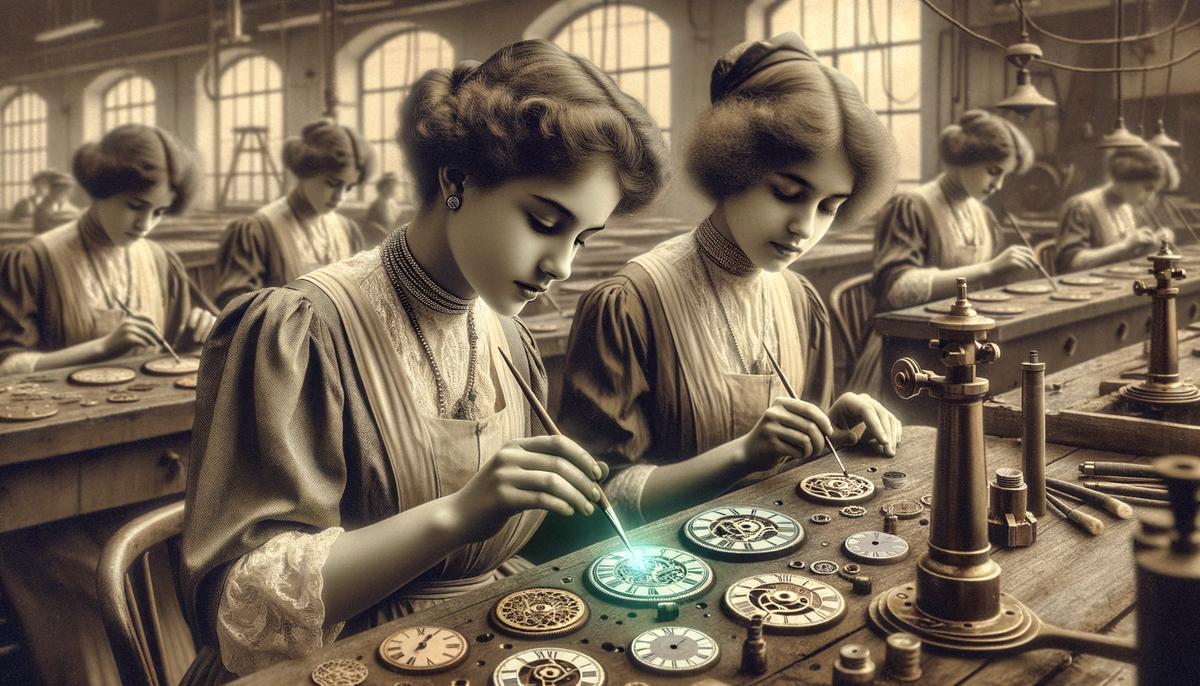
Picture this: it's the Roaring Twenties, and young women are flocking to factories to paint watch dials with radium paint. These gals, known as the Radium Girls, were taught to use the "lip-pointing" technique – twirling their brushes between their lips to get a fine point.
The higher-ups assured them it was safe, but boy, were they wrong. These bright young things were unknowingly poisoning themselves with each brush stroke. They'd even paint their nails and teeth for fun, glowing like fireflies at dance halls.
But the glow faded fast when they started getting sick. Teeth falling out, bones breaking – it was like a horror show. And the companies? They played dumb, blaming everything but their radium paint.
The radium was destroying the bone and literally drilling holes in the women's jaws while they were still alive.
Here's where it gets good, though. These ladies didn't take it lying down. They marched into courtrooms and fought for justice. It wasn't easy, but their determination paid off. They not only won their cases but also lit the way for better workplace safety laws.
Their courage changed the game, making sure future generations wouldn't have to work in dangerous conditions without knowing it. Pretty swell of them, don't you think?
Impact on Labor Laws and Industry
The Radium Girls' fight was like dropping a pebble in a pond – the ripples just kept spreading. Their legal victories got the whole country thinking about workplace safety. It was like America suddenly woke up and realized, "Hey, we need to do better by our workers!"
Fast forward to 1970, and we've got OSHA (Occupational Safety and Health Administration) keeping an eye on things. No more sweeping dangers under the rug – companies had to shape up or ship out.
As for those glowy watches? Radium got the boot, replaced by safer alternatives like tritium and Super-LumiNova. Now you can admire your vintage timepiece without worrying about more than a little nostalgia.
The Radium Girls didn't just win their own battles – they paved the way for a safer, brighter future for all of us. Now that's something to celebrate, don't you think?
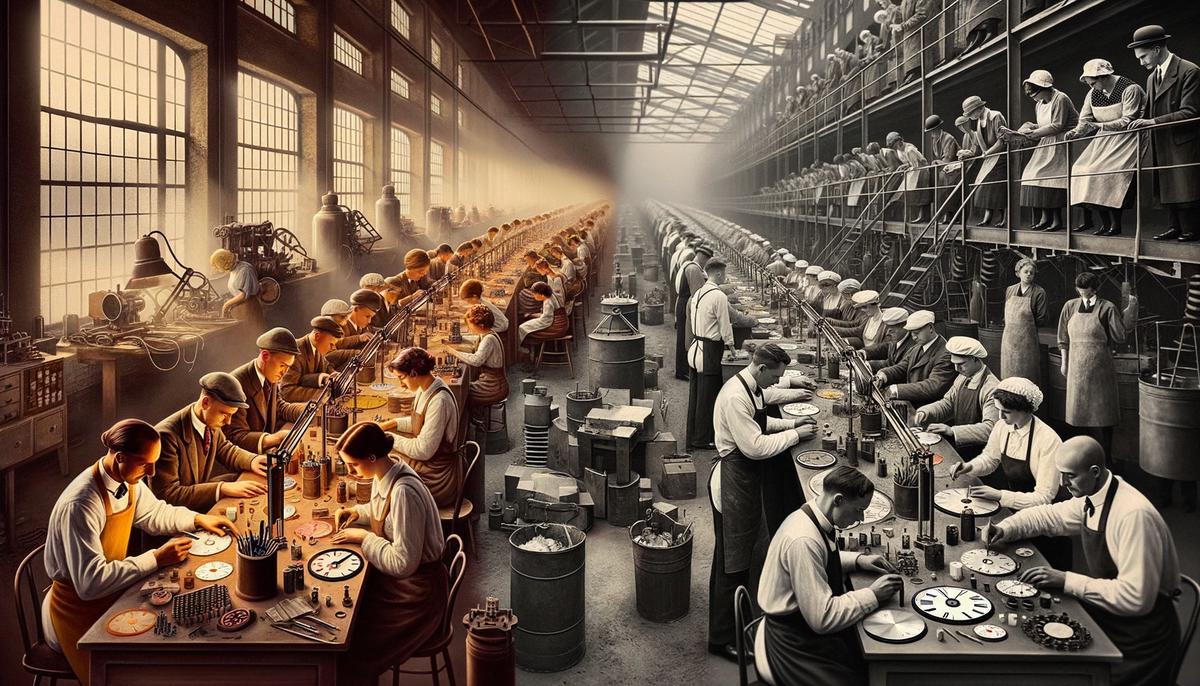
The Radium Girls' story shows how a group of brave workers can change the world. Their fight led to safer workplaces and better laws. It's a reminder that standing up for what's right can make a real difference. Let's give a little nod to these gals who helped make our work lives a whole lot safer and brighter!
- Moore K. The Radium Girls. Sourcebooks; 2017.
- Jorgensen T. Strange Glow: The Story of Radiation. Princeton University Press; 2016.
- Marnich M. These Shining Lives. Dramatists Play Service, Inc.; 2010.