
Impact of Orson Welles' Radio Prank
October 30, 1938—an ordinary night turned upside down by an extraordinary radio broadcast. Orson Welles, stepping up to the microphone, spun a tale of Martians launching their invasion from the sleepy town of Grover's Mill, New Jersey. Despite being a dramatized version of H.G. Wells' "The War of the Worlds," some listeners were sent into a panic. The impact? Welles' prank kicked off a wave of UFO fascination that would engulf the 1950s.
Suddenly, UFOs—or "flying saucers" as they came to be known—were the talk of the town. Sightings shot up, turning UFO spotting into a popular hobby. Even an airspace breach over the Pentagon in 1952 couldn't escape notice. The UFO craze was a classic example of turning fiction into an everyday topic.
Newspapers and media took a shine to these outlandish tales. Headlines fuelled the frenzy, leading to all kinds of bizarre reports. The case in Decatur, Georgia, where a driver claimed to have run over an alien, comes to mind. Throw in the scoutmaster incident in Florida, who blamed his burns on a UFO encounter, and you got an era buzzing with excitement.
For many, these accounts were a thrilling escape from the mundane. Thanks to Welles, the line between fact and fiction blurred, making the 1950s a hallmark of otherworldly fascination.
Documented UFO Sightings in the 1950s
Let's explore two particular incidents that had the public captivated:
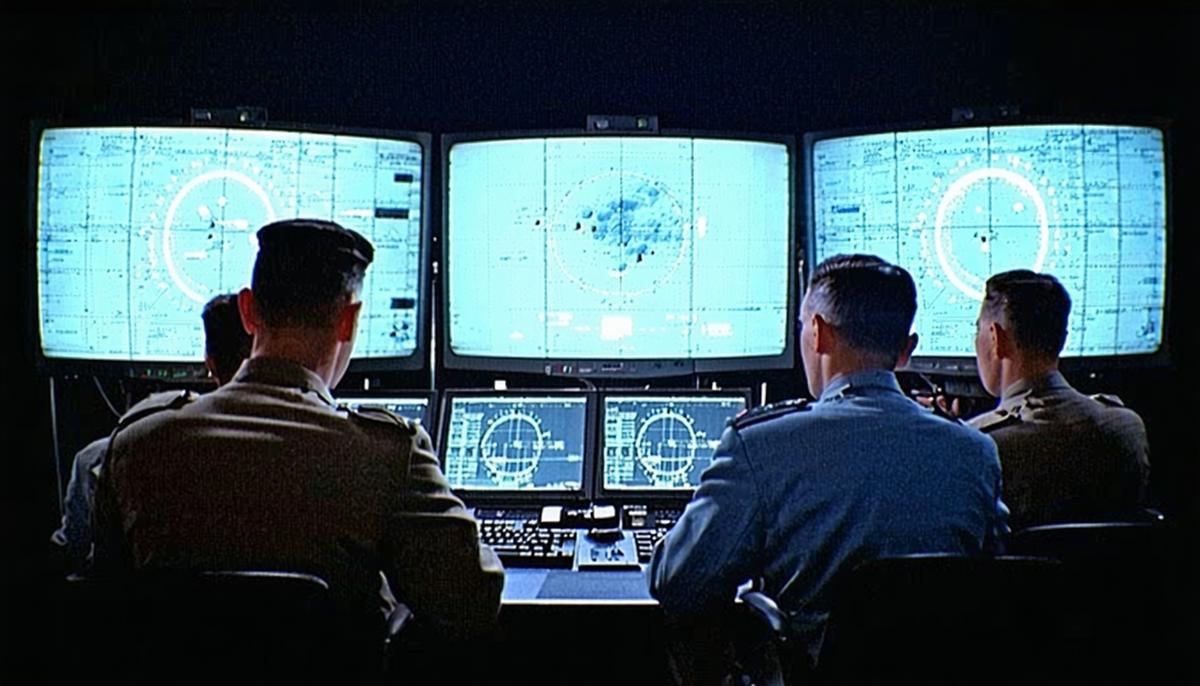
- The Pentagon Incident (1952): Seven unidentified objects appeared over Arlington, Virginia. These mysterious crafts were caught on radar, sparking enough concern to send jets scrambling into the heavens. Yet, the objects vanished as soon as the jets got close, only to reappear once the pilots had turned back. Even President Harry S. Truman got wind of it.
- The Ohio Searchlight UFO Incident (1949): In Norwood, Ohio, a simple carnival venture turned into an unexpected celestial exhibition. As Father Gregory Miller prepared to dazzle locals with a searchlight for a church event, attendees spotted something peculiar in the night sky—something big and circular that spurred countless calls to local weather bureaus and newspapers.
These documented sightings seemed to add fuel to a fire burning bright with curiosity. After all, what better way to add some fun to the daily grind than speculating about extraterrestrial visitors?
Government Response to 1950s UFO Sightings
As citizens craned their necks skyward, government agencies were busy fielding reports and keeping tabs on the unexplained. The United States Air Force launched Project Blue Book to sift through the many tales and separate fact from fiction.
Take Lt. Col. Richard French, a man tasked with debunking UFO stories. His official duty was to dismiss these tales as mere fantasies, yet even he reportedly spotted two UFOs with aliens in Newfoundland. Keeping true to the era's taste for secrecy, he kept quiet about it for years.
Amidst the cosmic curiosity, the government walked a tightrope of caution and skepticism. On the one hand, people wanted answers. On the other, officials had to tread carefully, lest they stir up even more excitement.
Public and media scrutiny was relentless. Air Force Intelligence couldn't downplay every sighting, especially the high-profile ones. The 1952 Pentagon incident had made serious waves, and brushing these encounters under the rug only added to the mystique.
Cultural Phenomenon and Hoaxes
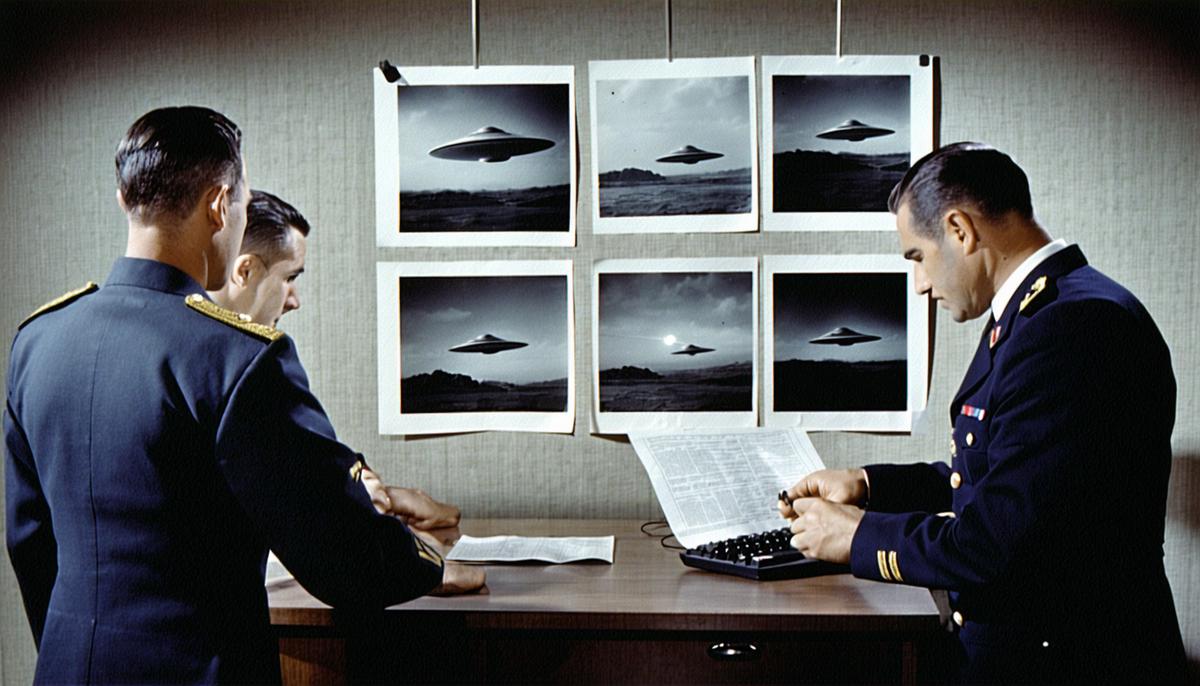
The 1950s were ripe for spinning tall tales about unidentified flying objects. Hoaxes like the scoutmaster's fiery encounter with a UFO in Florida tickled the collective imagination, offering a bit of the supernatural right in their own backyards.
The media played these stories up, amplifying the drama with every print. Each reported incident, whether fact or fiction, was sprinkled with enough intrigue to keep readers and listeners hooked. UFO stories were the ultimate escape—breaks from the predictability of post-war life, laced with just the right amount of excitement to keep the heart racing.
This cultural phenomenon wasn't just about creating a splash; it was rooted in a yearning for something extraordinary. Society, in all its suburban splendor and routine, was still recovering from the rigidities of war. What better antidote than the wild, unpredictable world of UFOs?
Even those skeptically inclined found themselves wrapped in the infectious excitement. Part of the thrill was in not knowing—like eagerly awaiting the next installment of a mystery. Were scoutmasters and drivers really tussling with extraterrestrials, or were they just crafting sensational tales?
In the end, hoaxes and embellishments were as much a product of their time as rock 'n' roll or TV dinners. They were vital threads in the fabric of 1950s culture, reflecting both the curiosity and the whimsy of a public eager for adventure and discovery.

The 1950s stand as a testament to a time when imagination and reality danced together under starry skies. UFO tales, whether truth or fiction, captured hearts and minds, leaving us with stories that continue to inspire wonder and curiosity.
- Shostak S. The War of the Worlds panic was a myth. Scientific American. 2013.
- National UFO Reporting Center. UFO Sightings Database. 2021.
- United States Air Force. Project Blue Book. 1952-1969.