
The Nylon Rationing Challenge
Let’s take a trip back to the 1940s when nylon stockings vanished during World War II. As resources were redirected for military use, stockings went from a daily staple to a black-market treasure. American women got creative with their bare legs.
Enter leg makeup, a quirky replacement that created the illusion of hosiery. Women applied liquid foundation to their legs and used eyebrow pencils to craft that important seam down the back. It wasn’t easy, but they managed.
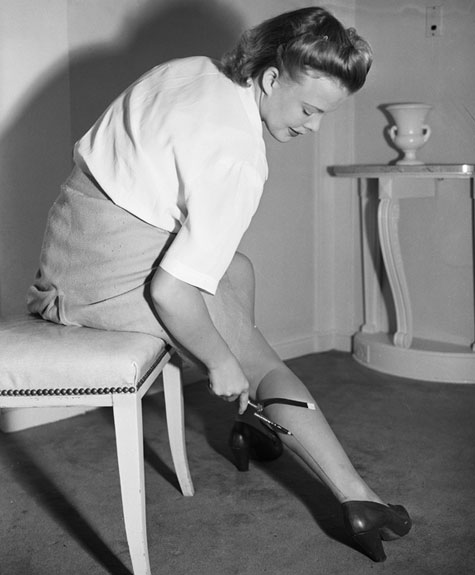
Leg makeup bars popped up in department stores, offering tutorials on achieving the perfect look. From liquids to lotions, creams to sticks, each product promised to mimic stockings. Some folks even tried homemade recipes, mixing talc and kaolin with water.
Creating a shine was crucial, as real stockings had a certain sheen. Women buffed their legs until they practically glowed. Painting a straight seam line took patience and skill – some nailed it, others ended up looking a bit messy.
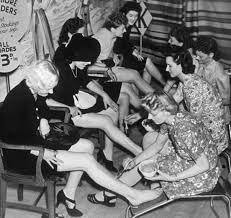
This wasn’t just about fashion – it showed how adaptable and determined women were during the war. They improvised their way through a nylon-less world, keeping things rolling on the home front.
When the war ended, the demand for nylon stockings erupted, leading to the famous “nylon riots.” Women lined up in droves to get their hands on those coveted leg coverings once more.
Cosmetic Stockings Emergence
Leg makeup kits lined department store shelves, promising to transform bare legs into silk-like stunners. Women became mixologists, blending colors to find their perfect match.
These concoctions often combined:
- Talc
- Kaolin
- Zinc oxide
Leg makeup bars offered a professional touch, where women could indulge in leg imitations that were nothing short of artistry.
Applying these cosmetics was tricky. Women would prep their legs with a gentle glide, creating the illusion of authentic stockings. The final touch? Crafting the perfect seam with an eyebrow pencil, though results varied wildly.
These cosmetics played a role in lifting spirits and maintaining normalcy during tough times. Women expressed resilience through their painted legs, subtly defying wartime shortages while keeping up appearances.
A sense of camaraderie emerged, with women sharing tips and tricks in beauty parlors and around kitchen tables. They helped each other apply the “liquid gold” and shared laughs when things went awry.
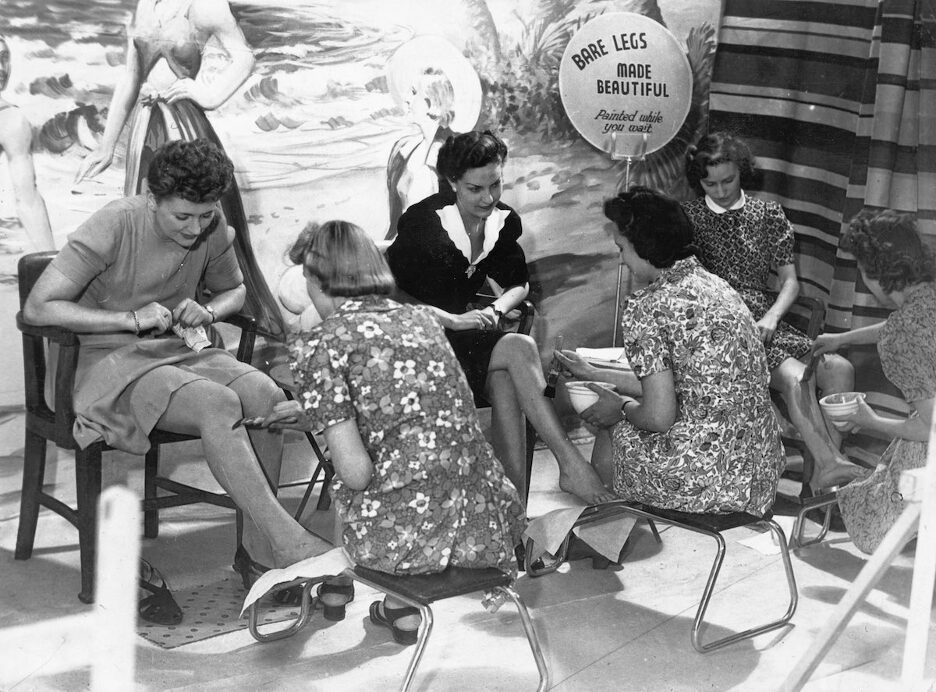
When nylon returned to shelves, these cosmetics faded away. But they left behind tales of creativity and the lengths women went to maintain elegance during challenging times.
The inventive spirit of women during wartime, painted in hues of leg makeup and camaraderie, reminds us that elegance and determination can shine through even the most challenging times.
- Meikle S. American Plastic: A Cultural History. Rutgers University Press; 1995.
- Wells FV, Lubowe II. Cosmetics and the Skin. Reinhold Publishing; 1964.
- Thomssen EG. Modern Cosmetics. Drug & Cosmetic Industry; 1947.
- Wilkinson JB, Moore RJ. Harry’s Cosmeticology. 7th ed. Chemical Publishing; 1982.
- Bushby AH. Aids to the Analysis of Food and Drugs. 5th ed. The Pharmaceutical Press; 1947.