
Eisenhower Takes Command: NATO's First SACEUR
Stepping into the role of NATO's first Supreme Allied Commander Europe (SACEUR) in December 1950 wasn't a walk in the park for Dwight D. Eisenhower. Fresh off his WWII hero status, Ike was handed the task of stitching together a military patchwork quilt across Europe. With Soviet shadows looming over the continent, his appointment was crucial. Tensions were high, and Eisenhower had to keep things cool.
Leading the charge in Europe during WWII had polished Eisenhower's credentials. His wartime efforts made him a natural choice to take on the top military job for the Western alliance. The North Atlantic Council gave him the nod, recognizing that his history of handling uneasy allies was just what NATO needed.
On the to-do list was constructing NATO's military might from scratch. Eisenhower had to sketch out a defense structure that could withstand Soviet pressure across Europe. He was given operational command of all U.S. military forces in Europe by President Truman, adding to his responsibilities.
Ike knew he had to win hearts as well as minds. He toured European capitals to rally the nations. It wasn't easy convincing people who were still nursing post-war wounds that fortifying against the Soviets was worth the effort.
"We do not keep security establishments merely to defend property or territory or rights abroad or at sea. We keep the security forces to defend a way of life." – Dwight D. Eisenhower, 1954
In his speeches, Ike made it clear: NATO wasn't there to fight a war but to keep one from happening. As he convinced the U.S. Congress to send support, Eisenhower also helped prop up other NATO members with the assurance that they weren't alone.
By April 1951, when SHAPE officially came into play, Eisenhower had already woven a semblance of military unity geared for peace. His vision for NATO was a balancing act where deterrence took center stage, ensuring Europe's peace landscape was more fortress than flimsy.
SHAPE Takes Shape: Eisenhower's Military Masterpiece
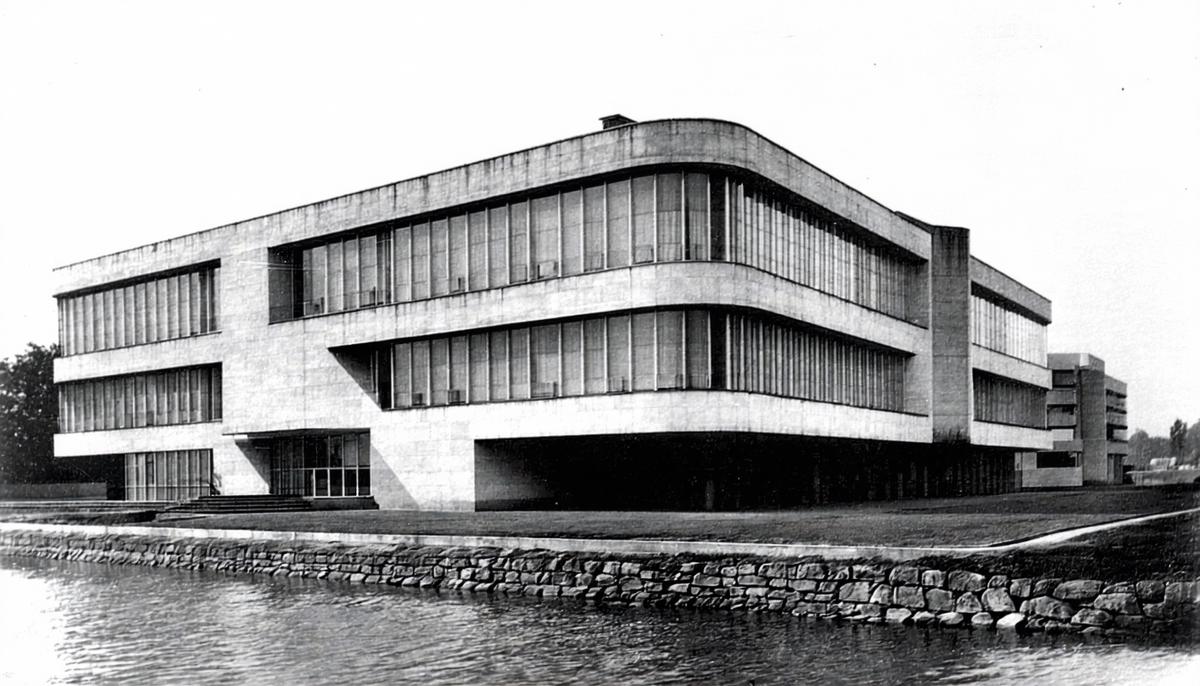
The Supreme Headquarters Allied Powers Europe (SHAPE) started taking shape in the Parisian suburb of Rocquencourt. Eisenhower signed off on the activation order on April 2, 1951, establishing the backbone of NATO's military machine. SHAPE became the central nervous system for the alliance, where defense tactics and strategic intelligence could zip across allied nations.
With the Korean War ongoing, Eisenhower knew the importance of beefing up Europe's defenses. SHAPE was crucial for pooling resources and brainpower, establishing a strategy that built trust among member nations.
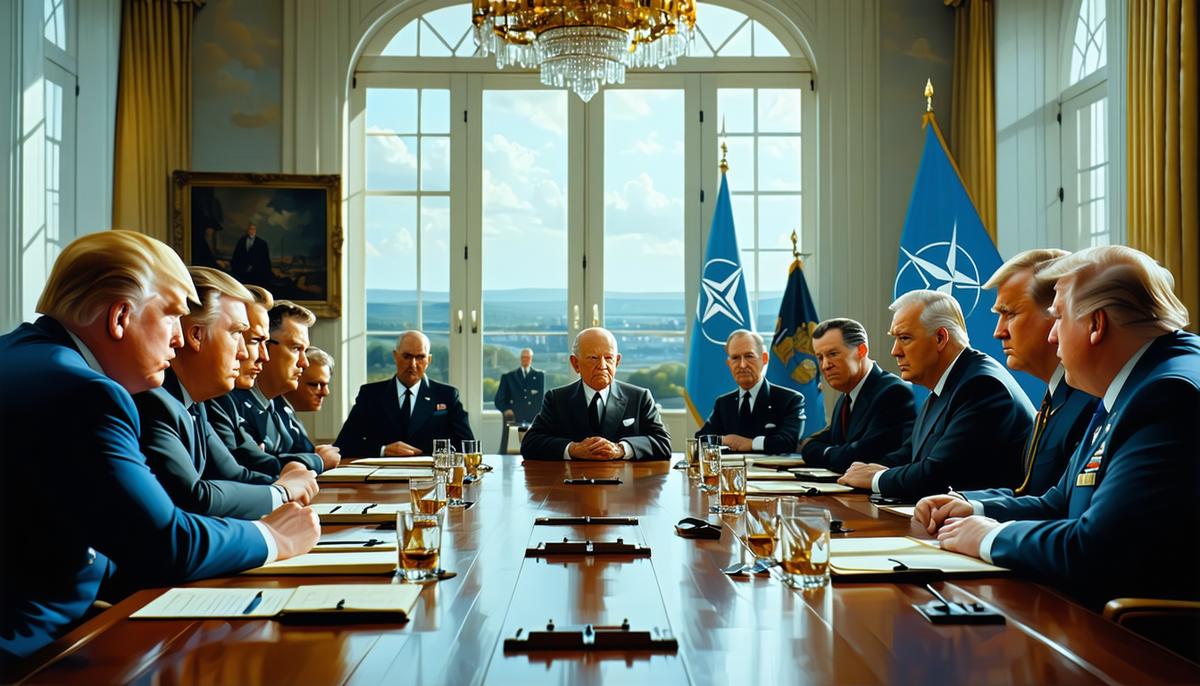
Eisenhower's presence balanced military might with diplomatic flair. Aided by his multinational staff, he brought together:
- Attention-grabbing headlines
- Diplomatic rosters
- Military edicts
This command was about unifying under a shared mission: peace that no dictator could derail.
At the heart of Eisenhower's approach was his knack for convincing skeptics that this military outfit was anything but war-hungry. With every meeting and briefing, Eisenhower oozed a camaraderie that turned political insiders and battle-hardened generals alike into believers.
In the end, SHAPE was more than Eisenhower's creation; it was a fortress of pragmatic peace-keeping, cementing a legacy where military coordination met the steadfast spirit of unity.
Eisenhower's Lasting Impact on NATO
Eisenhower's knack for knitting nations into a tight-knit security blanket had a cool ripple effect. By persuading European countries to ramp up their defenses, he brought newfound assurance to a war-weary continent. His ability to convert might into mutual trust really nailed his legacy.
Securing the backing of the United States Congress was a feat of its own. Eisenhower broke through with promises that NATO wasn't just the USA's solo act but an ensemble piece featuring committed international players. His assurances led to real funding and military maneuvers, transforming initial reluctance into a solid deal where everyone chipped in.
Key Achievements:
- Integration of West German divisions
- Welcoming Greece and Turkey into NATO
- Establishing a vision of collective responsibility
One luminous triumph was the seamless integration of West German divisions, turning distrust into defense. By inviting West Germany into NATO's common defense embrace, Eisenhower spun political skepticism into undeniable unity. It was no easy feat—post-war grievances still pricked memories, but Ike again played maestro, ensuring cooperation resonated louder than echoes of the past.
Welcoming Greece and Turkey into the fold was another sage move. Their entry deepened the alliance across continents. This eastward expansion was a masterstroke, creating a frontline buffer that reshaped the alliance's strategy against Soviet schemes.
Ike's tenure was about casting a vision of collective responsibility. He convinced the nations to close ranks like never before, setting the tone for future decades of collaboration. With every negotiation and handshake, Eisenhower carved not just a defense line but a legacy that's remembered fondly, echoing through time with the steady rhythm of unity and resolve.
- Eisenhower D. Speech to the American Society of Newspaper Editors. 1954.
- North Atlantic Treaty Organization. A short history of NATO. NATO website.
- Supreme Headquarters Allied Powers Europe. 70 Years of SHAPE: General Dwight D. Eisenhower. SHAPE website.