
1950: MacArthur's Korean War Media Censorship
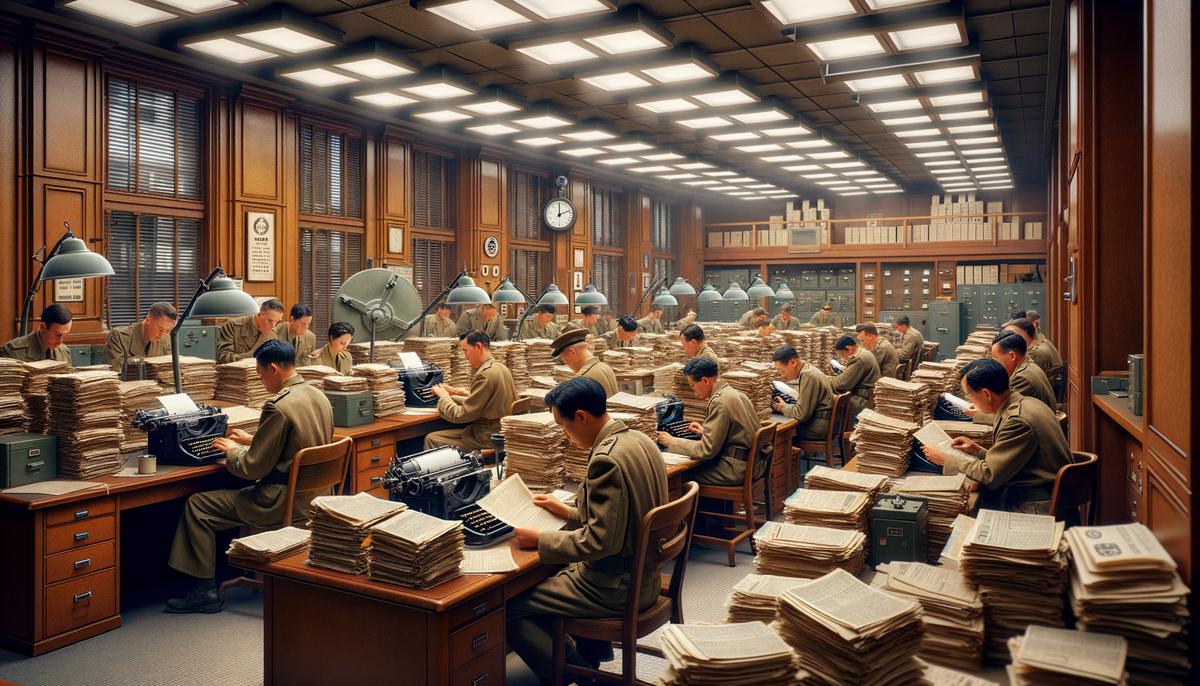
On December 21, 1950, General Douglas MacArthur imposed comprehensive censorship over news reports about the Korean War. This move significantly impacted how information about the conflict reached the public.
MacArthur's office became the sole source of approved information, shaping the public narrative of the war. Journalists found their reports tightly controlled, influencing what people heard and how they perceived the unfolding events overseas.
This wasn't just a blip in the news cycle but a pivotal moment with implications that rippled through journalistic circles. Reporters, often seen as truth-tellers, found themselves navigating a new landscape where their news needed approval from MacArthur's office.
Even amidst the vibrant 1950s, this act of censorship showed how information was carefully managed, highlighting the complexities of wartime communication and public perception.
"We shall attack and attack until we are exhausted, and then we shall attack again."
While not directly related to the censorship, this quote from General George Patton reflects the aggressive military mindset of the era.
1956: End of the Montgomery Bus Boycott
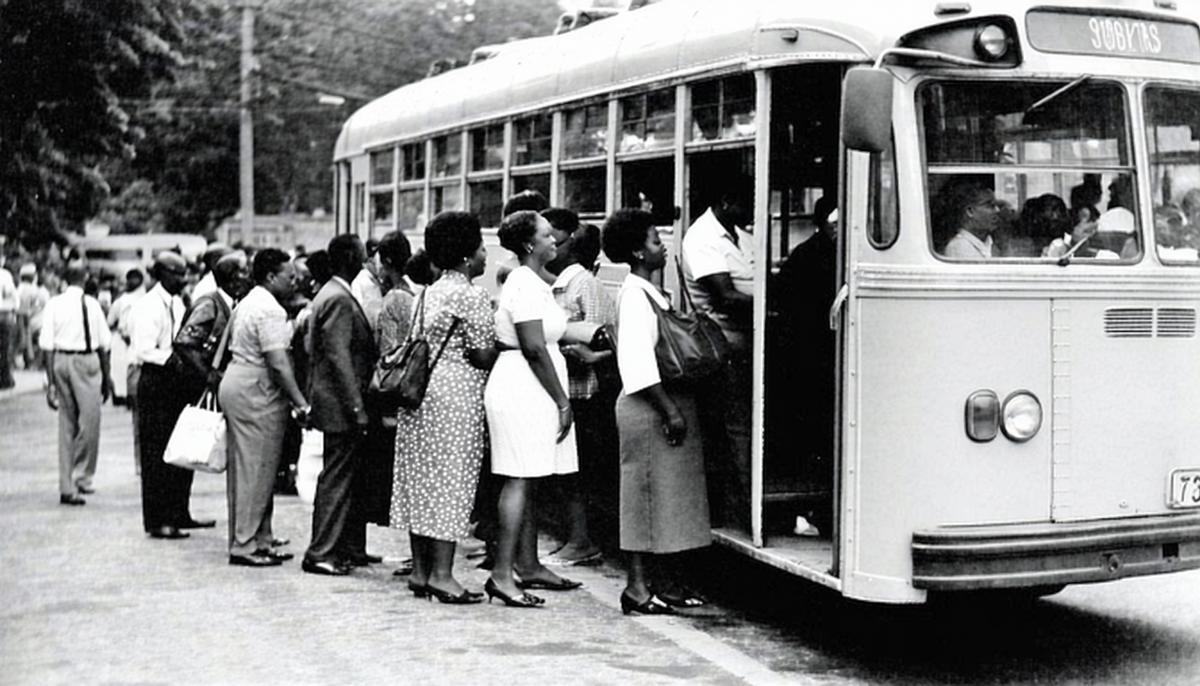
On December 21, 1956, the Montgomery Bus Boycott came to an end, marking a significant victory for the Civil Rights Movement. After the U.S. Supreme Court's decision in Browder v. Gayle declared segregation on public transport unconstitutional, Montgomery's buses rolled out with a renewed sense of justice.
This wasn't just about finding a place to sit; it was about planting the seeds of change. The integration of Montgomery buses signaled a shift, turning a simple bus ride into a symbol of freedom and progress.
The boycott, lasting 381 days, was more than just a local affair. It became a beacon for the entire Civil Rights Movement. People like Rosa Parks and Martin Luther King Jr. led a unified effort that echoed from Montgomery to the rest of the nation.
This pivotal moment wasn't just a page in the history books; it was a call for change that resonated through the 1950s. It showed that hope and persistence could steer society towards fairness and unity.
Next time you hop on a bus, remember the journey that brought us here—a journey powered by the determination of those who dared to dream of a just world.
Reflecting on these past events, we're reminded of the power and resilience in society. Whether it's wartime censorship or a community's stand against injustice, these moments shaped our world. Let's carry these lessons forward as we continue to work towards a future where truth and equality are everyday realities.
Other Notable Events in the 1950s:
- 1951: The Marshall Plan expires after distributing more than $13.3 billion in foreign aid to rebuild Western European economies.
- 1954: The first successful kidney transplant is performed by Dr. Joseph Murray and Dr. David Hume in Boston, Massachusetts.
- 1958: Charles de Gaulle is formally appointed as the first President of the Fifth Republic of France.
- MacArthur D. Reminiscences. New York: McGraw-Hill; 1964.
- Burns S. To the Mountaintop: Martin Luther King Jr.'s Sacred Mission to Save America: 1955-1968. New York: Harper Collins; 2004.
- Judt T. Postwar: A History of Europe Since 1945. New York: Penguin Press; 2005.