
Origins and Development of the GI Bill
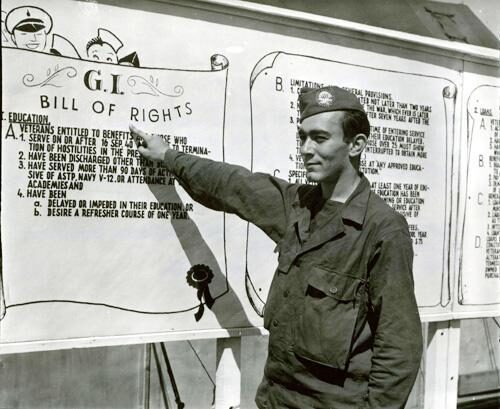
The G.I. Bill kicked off in 1944, aiming to give returning soldiers a proper welcome back. Harry W. Colmery, a former American Legion bigwig, dreamed it up on a cocktail napkin—talk about ideas with a twist!
It was like a ticket to the American Dream Express. Servicemen could waltz into colleges with Uncle Sam picking up the tab. The goal wasn’t just to hand out medals; it was to keep the job market from getting swamped.
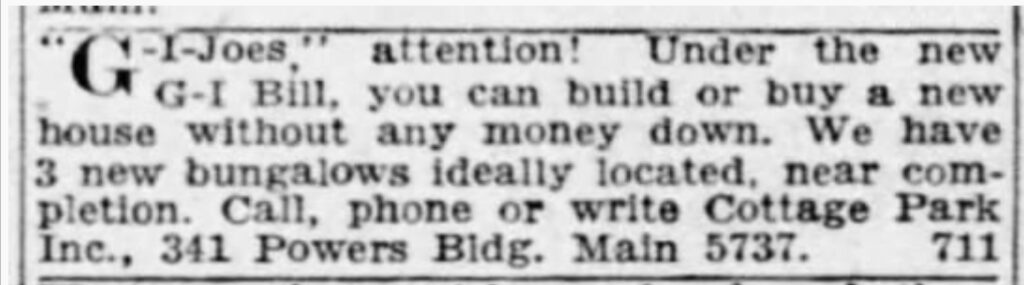
The bill opened doors, making college seem like a reachable ranch house rather than a lofty tower. Loans flowed freely, letting vets snap up homes with no money down. It was quite the housewarming party, despite a few hiccups.
But let’s not sugarcoat it. The bill didn’t treat everyone equally. African Americans often found doors slamming shut just as fast as Uncle Sam tried to open them. Women, too, got the short end of the stick with limited college choices.
Over time, the GI Bill’s had more makeovers than a Hollywood starlet:
- The Post-9/11 update beefed up education benefits
- The “Forever” version signed by President Trump waved goodbye to that pesky 15-year expiration date
Impact on Education and Employment
The G.I. Bill was serving up jobs and degrees like hot pies at the American Dream Diner. Veterans swapped battle plans for textbooks, with colleges bursting at the seams. By the late ’40s, nearly half of all college admissions were veterans!
With shiny new degrees or training, vets danced into fields they might’ve only dreamed of before. Think engineering, business, education—you name it, some G.I. Bill alum was climbing that ladder.
This educational tidal wave lifted more than just the veterans; it buoyed the whole economy. Every town was suddenly teeming with professionals, meaning more family wagons in garages and steak dinners on grills.
Yet, it wasn’t all smooth sailing. For African-Americans and other minority groups, local biases laid out obstacles thicker than Elvis’s sideburns. But many veterans found ways to leap these hurdles, showing true grit.
The G.I. Bill’s legacy in education and employment remains as American as apple pie. It helped shape an era of innovation, growth, and a hearty dose of optimism that still sprinkles a little magic dust on our dreams today.
Housing and Suburbanization
The G.I. Bill turned homeownership from a pipe dream into reality for many veterans. Low-interest loans let them bypass hefty down payments, making housing as attainable as a blue-light special.
Picture Levittowns popping up coast-to-coast, offering affordable homes to families eager to lay down roots. These budding suburbs became the heartbeat of a redefined American Dream, complete with fathers mowing lawns and kids riding bikes through safe streets.
Yet, while the dream was grand for many, African-American veterans and other minorities often faced locked doors and “No Vacancy” signs. Racial covenants and biased banking practices threw cold water on dreams of suburban bliss for some.
Still, these early suburban enclaves shaped American culture, from social dynamics to TV plots. The white-picket-fence life became a touchstone, serving as a nostalgic reminder of mid-century aspirations.
The G.I. Bill’s impact on housing and suburbanization is like a vintage postcard—a snapshot of a time when the grass seemed greener and the skies were the limit. It’s a patchwork of triumphs that underscores the optimism of the era, even if the picture wasn’t perfect for everyone.
Discrimination and Inequality
While the G.I. Bill opened doors for many, it wasn’t all soda fountains and sock hops for everyone. African American and female veterans often found those doors stubbornly jammed.
Black veterans faced hurdles tougher than grandma’s peanut brittle when accessing educational and housing benefits. Colleges sometimes treated them like they’d brought the wrong currency to the fair, while banks acted like bouncers at an exclusive club when it came to mortgages.
Female veterans didn’t have it much easier. College campuses could be as unwelcoming as a bee in a Sunday hat, with men getting first dibs on those coveted lecture hall seats.
Employment opportunities for diversity were often as limited as a capped jar of preserves. Women and minorities frequently returned to rigid expectations and job prospects that didn’t quite match those of their white male peers.
The effects of this discrimination rippled far beyond the ’50s, shaping communities for decades. It’s a sore spot in an otherwise rosy era, but one worth looking at with clear eyes. It reminds us of the resilience it cultivated and the work that remained unfinished—an important verse in the American song of progress.
The G.I. Bill’s legacy is a mix of opportunity and challenges. It shaped countless lives, showing the power of education and homeownership in building dreams. Looking back, we see not just a policy, but a slice of American optimism that still inspires, warts and all.
- Schneider GL. The Serviceman’s Readjustment Act of 1944. Emporia State University.
- U.S. Department of Veterans Affairs. 80 Years of the GI Bill: Empowering Generations of Veterans.
- History.com Editors. G.I. Bill. History.com. 2022.