
The 1950s were a time when schools reflected society's values. From dress codes to dating rules, each aspect offers a glimpse into a world where order and tradition held sway.
1. Gender-Specific Dress Codes
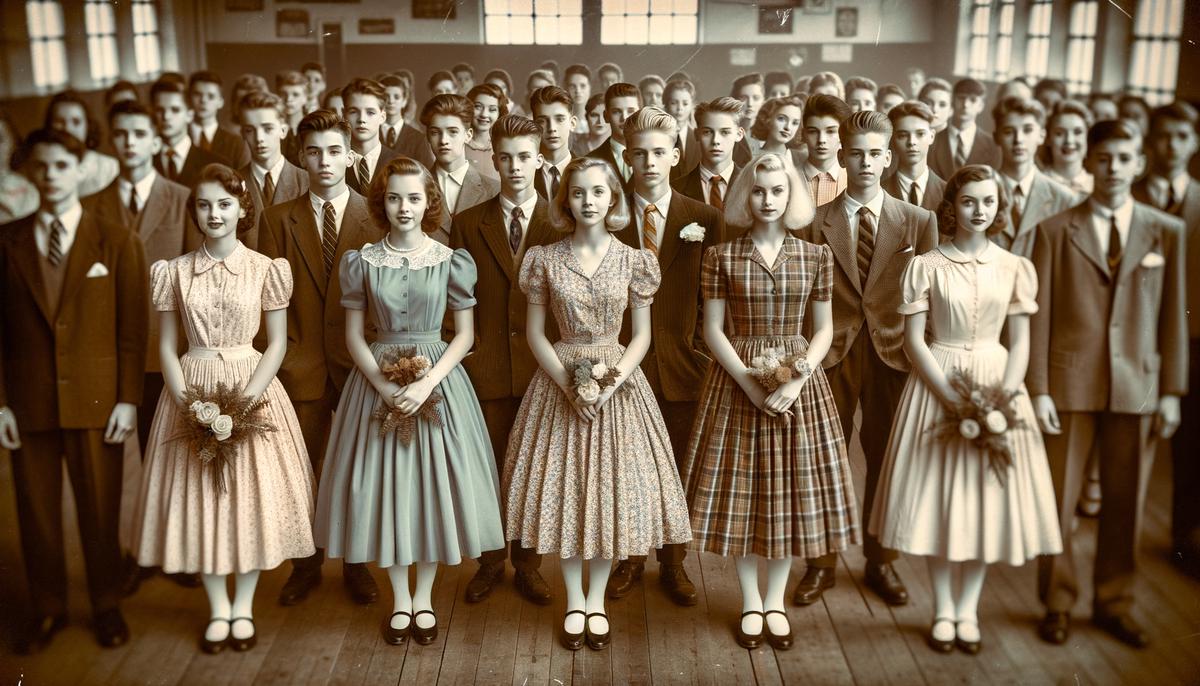
Girls in 1950s schools had to wear dresses or skirts – jeans were out of the question. Boys were expected to have short haircuts. These rules weren't just about fashion; they defined the roles of boys and girls in society.
- Girls: Dresses or skirts only
- Boys: Short, neatly trimmed hair
- No colorful nail polish or makeup for girls
2. No Married Students
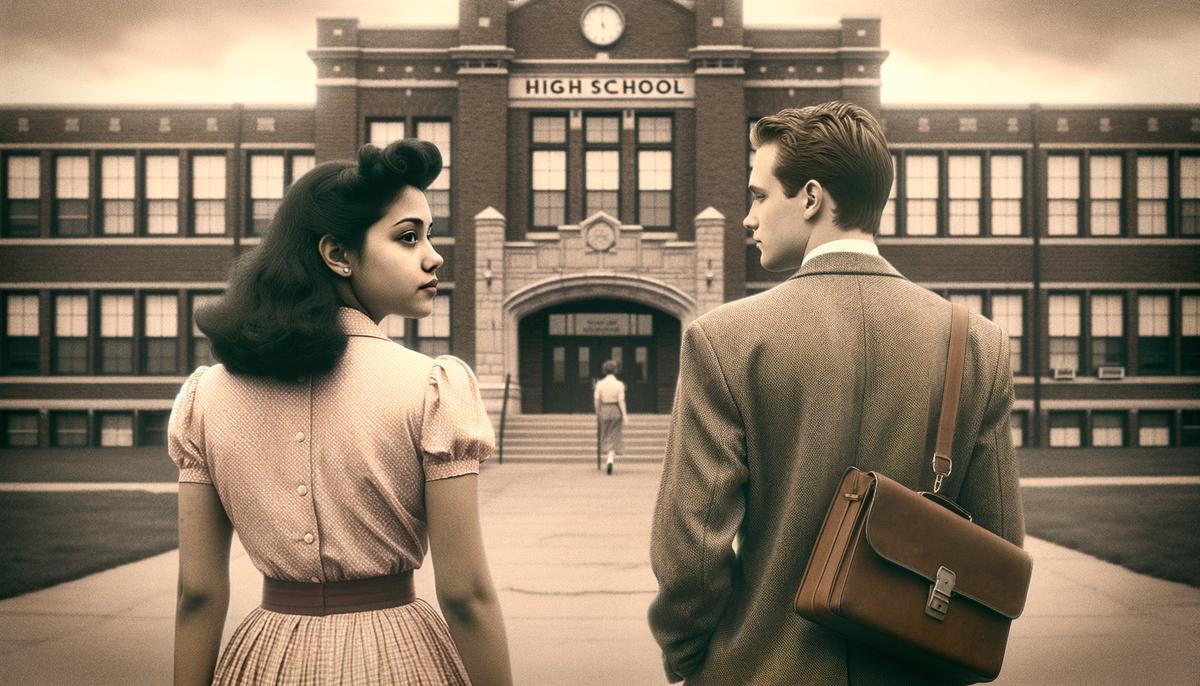
In the 1950s, getting married meant saying goodbye to high school. Teenagers who tied the knot often had to leave their classrooms behind. Schools were seen as places for unmarried youth to prepare for adult life, not for those already juggling marriage and studies.
This rule reflected how marriage and education were viewed as separate paths. It's a far cry from today's support systems for young parents continuing their education.
3. Separate Entrances
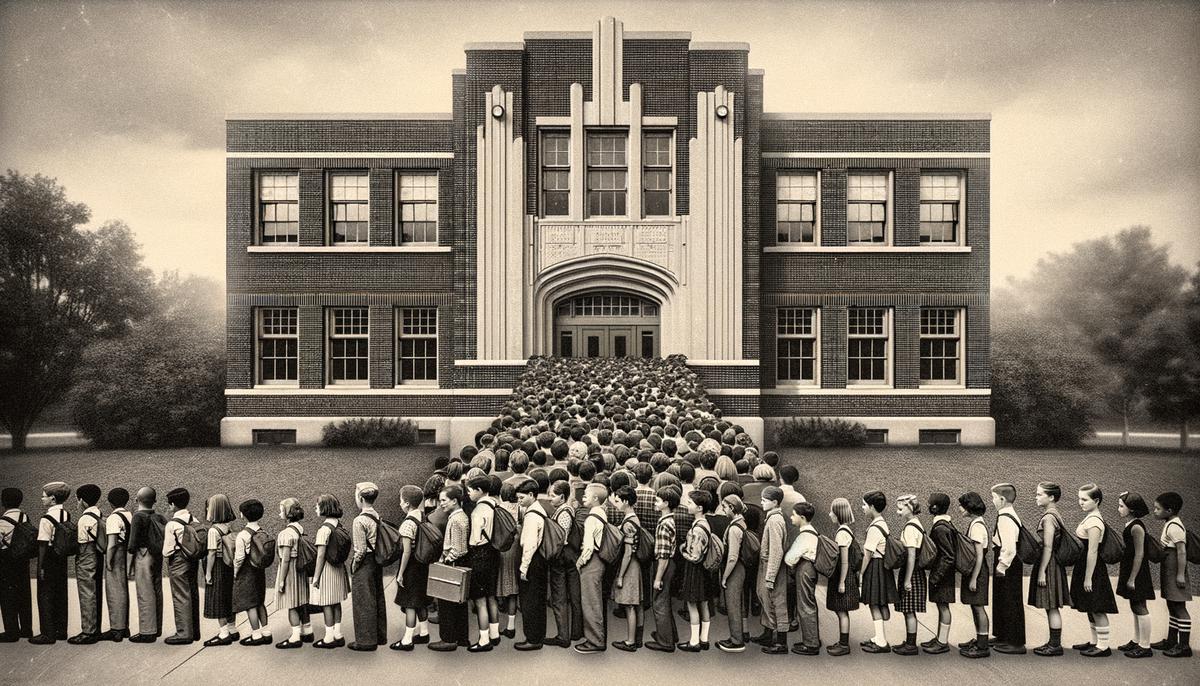
Boys and girls used different doors to enter school. This wasn't just about organizing foot traffic; it reinforced gender separation from the first step into school.
Imagine kids lined up by gender, ready for another day of learning. The separate entrances set the tone, emphasizing distinct roles for boys and girls.
To today's students, this might seem odd. But back then, it was a normal part of school life that reflected the wider society's views on gender roles.
4. Home Economics and Shop Classes
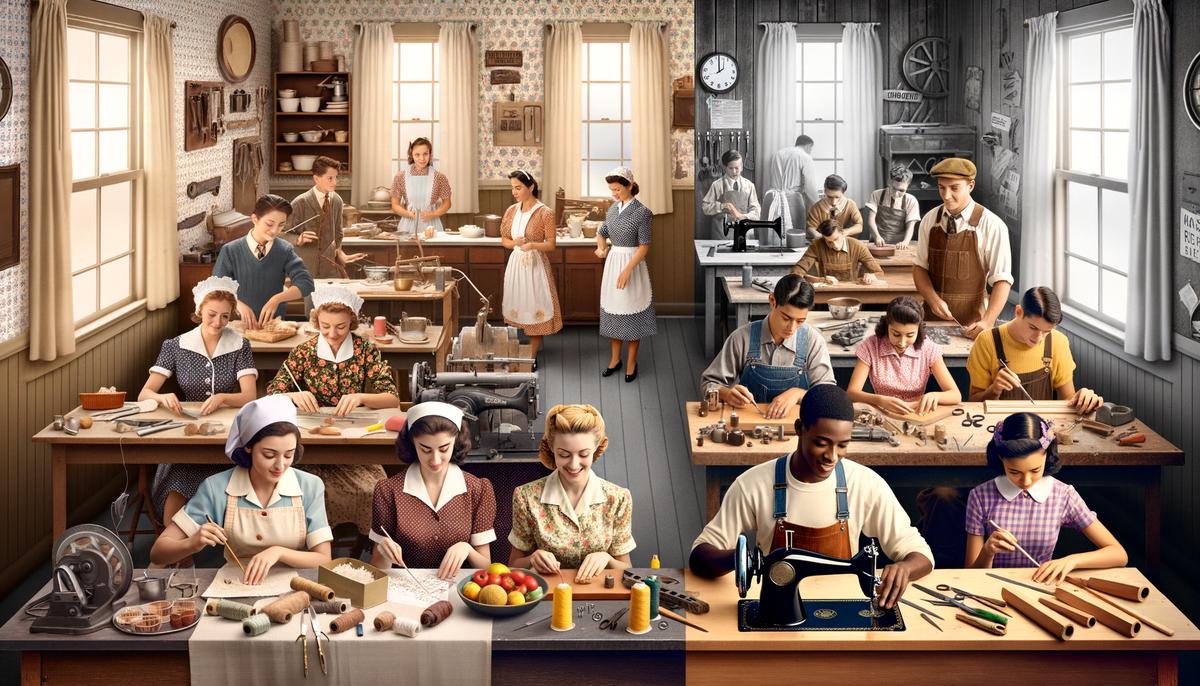
In the 1950s, practical education had a clear gender divide:
- Girls: Home economics – cooking and sewing
- Boys: Shop class – carpentry and mechanics
These classes prepared students for traditional gender roles – future homemakers and breadwinners. While it might seem outdated now, these courses taught useful skills. Who wouldn't want to know how to bake a pie or fix a squeaky hinge?
Looking back, these classes mirrored 1950s social structures. They also instilled pride in creating things by hand, whether it was a meal or a wooden birdhouse.
5. Corporal Punishment
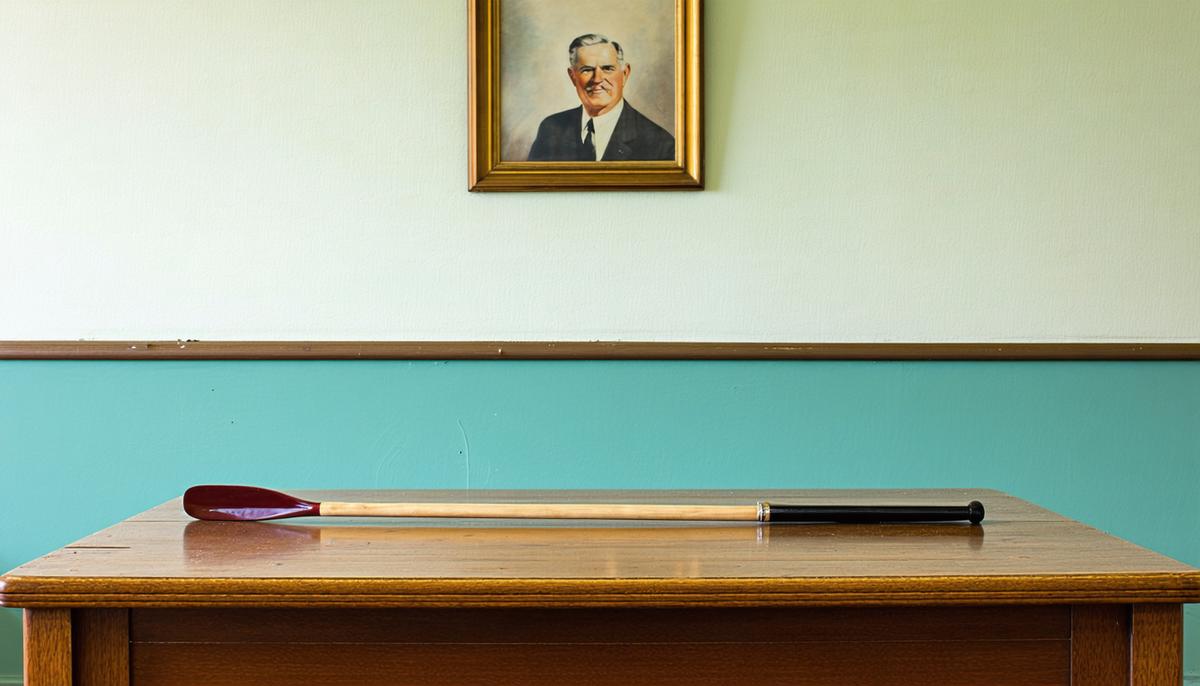
In the 1950s, a trip to the principal's office could mean facing the paddle. Corporal punishment was a common way to maintain order in schools.
Picture a misbehaving student being led away, returning with a new appreciation for classroom rules. It's hard to imagine such practices in today's schools, where positive reinforcement is preferred.
While we've moved on from these methods, they offer a glimpse into how discipline was handled in a different era.
6. Strict Etiquette Rules
1950s classrooms had strict etiquette rules:
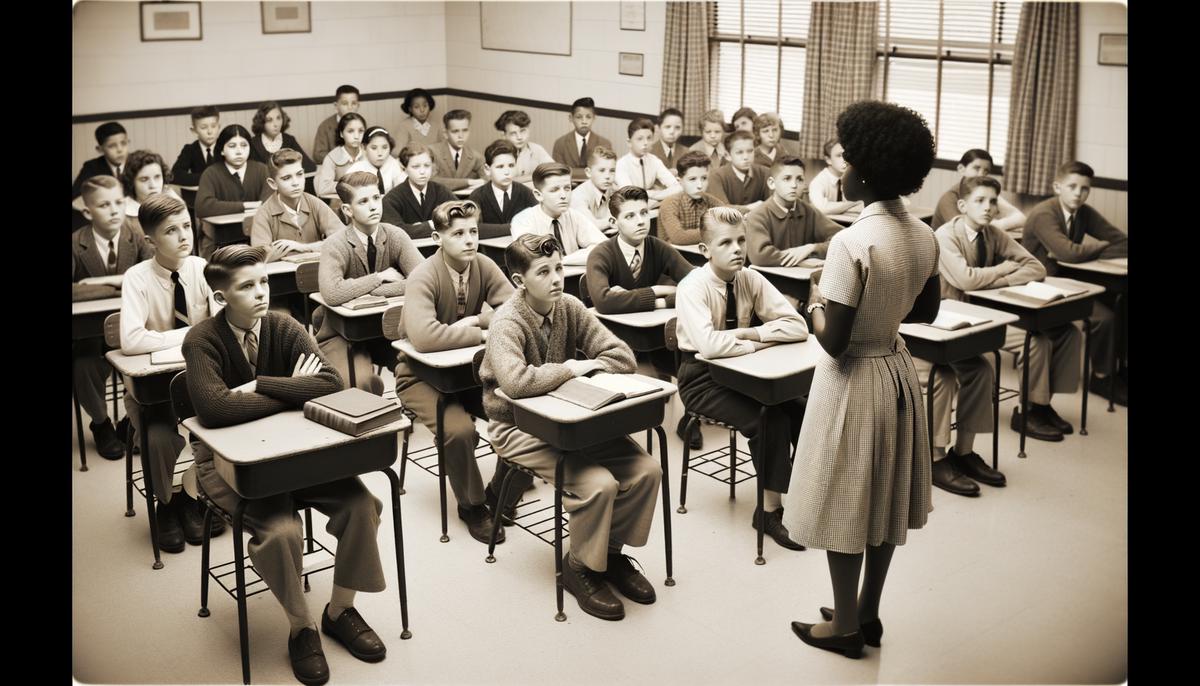
- Students sat up straight
- Addressed teachers as "Sir" or "Ma'am"
- Proper posture was a must
- Students stood when adults entered the room
These rules aimed to instill respect and discipline. Whispering to a neighbor or doodling could lead to a stern reprimand. While it might seem over-the-top now, it created an orderly learning environment.
Today's classrooms are more relaxed, but some of those old-fashioned manners might still come in handy.
7. Speaking Only If Spoken To
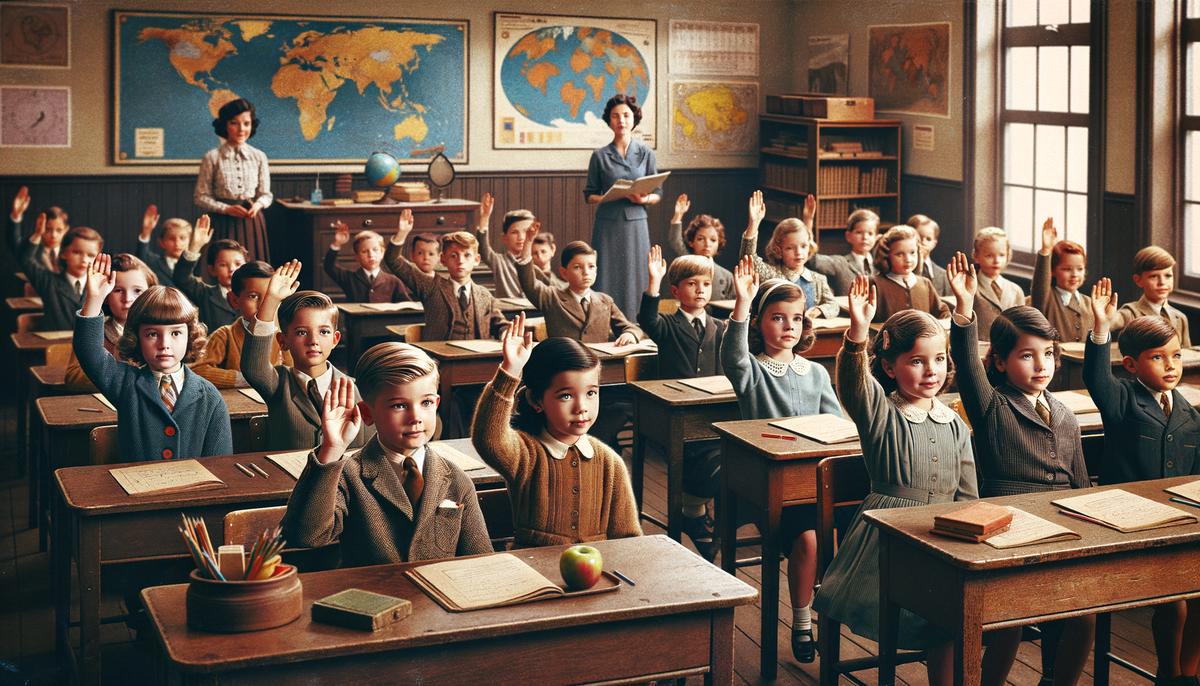
In 1950s classrooms, students spoke only when the teacher called on them. This created a quiet, structured environment where listening was key.
Students learned to process their thoughts before speaking. It's quite different from today's interactive classrooms, where open discussion is encouraged.
While we've moved towards more dynamic learning, there's still value in knowing when to listen and when to speak up.
8. Separate Gym Classes by Gender
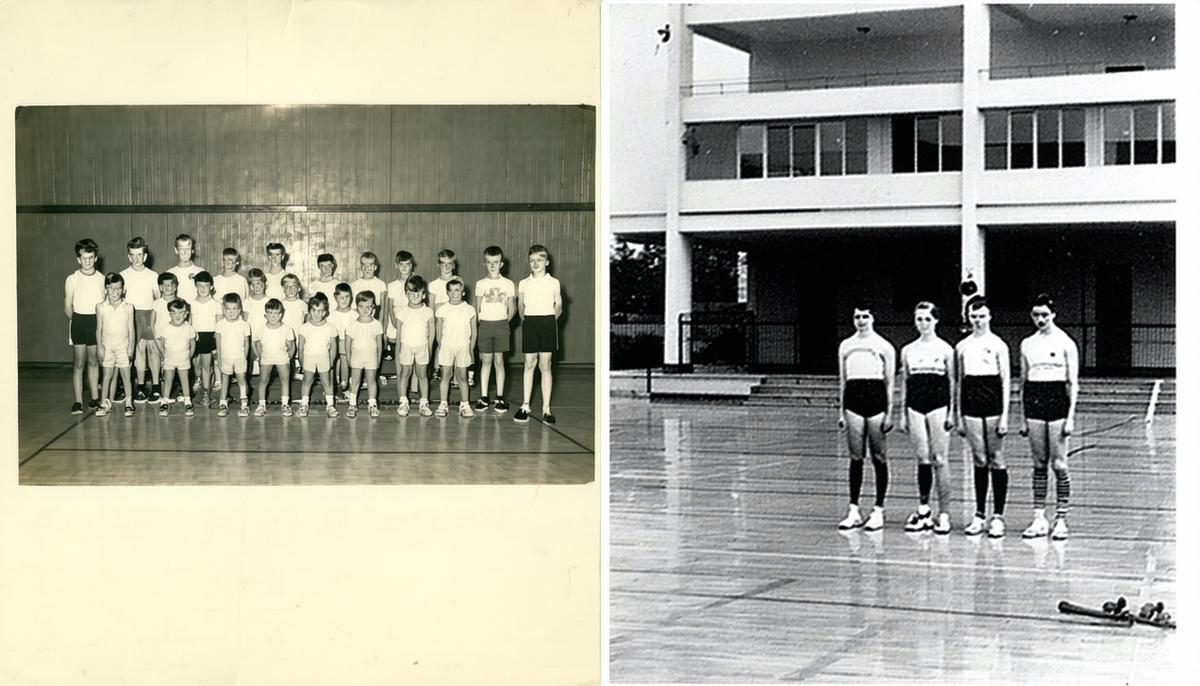
In the 1950s, gym classes were typically separated by gender. This division reflected broader social norms of the time, with physical education tailored to align with traditional gender roles.
- Girls' activities: Calisthenics, dance, and gymnastics
- Boys' activities: Wrestling, football, and other team sports
The rationale behind this separation was the belief that boys and girls had different physical needs and capabilities that should be addressed separately. Today, this approach would seem outdated, as modern gym classes aim to offer everyone the chance to participate in a variety of activities together, recognizing that athletic skills aren't determined by gender.
Looking back at these gender-segregated classes gives us a glimpse into how societal expectations shaped daily school life in the 1950s.
9. Mandatory Military Drills
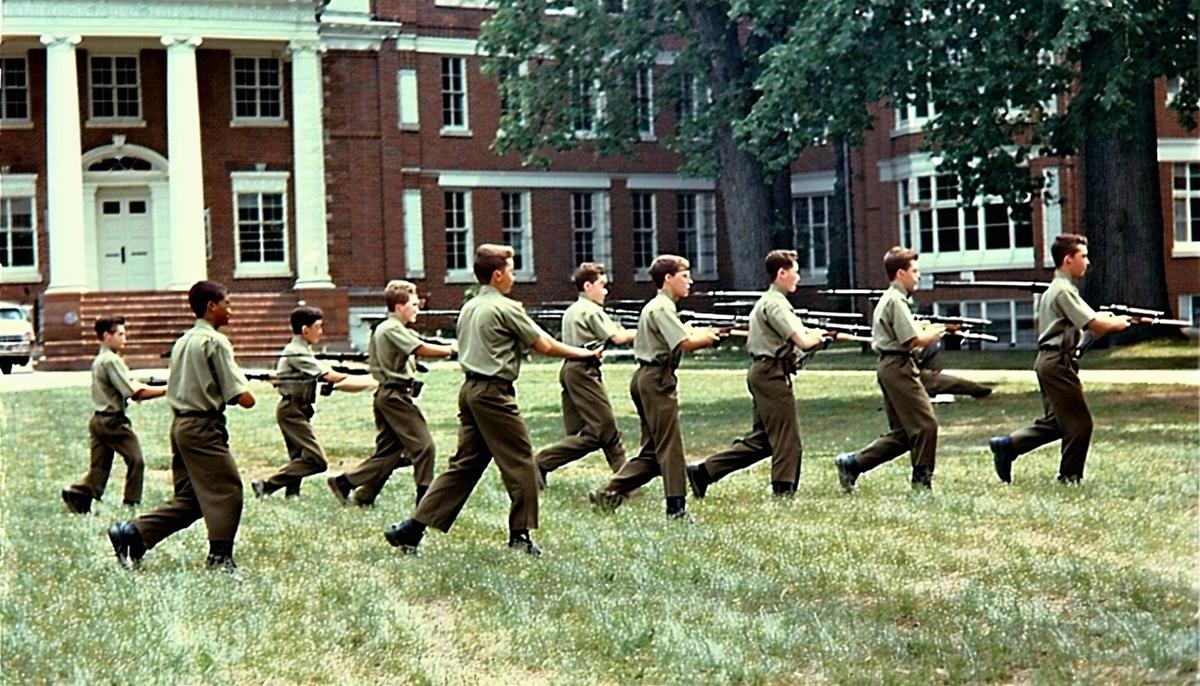
Some schools in the 1950s included mandatory military drills as part of their curriculum. These exercises involved:
- Marching in formation
- Learning basic military protocol
- Instilling discipline and order
For many boys, these activities were seen as preparation for potential future military service. The drills reflected the era's emphasis on duty and readiness, mirroring a national sentiment where young men were viewed as future defenders of freedom.
Mastering these exercises felt like participating in a grand tradition and a rite of passage into adulthood. Today, such drills in schools might seem unusual, as modern classrooms typically focus more on personal growth, creativity, and critical thinking. However, those mandatory drills of the past left a legacy that speaks to the 1950s spirit of unity and resilience.
10. No Colorful Nail Polish or Makeup
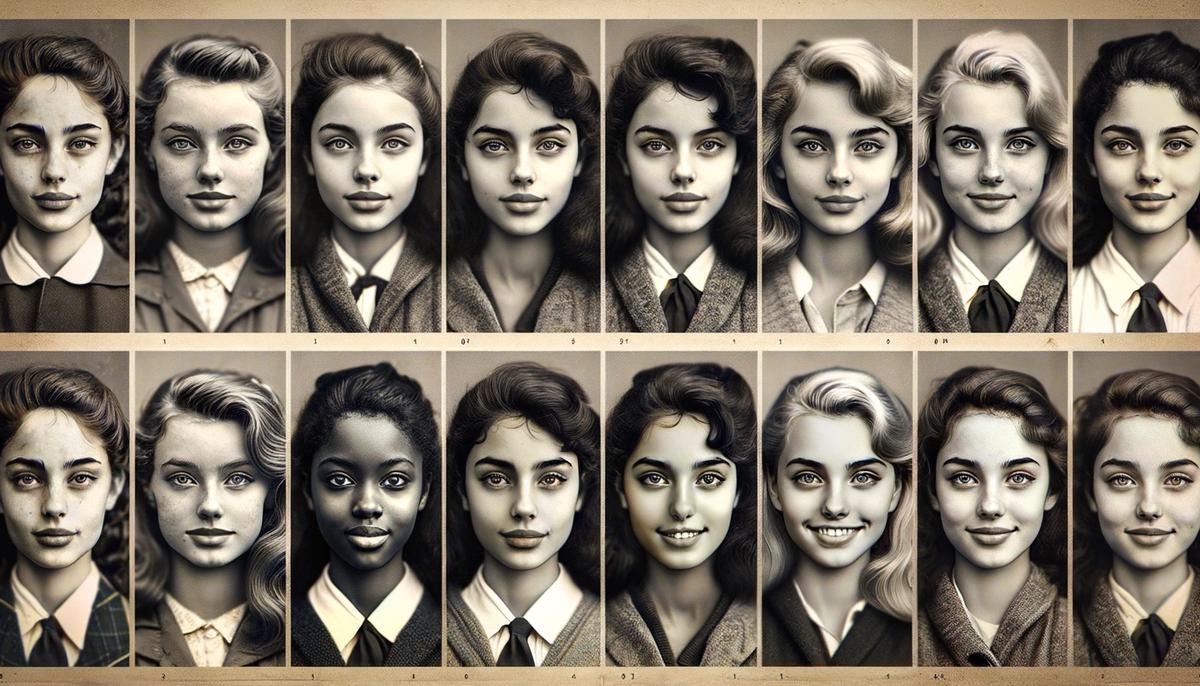
In the 1950s, schools often had strict rules about appearance, especially for girls. Colorful nail polish and makeup were typically not allowed, with schools emphasizing a more natural, understated look. This policy aligned with the era's broader expectations of modesty and decorum.
"The unwritten lesson was to let character shine through rather than flashy appearances."
For many, this was just another aspect of the refined and restricted wardrobe expected in schools at the time. Today's students, used to more freedom in personal expression, might find such rules restrictive. Modern schools tend to focus more on ensuring students feel confident in their own skin rather than enforcing specific appearance standards.
While we've moved on from these stringent beauty standards, there's a certain charm in remembering a time when simplicity was valued in school settings.
11. Early Curfews for Functions
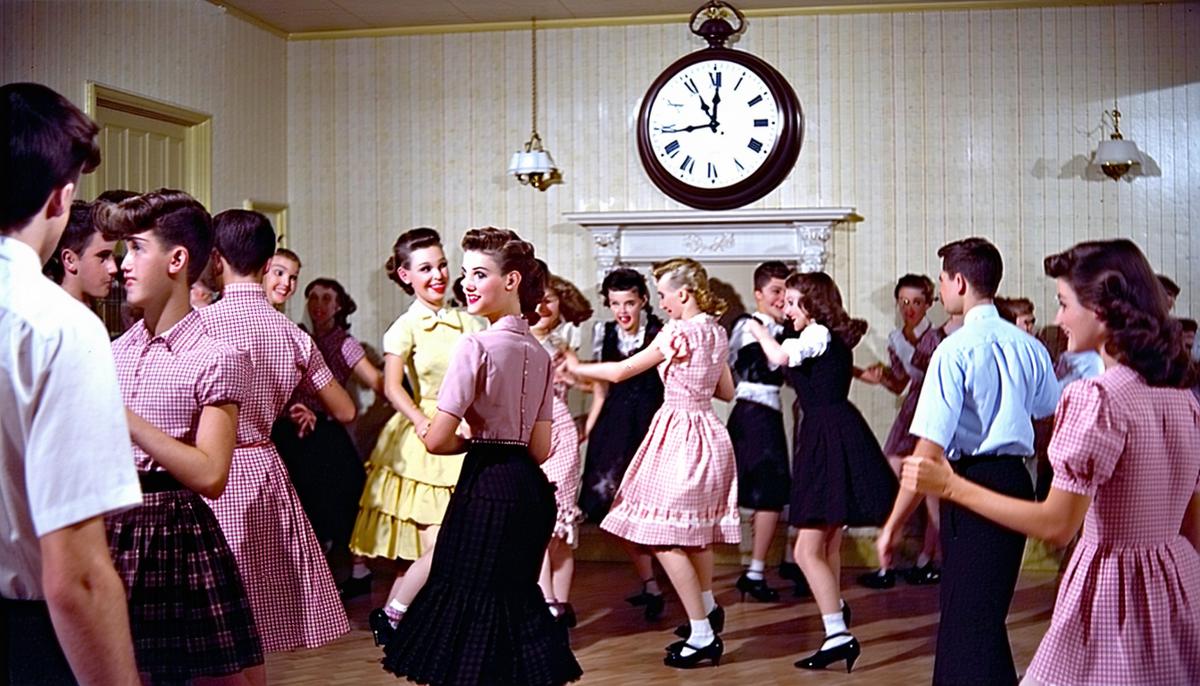
School events in the 1950s, like dances and games, often came with strict early curfews. These time limits ensured students headed home well before midnight, reflecting the era's emphasis on safety and propriety.
As the clock ticked closer to curfew, there'd be a gentle buzz of activity as students prepared to wrap up their evening. These early endings were part of a broader ethos that valued balance – allowing for fun evenings but also ensuring students got enough rest.
For teens of the time, it was an exercise in enjoying the moment within set boundaries. While modern schools may not stick to such strict time restrictions, the 1950s curfew culture serves as a reminder of how different values shaped youth experiences in that era.
12. Strict Dating Rules
Dating in 1950s high schools came with a set of rules that might seem quaint today:
- Public displays of affection were frowned upon
- Even hand-holding was considered bold
- The concept of "going steady" was a structured affair
- School dances were often chaperoned
These rules weren't meant to squash puppy love, but rather to guide students through their first forays into dating. While today's teens might find such guidelines restrictive, there's a certain nostalgia in remembering a time when romance unfolded more slowly and formally.
It was an era when small gestures carried significant weight, and the pace of relationships matched the measured tempo of the times.
13. Uniforms or Strict Dress Codes
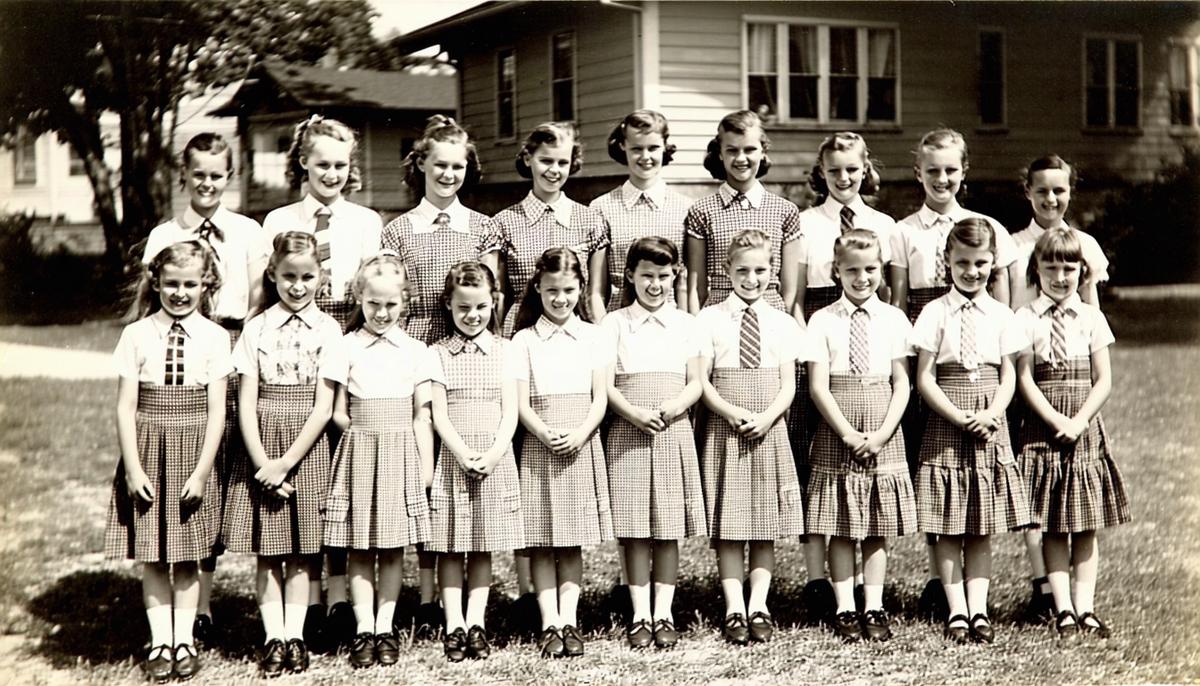
In 1950s schools, uniforms and strict dress codes were common. The hallways were often filled with students in matching outfits, usually in simple colors like navy blue and white. This uniformity was seen as a way to create a neat environment focused on learning rather than fashion.
For schools without uniforms, dress codes were still quite strict. Rules dictated:
- Skirt lengths
- Tucked-in shirts
- Well-pressed pants
The goal was to maintain a sense of decorum and equality among students.
Parents often appreciated these policies, believing they would help their children concentrate on studies rather than clothing choices. While some students may have found the rules restrictive, others enjoyed the simplicity of not having to decide what to wear each day.
Looking back, these uniform policies remind us of a time when conformity in appearance was thought to foster community spirit in schools. It's a fun contrast to today's more individualistic approach to student fashion.
14. Regular Checks of Outbuildings
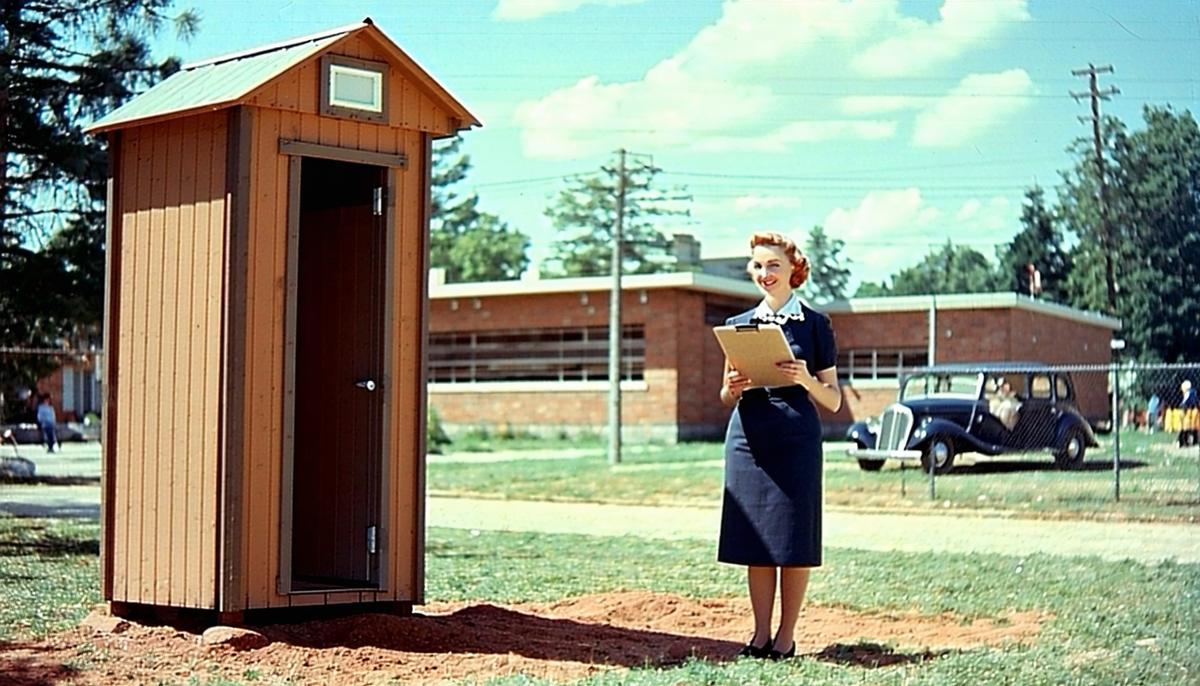
In some rural schools of the 1950s, teachers had an unusual duty: regularly checking outbuildings and outhouses. This task was necessary in areas where indoor plumbing hadn't yet reached the school grounds.
Imagine a teacher with a clipboard, strolling out to inspect these structures each morning. It wasn't just about cleanliness – these checks helped maintain order and ensure the facilities were ready for use.
While it might seem odd now, this duty shows how different school life was back then. It's a reminder of how educators went above and beyond, handling all sorts of tasks to keep their schools running smoothly.
"Check the outhouses daily."1
Today's students might giggle at the idea, but it's neat to think about how schools managed before modern plumbing. It's just one of those quirky details that makes learning about 1950s school life so interesting!
15. Teachers as Authority Figures
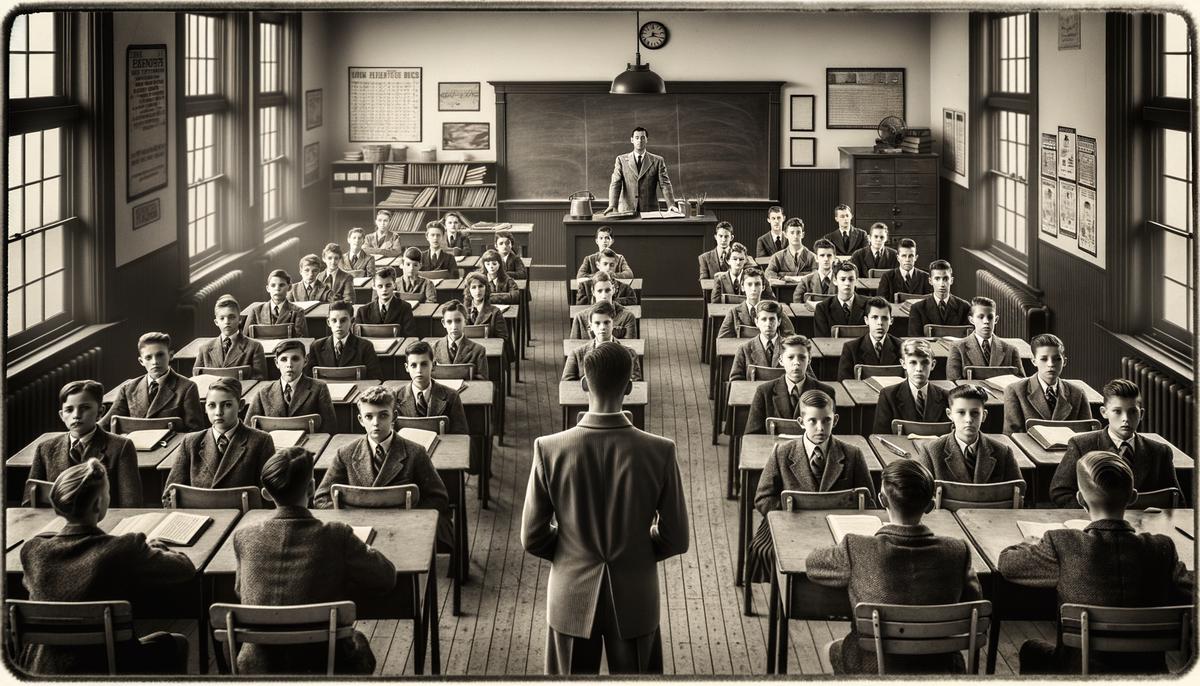
In 1950s classrooms, teachers were seen as strong authority figures. They commanded respect and had the power to maintain discipline in ways that might surprise us today.
A teacher's presence alone could quiet a chatty class. They were trusted not just to teach, but also to shape students' behavior. Disciplinary methods were stricter then, sometimes including corporal punishment like paddling – something that would be shocking in most schools now.
The principal's office was a place students truly feared. Being sent there usually meant serious trouble, and students often returned with a new respect for school rules.
While today's teacher-student relationships are usually more relaxed, there's something interesting about remembering a time when teachers were seen almost like stern guardians. Their job wasn't just about ABCs and 123s, but also about molding young people into well-behaved citizens.
It's fun to look back and see how much things have changed. Even if we wouldn't want to go back to those stricter days, it's cool to think about how different school life was for our parents or grandparents.
Looking back at these 1950s school practices shows us how much things have changed. It's neat to think about those more structured times, even if we're glad some things are different now!