
Bakelite Jewelry's Rise in the Art Deco Era
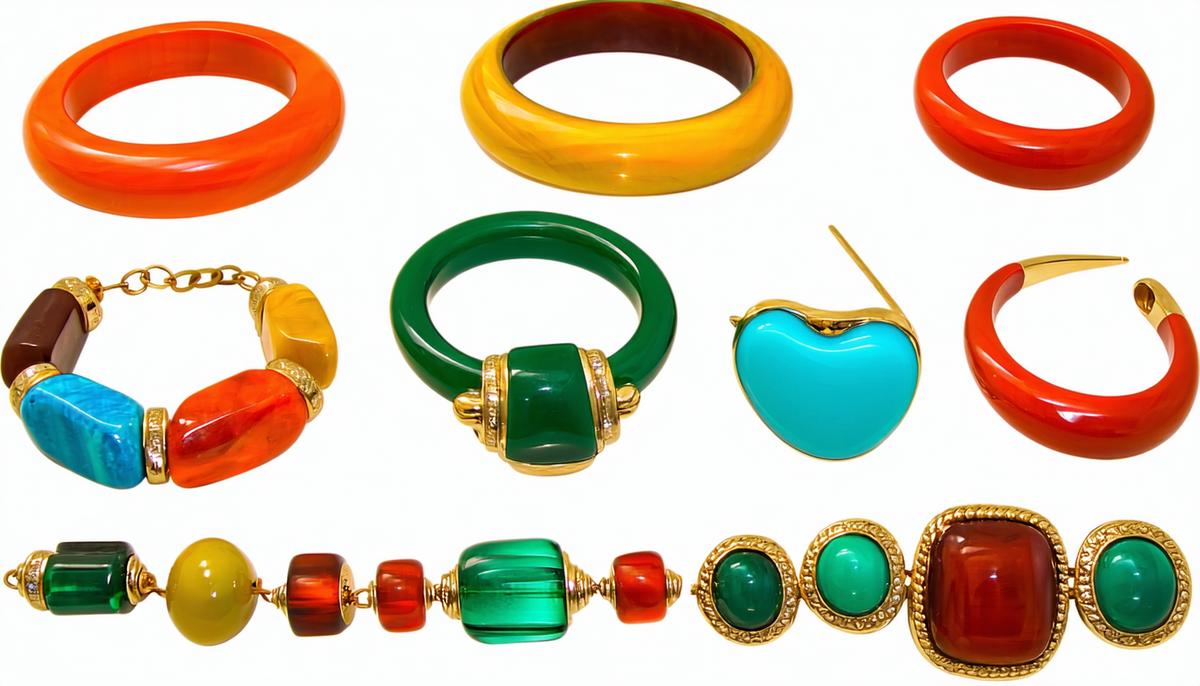
Bakelite jewelry burst onto the scene in the early 1900s, following Dr. Leo Baekeland's discovery of this durable plastic. During the Art Deco era, it gained immense popularity, appearing in a myriad of colors and forms. From bangle bracelets to chunky beads, Bakelite offered stylish, affordable fashion for those on a budget.
In the 1930s, major retailers like Sears stocked their shelves with these vibrant pieces. Even high-end designers such as Chanel and Van Cleef & Arpels incorporated Bakelite into their collections, solidifying its status as a classic material.
Crafting Bakelite was an art form in itself. Skilled artisans shaped, carved, and polished each piece to perfection. The color palette was extensive, ranging from cherry red to electric green, with each piece developing its own unique patina over time.
As newer plastics emerged, Bakelite gradually faded from the spotlight. Today, it's a sought-after collectible, with vintage pieces highly prized for their charm and historical significance.
Bakelite Jewelry Characteristics and Authentication
Genuine Bakelite jewelry has distinct characteristics that set it apart from imitations. It's notably heavier than most plastics, with a substantial weight that feels luxurious. The craftsmanship is impeccable, featuring smooth, uninterrupted surfaces.
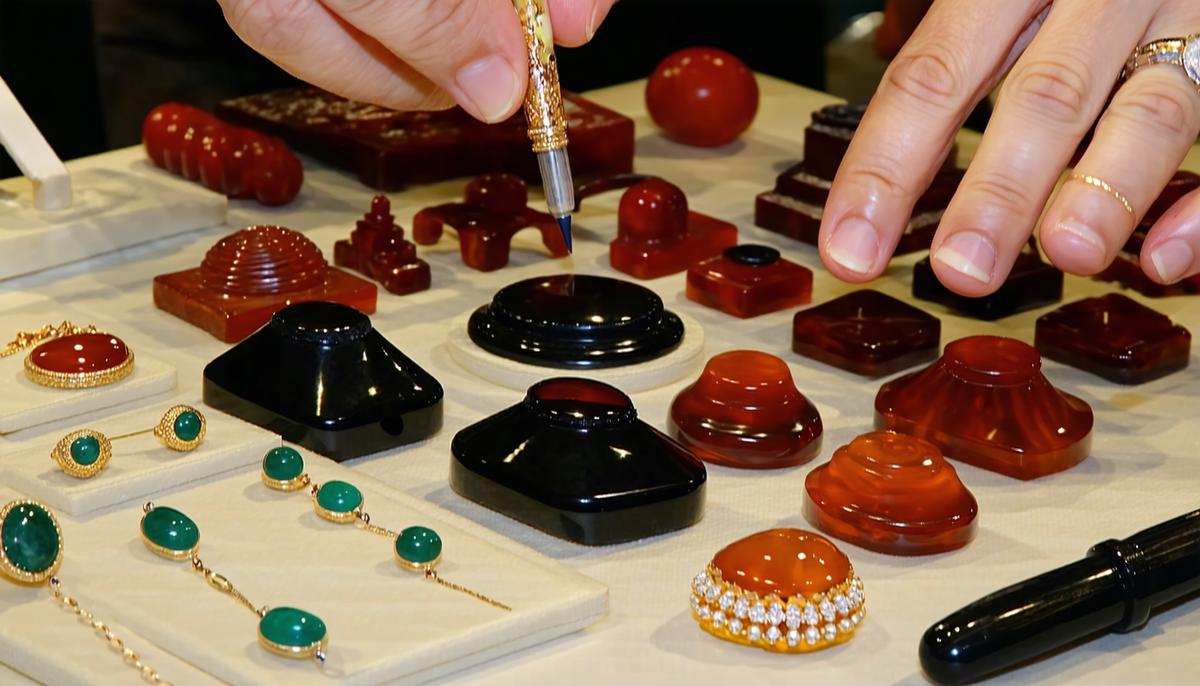
Bakelite's colors are deep and rich, often developing a unique patina over time. To authenticate a piece, collectors employ several tests:
- The hot pin test: A heated pin pressed gently against the jewelry won't leave a mark on genuine Bakelite.
- The Simichrome test: A dab of Simichrome polish rubbed on the jewelry will turn yellowish if it's authentic Bakelite.
- The rubbing test: Vigorous rubbing creates heat, releasing a faint formaldehyde smell from real Bakelite.
- The hot water test: Dipping the piece in hot water can also release that characteristic formaldehyde scent.
These tests, combined with the jewelry's appearance and feel, help collectors and enthusiasts distinguish genuine Bakelite from imitations.
Collectibility and Care of Bakelite Jewelry
Bakelite jewelry is highly collectible due to its unique designs, vibrant colors, and historical significance. Many pieces were hand-carved, making each one special. The color spectrum ranges from bright cherry reds to deep mustard yellows, with each piece developing its own character over time.
These pieces represent a slice of early-to-mid 20th century history, capturing the spirit of the Art Deco and Jazz Age. The fact that famous designers like Chanel and Elsa Schiaparelli worked with Bakelite adds to its allure.
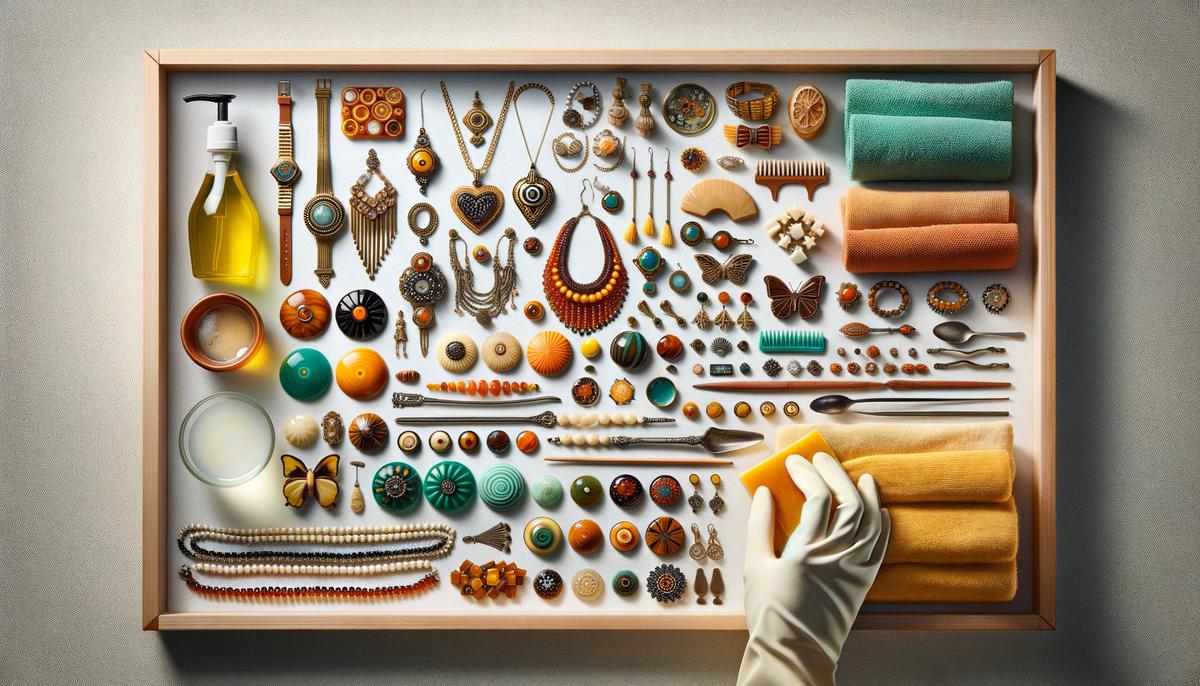
Caring for Bakelite Jewelry:
- Clean with a soft cloth and mild soap. Avoid harsh chemicals.
- Rinse with warm water and pat dry.
- Allow to air dry completely.
- Store away from direct sunlight and damp conditions.
Proper care ensures these historical pieces continue to shine for years to come.
Bakelite jewelry remains a colorful reminder of an innovative era. Its enduring appeal keeps collectors on the hunt for these unique pieces of wearable history. Whether you're drawn to the bold designs of Art Deco brooches or the smooth, chunky bangles of the 1940s, Bakelite offers a tangible connection to a bygone era of style and innovation.
- Baekeland LH. Method of making insoluble products of phenol and formaldehyde. US Patent 942,699. December 7, 1909.
- Davidov C, Redington G. The Bakelite Jewelry Book. Abbeville Press; 1988.
- Codina C. The New Jewelry: Contemporary Materials and Techniques. Lark Books; 2004.