
Types of 1950s Cast Iron Toy Cars
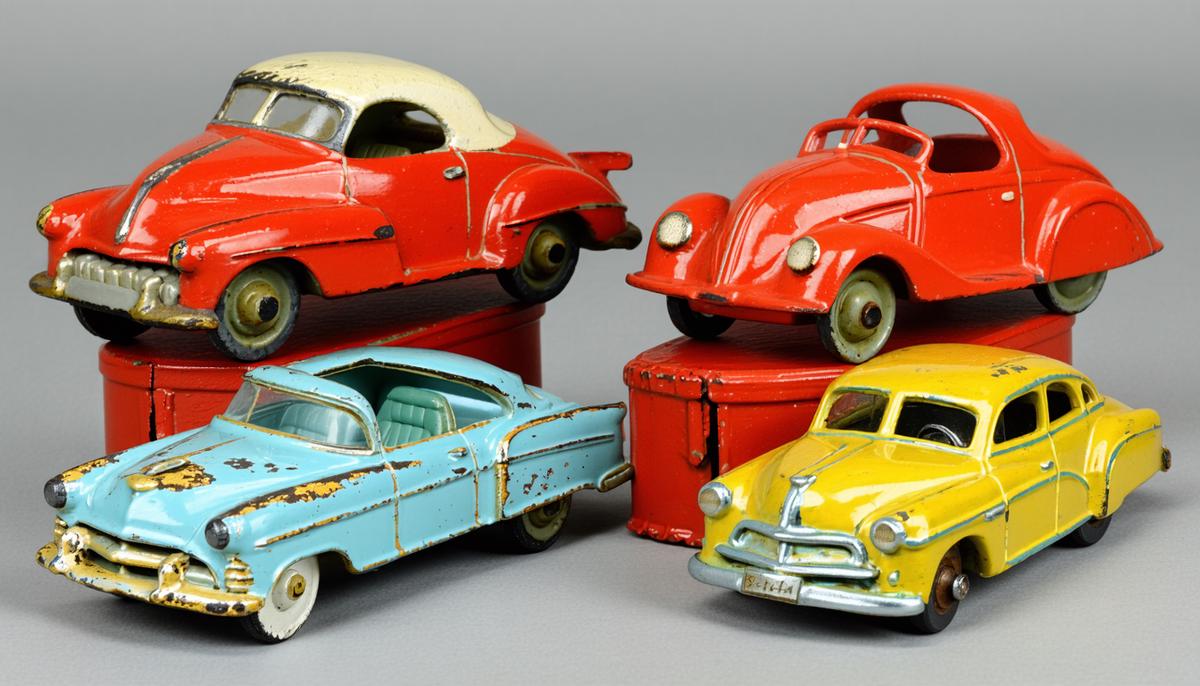
Cast iron toy cars from the 1950s came in different shapes and sizes, each showcasing the era's craftsmanship and imagination:
- Antique models: Dating from before the 1950s but still popular in that decade, these were heavy and detailed. They often featured hand-painted trims and intricate decals. Collectors seek out brands like Duro and Bandai for their scarcity and nostalgic appeal.
- Vintage cars: Made from the '50s to the '80s, these sported vibrant colors and sometimes had features like friction-powered wheels or steerable front ends. Marx and Schuco were among the well-known manufacturers.
- Die-cast cars: Produced in the 1950s, these were known for their precision and quality. Brands like Hot Wheels and Matchbox became popular with children and collectors alike.
- Pullback cars: These offered simple mechanics and bright colors, making them affordable and fun options for quick play.
Identifying Authentic Cast Iron Toy Cars
To spot genuine 1950s cast iron toy cars, look for these telltale signs:
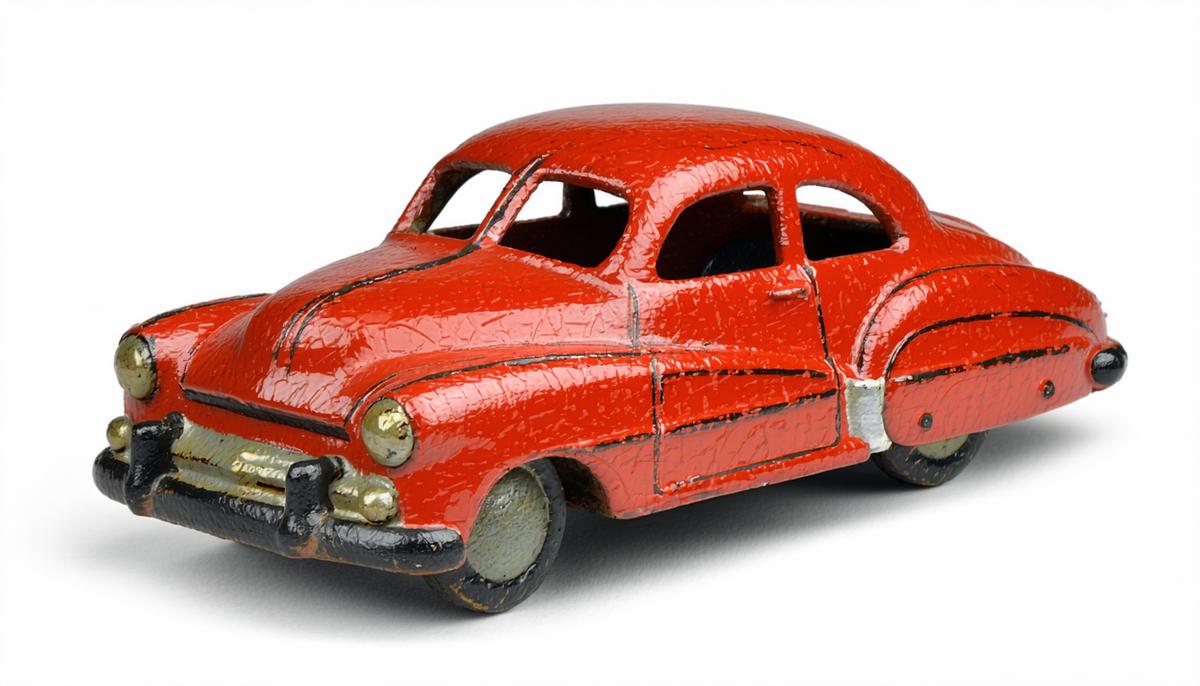
- Casting methods: Original cars were made through sand casting, resulting in smoother surfaces and sharper details compared to modern reproductions.
- Surface textures: Authentic pieces have smoother finishes and clearer details. Check inside and under the cars for the best feel of the texture.
- Paint: Original cars often had thicker paint layers applied by dipping, resulting in distinct chips that reveal multiple layers underneath. Reproductions typically have thinner, sprayed-on paint.
- Fasteners: Vintage toys often used peened-over metal pins or concealed bolts. Phillips head screws are a sign of modern production.
- Color: True vintage pieces might reveal a dark brown or blackish shade from the iron itself, while newer pieces can be more grayish.
The Cultural Impact of 1950s Cast Iron Toy Cars
Cast iron toy cars in the 1950s were more than just playthings; they reflected America's love affair with automobiles. These miniature vehicles sparked children's imaginations, allowing them to create their own adventures and stories.
The toy industry capitalized on the nation's car culture, producing designs that mirrored real vehicles. This helped perpetuate the fascination with automobiles among younger generations.
These toys represented the era's values of innovation, prosperity, and individuality. They invited kids to dream big, fostering an interest in mechanical wonders that would contribute to the thriving automotive scene in later years.
In essence, 1950s cast iron toy cars embodied the spirit of an era, representing a society on the brink of modernity and fueled by chrome-plated dreams of brighter tomorrows.
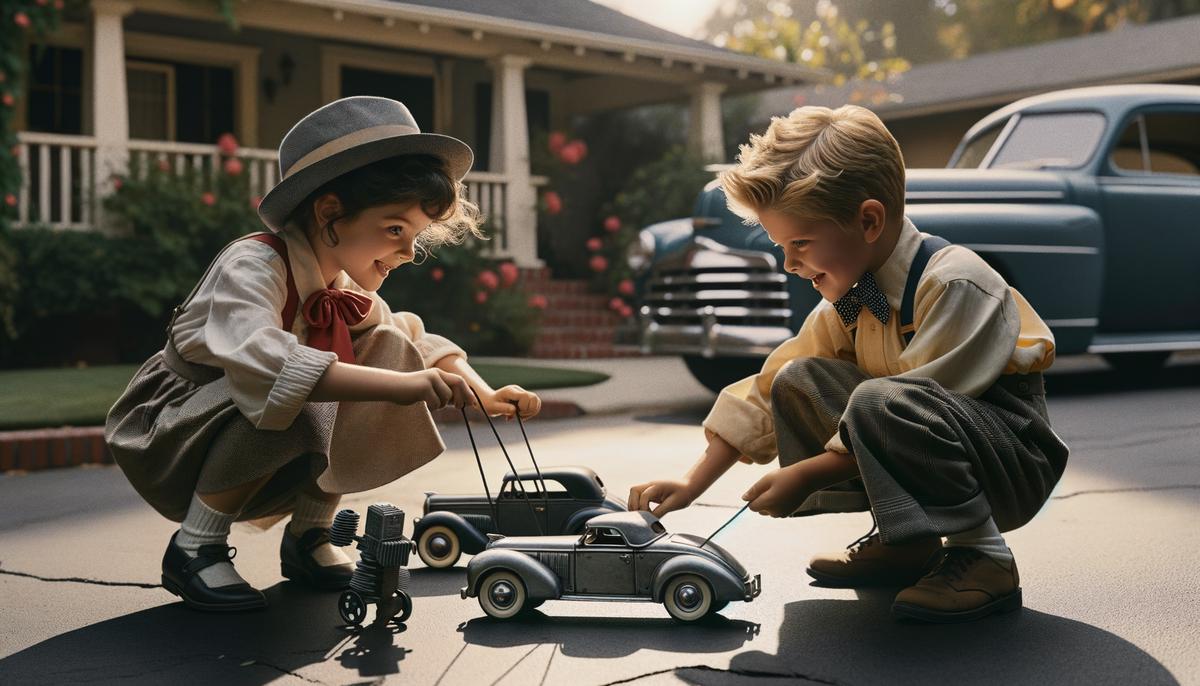
Whether you're a collector or just someone who appreciates a good story, these 1950s cast iron toy cars offer more than just nostalgia. They remind us of an era filled with dreams and creativity, where every little car held the promise of adventure and possibility.
- Jacobs CM. Kenton Cast Iron Toys. Charleston, SC: Arcadia Publishing; 2008.
- Lowe T. Round 2: Keeping Vintage Brands Alive. Toy Collector Magazine. 2023;45(2):18-24.
- Duellman E, Duellman B. Elmer's Auto & Toy Museum: A Collector's Legacy. Antique Toy World. 2022;50(9):32-36.
- Smith R. Casting Techniques in Toy Manufacturing: Old vs New. Journal of Antique Collectibles. 2021;33(4):105-112.