
Captain Midnight and His Legacy
Captain Midnight, a hero of the 1950s, was more than just a character – he was a ticket to adventure for young minds. Starting on radio and later transitioning to television, Captain Midnight captured the imagination of families across America. With his steady voice and daring escapades, he became a partner in imagination for kids everywhere.
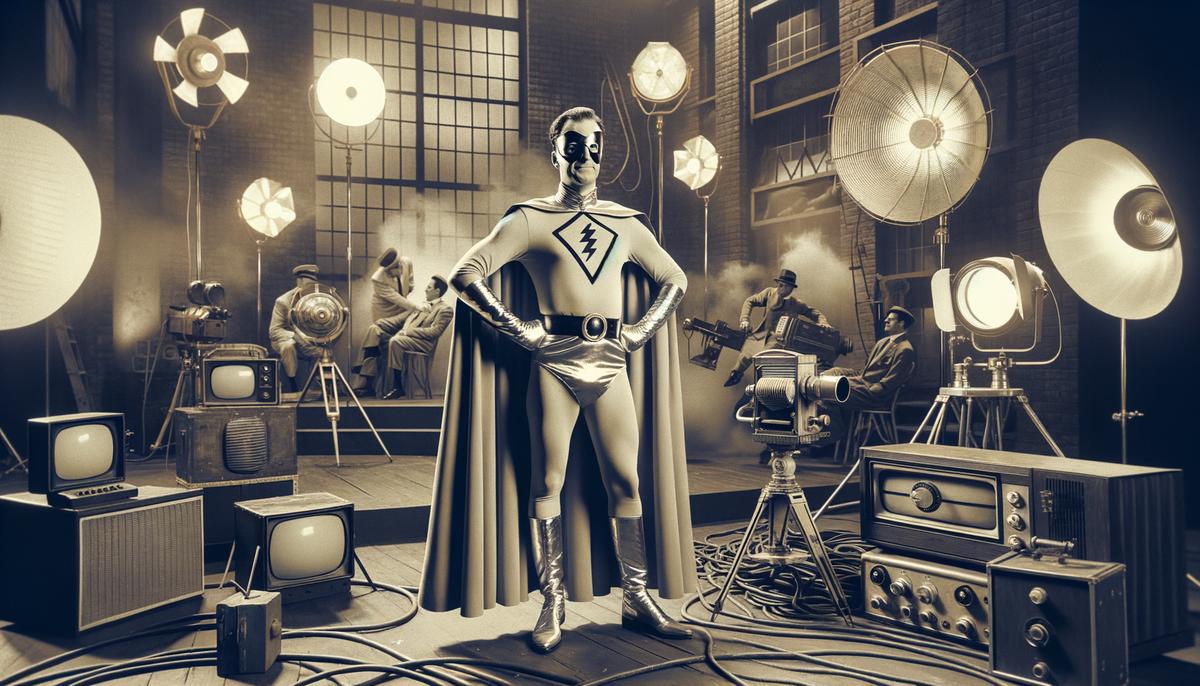
On TV, Captain Midnight's adventures became a visual spectacle, drawing children close to the screen. The show embodied post-war optimism, where justice always prevailed and a secret decoder ring could make any kid feel like a hero. Boys proudly wore their Secret Squadron badges, each decoding message a call to action.
Captain Midnight's themes of bravery, integrity, and ingenuity resonated with the era's values. The show was a beacon of hope, mirroring what parents wanted their children to embody. Even small-town kids understood these simple truths thanks to Captain Midnight and his crew.
The cast was memorable too:
- Ichabod Mudd: The trusty sidekick, could lighten any mood with a quip.
- Aristotle "Tut" Jones: Brought science to Main Street living rooms.
The show's popularity was as enduring as a pair of Levi's – a respected part of American life.
Collectibles like the decoder ring brought the show's excitement into real life. A simple twist could transform an ordinary afternoon into an important mission. These gadgets were playground treasures, marking their owners as part of an exclusive club.
Captain Midnight remains a fond reminder of simpler times, when values were clear-cut and every good story needed a hero worth cheering for.
Decoder Rings: A Cultural Phenomenon
Decoder rings were more than just toys; they were passports to adventure. Tucked in cereal boxes or given as Ovaltine prizes, these rings were badges of belonging to the Secret Squadron. For 1950s kids, owning one was as exciting as finding a fresh-baked pie on the windowsill.
Ovaltine smartly linked their product with Captain Midnight's excitement, creating a craze that had kids begging for malted goodness. Food companies tapped into both imaginations and appetites. Each Ovaltine jar was a step closer to cracking the next vital message.
These rings made storytelling interactive. By solving coded messages, children became part of the action. For a small-town kid, decoding these messages felt as triumphant as a baseball star's winning streak.
The marketing behind the rings was clever: make the audience feel crucial to the story. This turned viewers into participants, showing off the era's creativity. The rings became cultural icons, as memorable as Elvis's hair or James Dean's rebel look. They captured an age of innocence when every child could be their own hero.
"Justice, through strength and courage."
This was the show's tag line, often decoded by eager young fans.
Today, decoder rings bring back memories as sweet as a chocolate malt. They remind us of a time when simple toys could spark friendships, fuel imaginations, and turn ordinary days into grand adventures.
Reflecting on Captain Midnight and the decoder rings brings a sense of nostalgia, capturing a time when stories were woven with imagination and values. These cherished memories remind us of an era where simplicity met adventure, leaving an indelible mark on those who lived it.
Fun Facts about Captain Midnight:
- The TV show featuring Captain Jim "Red" Albright, played by Richard Webb, began on September 9, 1954, on CBS.
- It ran for 39 episodes until January 21, 1956.
- Olan Soule was the only actor to perform in both the radio program and the television program.
- Webb R. Captain Midnight Television Series. CBS. 1954-1956.
- Soule O. Captain Midnight Radio and Television Programs. CBS Radio and CBS Television. 1938-1956.