
In the 1950s, people imagined the future as a mix of technological wonders and societal changes. While some dreamed of flying cars and harmonious living spaces, others worried about overpopulation and technology's impact. This blend of optimism and caution shaped how folks back then pictured what lay ahead.
Technological Predictions
In the 1950s, the future seemed like a cartoon come to life, full of fantastic gadgets we thought would transform our daily routines. Dreams of jetpacks, flying cars, and robots weren't just for comic books—they felt like they were right around the corner.
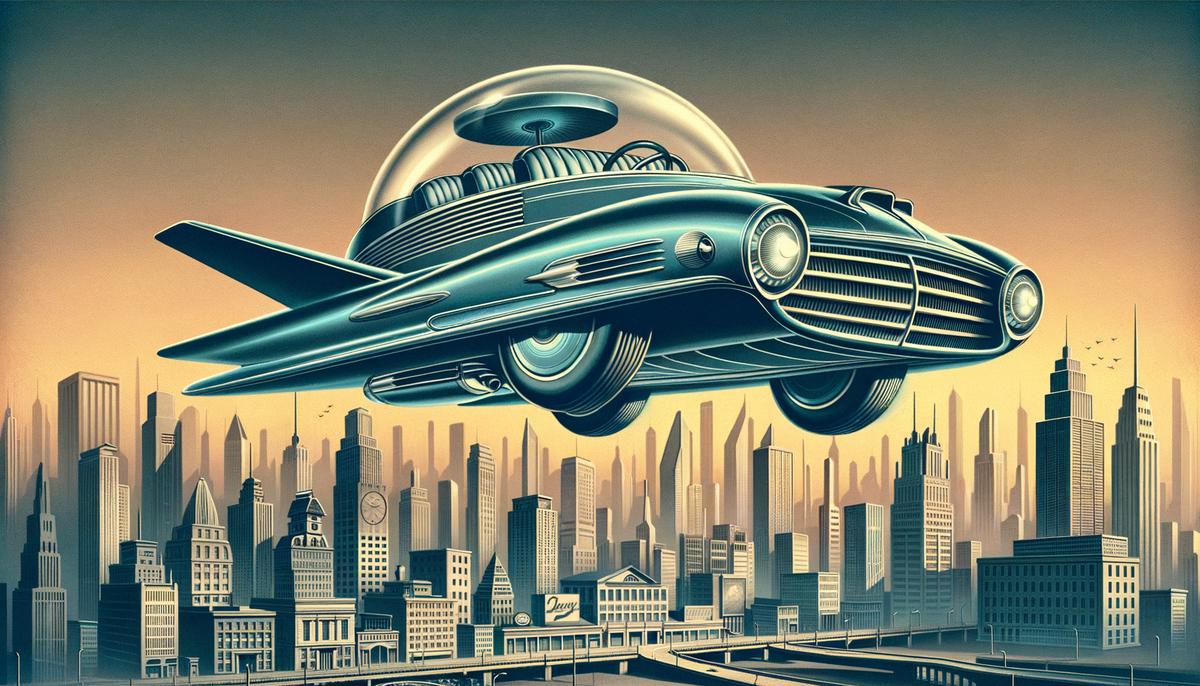
Take personal air travel. Folks imagined zipping around the skies like James Bond. Flying cars seemed as certain as rain in April. Now, those dreams didn't quite pan out, but boy, did we have fun imagining it.
Videophones were another hot ticket. Picture chatting with Aunt Edna face-to-face instead of waiting for her long-winded letters. Today, we've got video calls in our pockets, but back then, it was still a pipe dream.
Home automation was the bee's knees! Imagine a world where:
- Your coffee pot knew when you woke up
- Curtains opened themselves
- Robots handled all the daily chores
The idea of a smart home was as thrilling as a walk on the moon. Today's tech would make any 1950s housewife do a double take.
While not every gizmo from the 50s came to life, they weren't all pie in the sky either. We might not have flying cars, but most of us are walking around with more information in our pockets than a whole library!
Societal Changes
The 1950s weren't just about dreaming up gadgets; society was going through big changes too. The vision was clear: more leisure, less work. People believed technology would give us more time to relax. It's like they imagined a future where your boss would say, "Go ahead, take a little snooze!" instead of piling up your desk with paperwork.
Urban planning got funky. Folks dreamed of bubble domes over neighborhoods to control the weather. These visions were all about safe, easy living spaces.
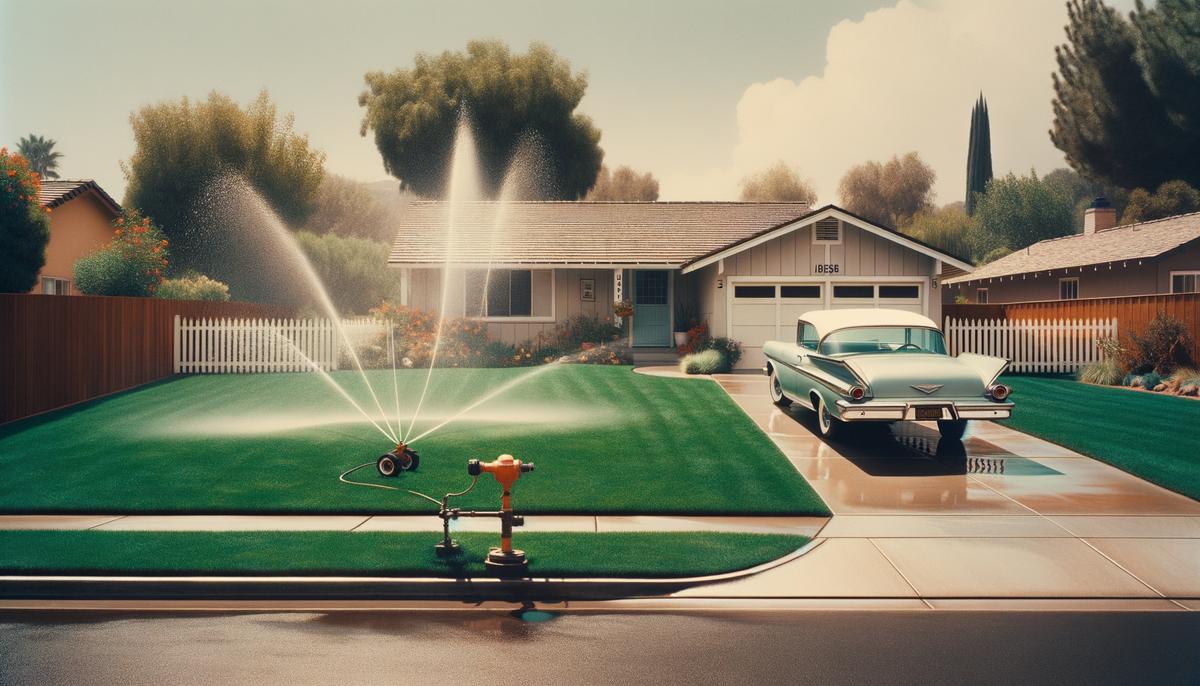
The suburban dream was in full swing. People were leaving cities for white picket fences and cul-de-sacs. New 'planned communities' like Levittown popped up everywhere, perfect for barbecues and lawn sprinklers.
At work, people hoped for less time on spreadsheets and more time with family. They imagined flexible schedules and 'quality time' at home. While we didn't end up in a total leisure utopia, those dreams of a carefree future still stir the imagination.
In every way, 1950s America hoped and dreamed big—with a Coke in hand and tunes on the jukebox.
Utopian vs. Dystopian Visions
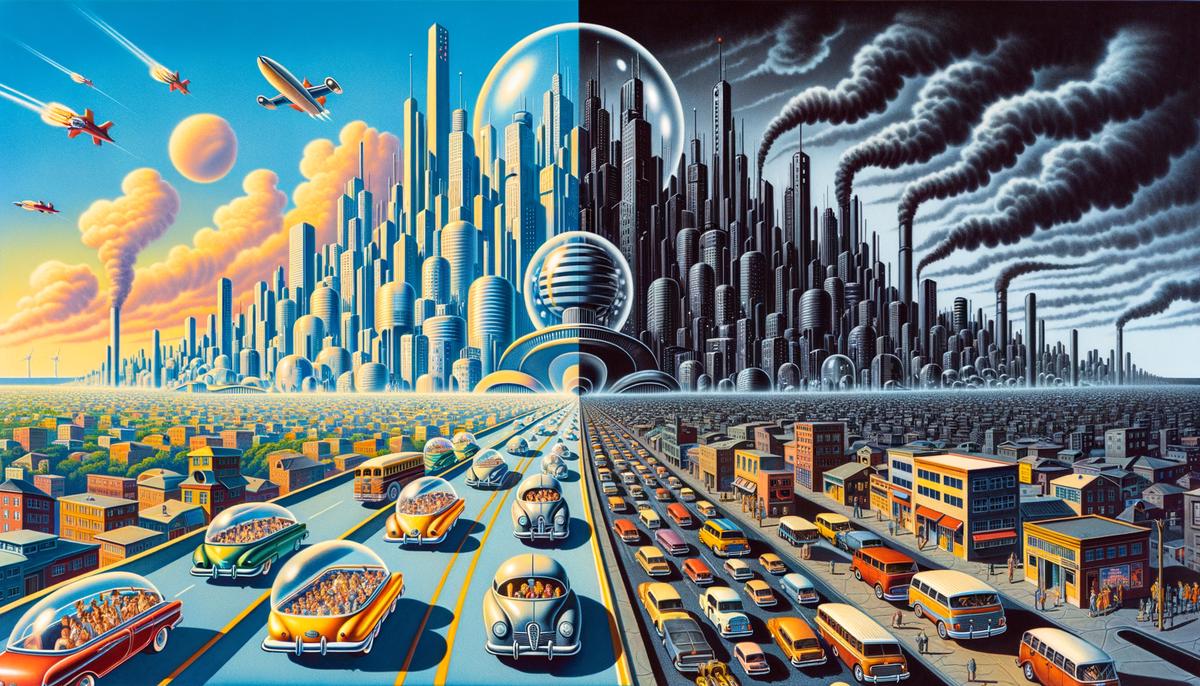
The 1950s' view of the future wasn't all sunshine and rainbows. Between dreams of clean, efficient cities and fears of being buried under skyscrapers or overwhelmed by tech, there was a whole spectrum of possibilities.
Some imagined cities that controlled the weather and cleaned themselves up. But others worried about smog and chaos if we didn't get our act together.
Overpopulation was a hot topic. Would we have:
- Sprawling farms with food at the push of a button?
- Or densely packed cities with dwindling resources?
The idea of too many people in too small a space had some folks nervous.
Technology was both exciting and worrying. For every dream of robo-assistants making life easier, there were fears of machines taking over while humanity took a backseat. Some wondered if we'd end up underemployed and overwhelmed in a world run by gadgets.
The 50s didn't just dream in black and white; they painted a whole mural of potential futures. Our folks back then weren't afraid to think big or worry a little as they tried to peek beyond tomorrow's doorstep.
While not every dream from the 1950s came true, those hopeful glimpses into the future still inspire us today. They show that even when things are uncertain, imagining better days can keep our spirits high and push us forward.
- Butler OE. Parable of the Talents. New York: Seven Stories Press; 1998.
- Orwell G. 1984. London: Secker & Warburg; 1949.
- Forster EM. The Machine Stops. Oxford and Cambridge Review. 1909.
- Wells HG. When the Sleeper Wakes. London: Harper & Brothers; 1899.
- Bradbury R. Fahrenheit 451. New York: Ballantine Books; 1953.
- Robertson M. Futility. New York: M.F. Mansfield; 1898.
- Pinsker S. A Song for a New Day. New York: Berkley; 2019.
- Asimov I. Foundation. New York: Gnome Press; 1951.
- Hossain RS. Sultana's Dream. The Indian Ladies' Magazine. 1905.