
Cultural Significance of 1950s Lemonade Stands
Neighborhood lemonade stands were a staple of 1950s suburban life. These small ventures offered kids a taste of entrepreneurship and taught valuable life skills.
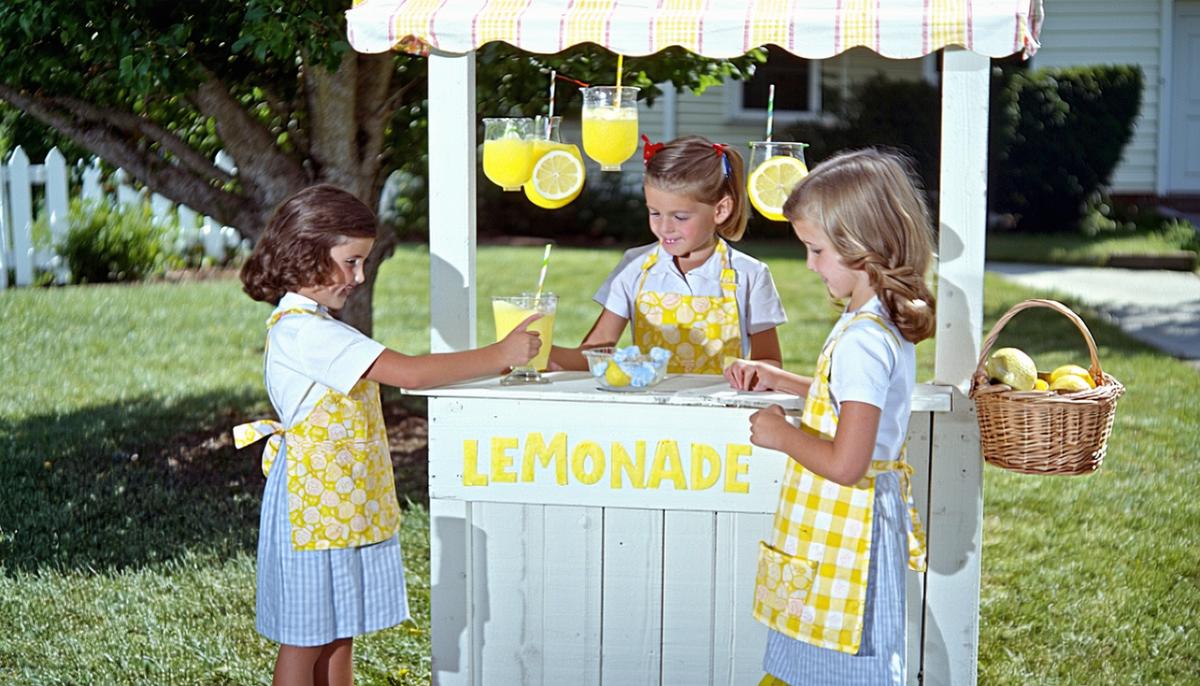
Picture a group of kids in homemade aprons, gathered around makeshift counters. One would be the artist, creating colorful signs declaring "Ice-Cold Lemonade – 5 Cents!" Another would act as a greeter, waving at passing cars.
These stands were more than just about selling drinks. They were about:
- Charm
- Negotiation
- Community spirit
Kids learned simple economics, from setting prices to saving for that new bicycle or a trip to the candy store.
Lemonade stands mirrored the post-war optimism of the '50s. They brought neighbors together, creating a buzz of activity and conversation. Even shy folks would come out for a sweet sip and a chat.
For many, these stands symbolized innocence and youthful ambition. Families would gather around, sharing laughs and stories. It was a slice of 1950s life, where simple pleasures and community connections took center stage.
Nostalgic Neighborhood Gatherings
Lemonade stands were magnets for neighborhood gatherings, creating little hubs of summertime social life. Imagine the scene: summer heat, distant lawn sprinklers, and a charming stand at the corner with hand-painted signs and excited kids.
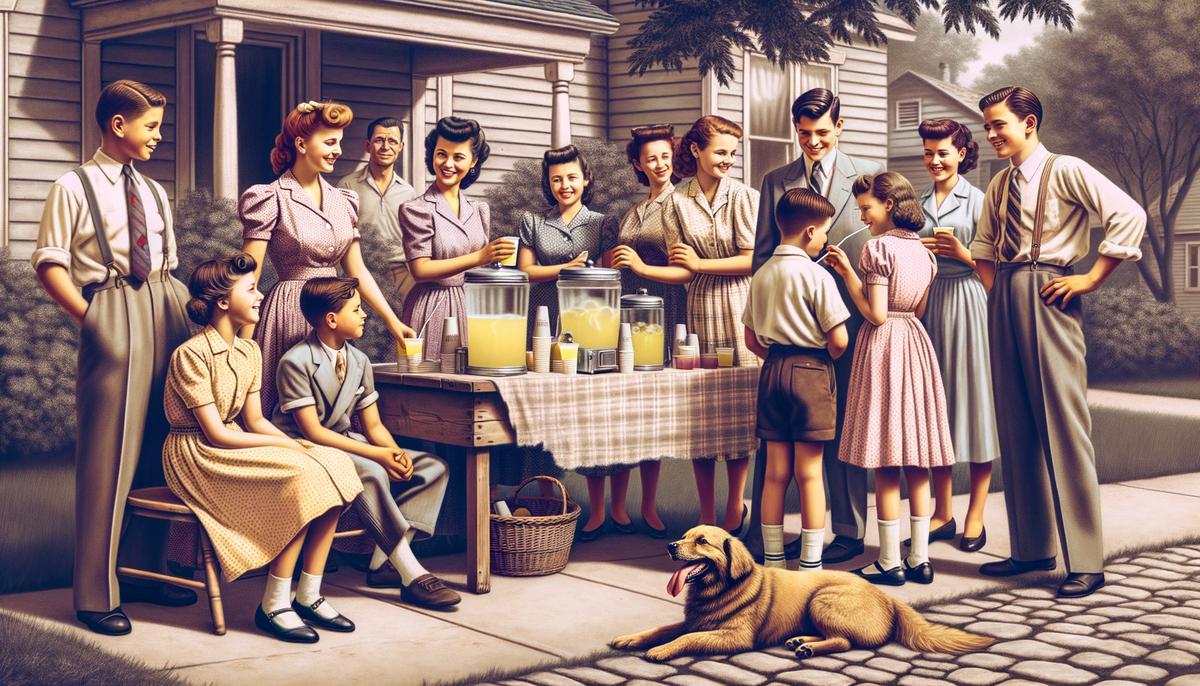
These stands naturally drew out the community. Moms pushing strollers would stop for a refreshing break and a chat about recipes or gardening. Dads would share stories while enjoying a second cup. Even the family dog might find a shady spot nearby.
Back then, neighbors were more than just people living next door. There was a real sense of camaraderie fostered by these shared moments. The post-WWII period had created a desire for connection and enjoyment of simple pleasures.
"The reasons for the lemonade stand's demise are probably quite complex and might provide a good thesis subject for a social study student some day. Cars go by too fast now to stop in time. There are usually plenty of bottle soft drinks in the refrigerators, too. Our kids are kept so busy these summers with organized play and camps they no longer find the long bored hours in which to cook elaborate financial plans."
Lemonade stands were like mini festivals. They were spots where community bonds grew stronger through:
- Laughter
- Taste tests
- Friendly debates over lemonade recipes
As glasses clinked and stories unfolded, a shared history took root.
Kids learned valuable social skills at these stands. They practiced conversation, courtesy, and how to make others feel welcome. It was an outdoor classroom where they picked up life lessons about community and shared joy.
These gatherings left lasting impressions. The image of neighbors chatting around a lemonade stand, faces flushed from summer breezes, captures a moment of simple happiness that many still fondly remember.
In 1950s suburbia, lemonade stands were more than just kid-run businesses. They were focal points of community spirit and youthful dreams. Through these simple setups, children learned about life, business, and human connection in ways that stuck with them long after the last cup was sold.
- New York Times. Lemonade Business in New York City. July 1880.
- Green Bay Semi-Weekly Gazette. Bay Beach Lemonade Stand Construction. August 1900.
- Green Bay Press-Gazette. The Demise of Lemonade Stands. July 1951.