
History and Evolution of Toy Farm Animals
In the 1950s, kids weren’t just glued to cowboy shows on TV. They were creating their own rural adventures with metal toy farm animals. This trend kicked off in the 1920s, thanks to Britains Limited. They added a touch of metal magic to the toy world by creating lifelike farm scenes, from quaint barns to busy hayfields.
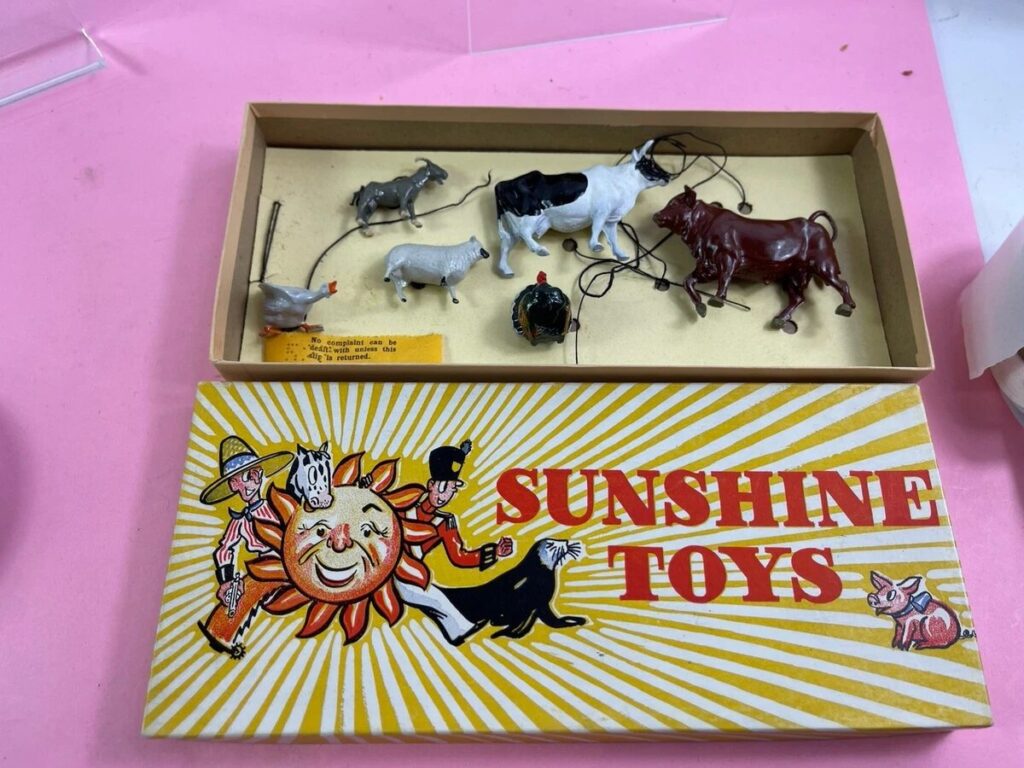
By 1950, these toy animals were all the rage. Companies like Marx joined in, releasing sets under the “60mm” and “54mm” labels. They used clever molds to make all sorts of barnyard characters:
- Roosters
- Ducks
- Pigs
- Cows
- Horses
These toys came in different materials, from lead to plastic, as toy makers tried to balance fun with safety.
Kids loved these toys for their looks and how they could play with them together. Collectors today still treasure these connections to the past. Sometimes, they even stumble upon rare pieces at auctions, like a “Pipes and Drums of the Black Watch” set that’s now worth a pretty penny.
These toys weren’t just for play. They also brightened up homes as decorations. You might spot some vintage lead pieces on shelves, a nod to simpler times. Pictures of these toys pop up online, bringing back memories for folks who grew up in the ’50s and sparking curiosity in younger generations.
Materials and Manufacturing Techniques
In the 1950s, metal was king when it came to toy making. Companies like Britains Limited and Marx combined creativity with tradition to craft farmyard scenes that were tough enough for playtime.
These companies used metals like lead and tin. Lead was great for detailed designs, while tin didn’t rust and was easy to shape. The process was pretty cool:
- Pour molten metal into molds
- Let it cool
- Out came tiny cows, pigs, and chickens
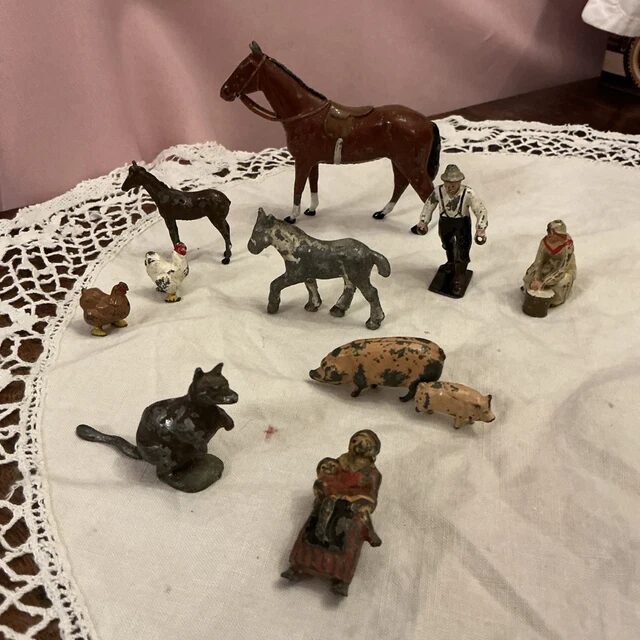
But the real magic happened after the metal cooled. Skilled workers hand-painted each animal with care. They added intricate patterns and lifelike colors that gave each toy personality. From rosy-cheeked piglets to shiny-coated horses, every brushstroke brought these barnyard pals to life.
Today, collectors appreciate these toys not just for their history, but for the skill that went into making them. Each hoof and feather tells a story of craftsmanship from a time when toys were more than just plastic and wires.
Cultural Impact and Collectibility
Back in the ’50s, kids didn’t need screens to have fun. Those metal farm animals were the stars of many imaginary adventures. As children played, they picked up lessons about community and nature without even realizing it.
These toys fit right into the mood of the times. After the war, people were looking for a return to simpler living. These farm sets captured that feeling perfectly, bringing a bit of country charm into every home.
"It is just that kind of toy which can be played with equally well by the youngest or oldest child, not to mention a large number of grownups,"
This quote from Britains’ 1940 catalogue still rings true today.
Fast forward to today, and these toys are hot items for collectors. Fans scour auctions, antique markets, and online shops for rare finds. A well-preserved set can fetch a pretty penny, especially if it has unique details or an interesting backstory.
What makes them so special? Maybe it’s the nostalgia factor, or the skilled craftsmanship that went into each piece. Whatever the reason, these metal farm animals are more than just toys. They’re little time capsules that take us back to the good old days of the 1950s.
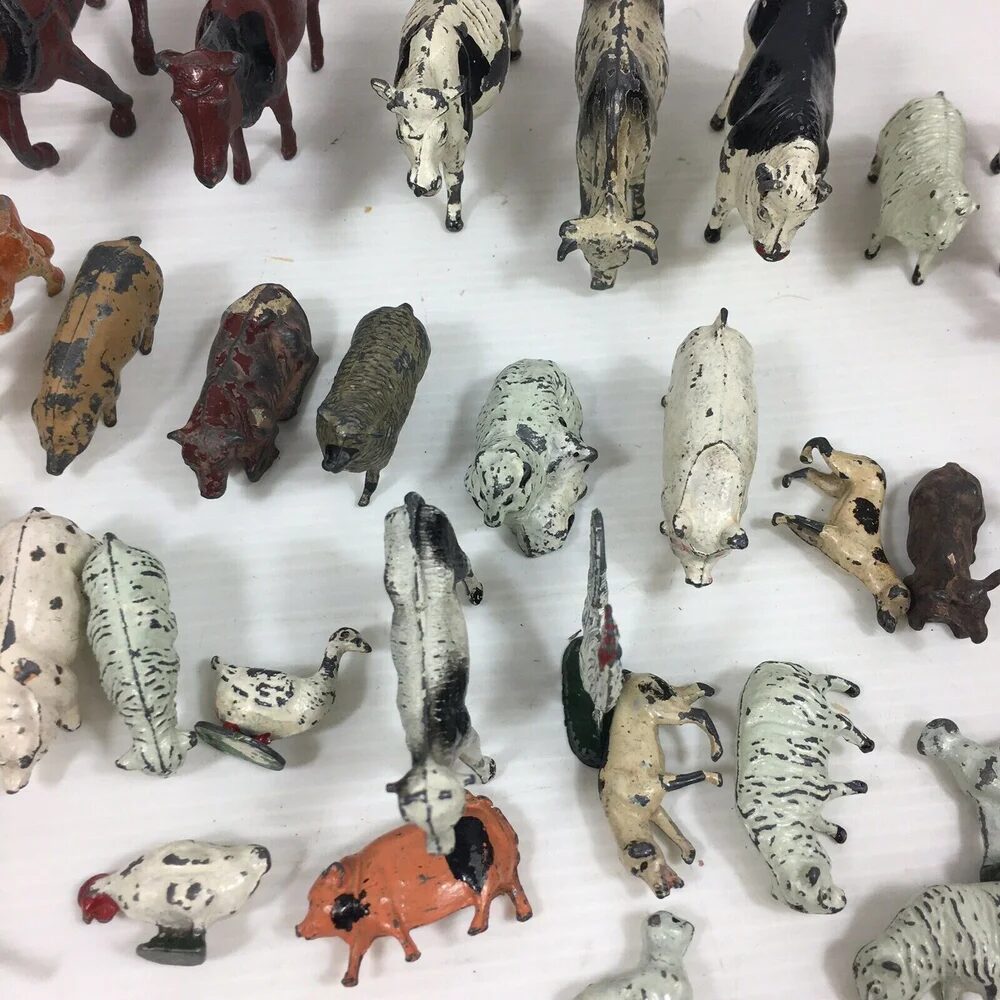
Looking back, it’s clear these toy farm animals were something special. They let kids create their own little slice of country life right in their living rooms. Today, they’re still bringing joy to collectors and anyone who loves a bit of 1950s charm.
- Opie J. Toy soldier consultant to Bonhams Auctions. Personal interview.
- Britains Limited. Company catalogue. 1940.