
In the 1950s, metal toy soldiers captured kids' imaginations, serving as both playthings and windows into history. These miniature figures reflected a world recovering from war and embracing new possibilities. Let's explore how these tiny soldiers shaped childhood adventures and cultural stories.
History of 1950s Metal Toy Soldiers
The 1950s saw kids playing with metal toy soldiers, taking them on epic battles in their living rooms. These little warriors weren't just toys, they were a glimpse into history and creativity.
Britains, a well-known UK company, perfected the art of hollow-casting lead figures. Their vividly painted soldiers were like playground superheroes. Across the Atlantic, Barclays in New Jersey made figures that seemed to leap, step, or salute—bringing playtime to life.
In Europe, companies like Hausser in Germany were innovating with composition figures, combining materials like sawdust and glue. This era also saw plastic starting to gain popularity, but metal soldiers held their ground, especially among big names like Britains and Barclays.
These toy soldiers mirrored past conflicts, allowing children to reenact battles they'd only heard whispers of from their parents. Whether in backyards or on living room floors, these figures provided backdrops for countless adventures.
In 1966, concerns over lead poisoning led to the end of lead figures. Companies like Britains had to adapt, embracing plastic figures. This change marked a new chapter in the toy soldier story.

Manufacturing and Materials
In the 1950s, metal toy soldiers were mainly made from lead, prized for its malleability. Workshops buzzed with activity as craftsmen created finely detailed figurines.
Britains led the way with their hollow-cast method, where liquid lead was poured into molds to create lightweight soldiers. However, concerns about lead poisoning eventually led to a search for safer alternatives.
- Pewter
- Alloys (mixing tin with elements like copper)
- Combinations of metal with resin or plastic
This shift wasn't just about safety; it opened doors for innovation. New techniques emerged, allowing for more vivid finishes and mass production.
While plastic gained ground, metal maintained its presence, now lead-free. Manufacturers embraced new technology to refine their craft, proving that even in miniature, big changes can happen.

Cultural Impact and Collectibility
1950s metal toy soldiers were more than playthings; they were gateways to imaginary worlds. In post-war America, these figures invited kids to recreate historical battles or dream up new adventures. Parents saw them as educational tools, teaching history, strategy, and even empathy.
Over time, these modest metal figures became coveted collectibles. They're valued not just for nostalgia, but for their craftsmanship and historical significance. In the collector's market, condition, rarity, and provenance are key. Pristine figures, especially those "never-been-played-with," can fetch high prices at auctions.
Factors affecting value:
- Uniform details
- Soldier's stance
- Original paint job
- Authenticity
- Completeness of sets
Note: Even well-intentioned touch-ups can decrease value.
Despite technological advances and plastic alternatives, the charm of metal soldiers endures. They connect us to history in a tangible way, proving that the allure of brave toy soldiers ready for imaginary battles is timeless.
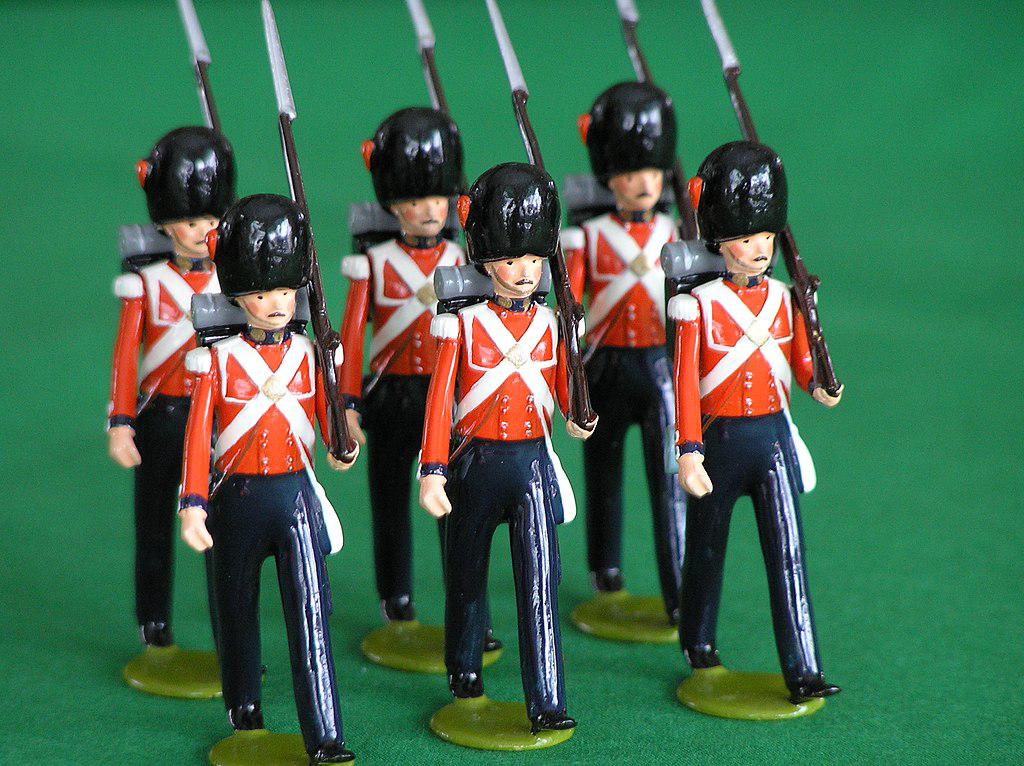
Metal toy soldiers of the 1950s were storytellers of their time, connecting generations through shared tales of bravery and imagination. Their legacy continues to charm collectors and enthusiasts today.
- Opie I, Opie P. Children's Games in Street and Playground. Oxford University Press; 1969.
- Garratt J. Collecting Toy Soldiers in the 21st Century. Pen and Sword; 2011.
- Green J. Toying with Militarism: A Historical Perspective. Journal of American Culture. 1988;11(2):29-36.