
The Experience of Picking Up Glass Milk Bottles
There you are, still in your pajamas, opening the front door to find a couple of glass milk bottles in the metal milk box. That special little clink as you pick them up is a reassuring start to the day.
These weren't just any bottles. They were sturdy glass that let you see that layer of cream floating on top. The thrill wasn't just in the retrieval; it was that comforting reliability, knowing the milkman had done his job again.
The milkman was practically a family member. Punctual as a school bell, he'd come down the street, always tipping his hat if he caught you peeking out the window. He'd switch out the empties for new bottles and vanish, leaving behind the promise of cold milk.
There was always a bit of excitement, rushing out to see if you'd scored an extra bottle or something special like a pint of cream. Sometimes you'd spot a note left by Mom for a special request, knowing something tasty might grace the breakfast table soon.
Glass bottles were more than just containers. They were little pieces of history, cool in your hand. You'd stack the empties in the sink, imagining their journey back to the dairy for another fill.
As you carried them inside, you couldn't help but smile. It was nice knowing that tomorrow, you'd get to do it all over again.
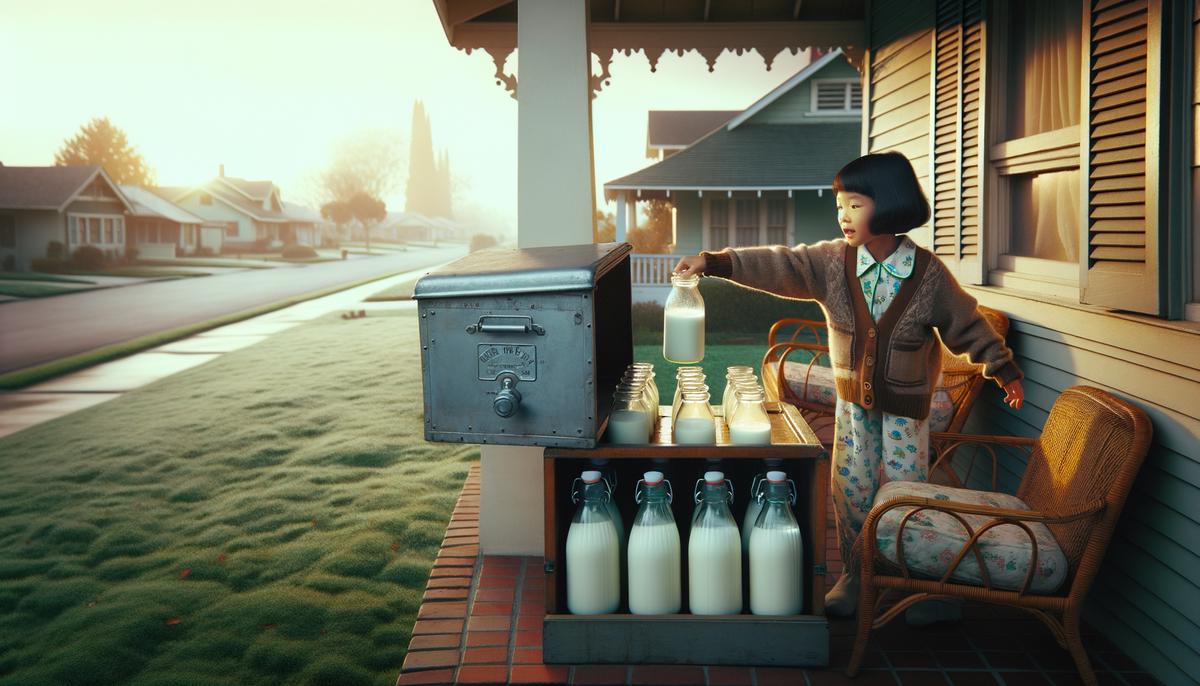
The Evolution and Nostalgia of Milk Delivery
Glass milk bottles have come a long way since the late 1700s when having a cow in the backyard was common. In 1785, Vermont pioneered a new era where people could rely on their local milkman to bring fresh milk right to their doorsteps.
The invention of the glass milk bottle in 1878 was a game-changer. These clear vessels became the face of professional milk delivery. Families gained the convenience of modernity in a bottle, with caps preserving milk's freshness until ready to pour.
Progress brought wheels into the mix—first horse-drawn carts, then motorized trucks. Milk delivery routes expanded, allowing more families to enjoy this service. It became a morning ritual of glass clinks and engine hums.
The 1930s brought the refrigerator, which reduced the need for daily milk visits. Coupled with the rise of supermarkets offering plentiful milk options, the milkman slowly faded from doorsteps across America.
Supermarket shelves offered milk in plastic and wax-paper containers—convenient and unbreakable. The friendly milkman started disappearing from everyday life as households loaded milk crates into their grocery trunks.
Yet, milk delivery has seen a resurgence. A desire for local and sustainable options has brought the milkman back, now with a digital twist. You can order your milk online, enjoying a taste of nostalgia with modern convenience.
The milkman remains a cherished symbol of Americana, reminding us of simpler times. Those vintage glass milk bottles stir warm memories, connecting us to the rhythm of the past amidst our daily hustle.
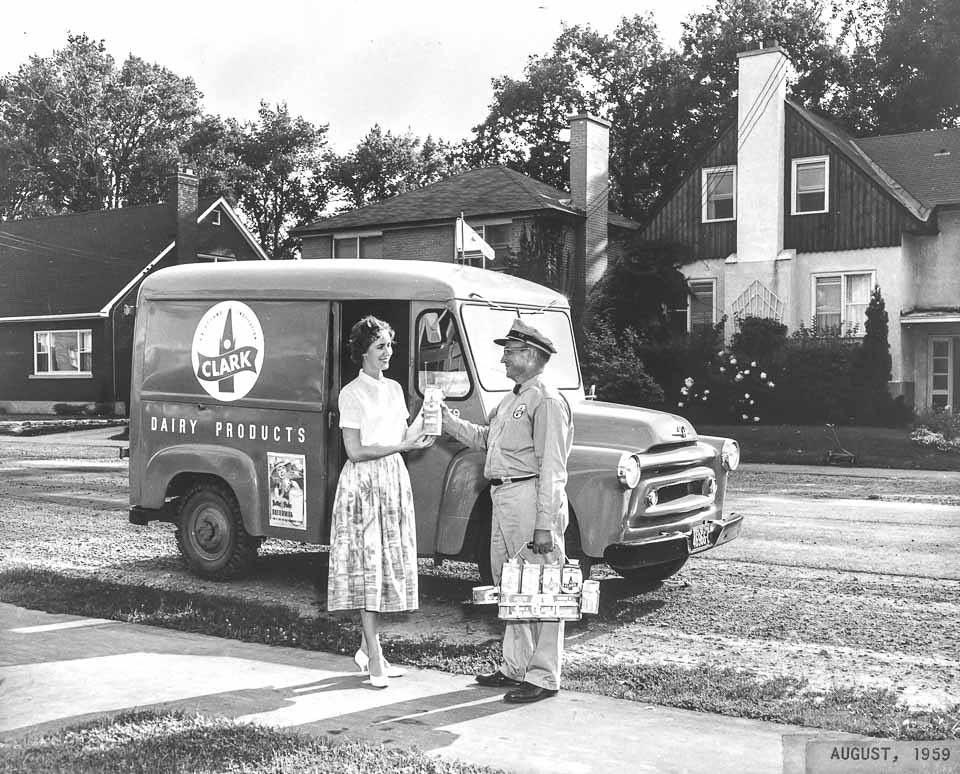
As you think back to those mornings with glass milk bottles waiting on the porch, there's a comforting sense of continuity. The simplicity of that era reminds us that sometimes, the smallest rituals can bring the greatest joy.
- Dairy Crest. Glass milk bottle production statistics. 2012.
- Phelps T. The British Milkman. 2010.
- Wassberg Johnson S. Food historian personal communication. 2023.
- Prizgintas A. Orange County Milk Bottle Museum. Personal communication. 2023.
- United States Department of Agriculture. Agricultural surveys. 1960-1970.
- Progressive Grocer. Grocery store market share report. 1960.