
History and Popularity of Tin Litho Airplanes
Tin litho airplanes from the 1950s were a big hit with kids and collectors alike. These toys, which originated earlier in the 20th century, really took off during the '50s. Their vibrant colors and unique designs made them stand out in toy shops and homes everywhere.
Manufacturers used tin lithography to create detailed prints directly on metal sheets. This process brought intricate patterns and bold colors to life, making each airplane a little work of art. Kids loved them for play, while adults appreciated them as collectibles.
In the post-war era, when aviation was capturing everyone's imagination, these toy planes let children explore the world of flight from their living rooms. Many models featured friction or wind-up propulsion, adding to the fun.
The market offered a variety of airplane models, from army jets to commercial liners. Each represented a piece of aviation history, allowing kids to imagine themselves as pilots or adventurers. Collectors treasured these models for their detail and the stories they told.
These airplanes weren't just toys or collectibles—they were cultural icons of their time. Like vinyl records today, tin litho airplanes offer a connection to an era of optimism and discovery.
Design and Features of 1950s Tin Litho Airplanes
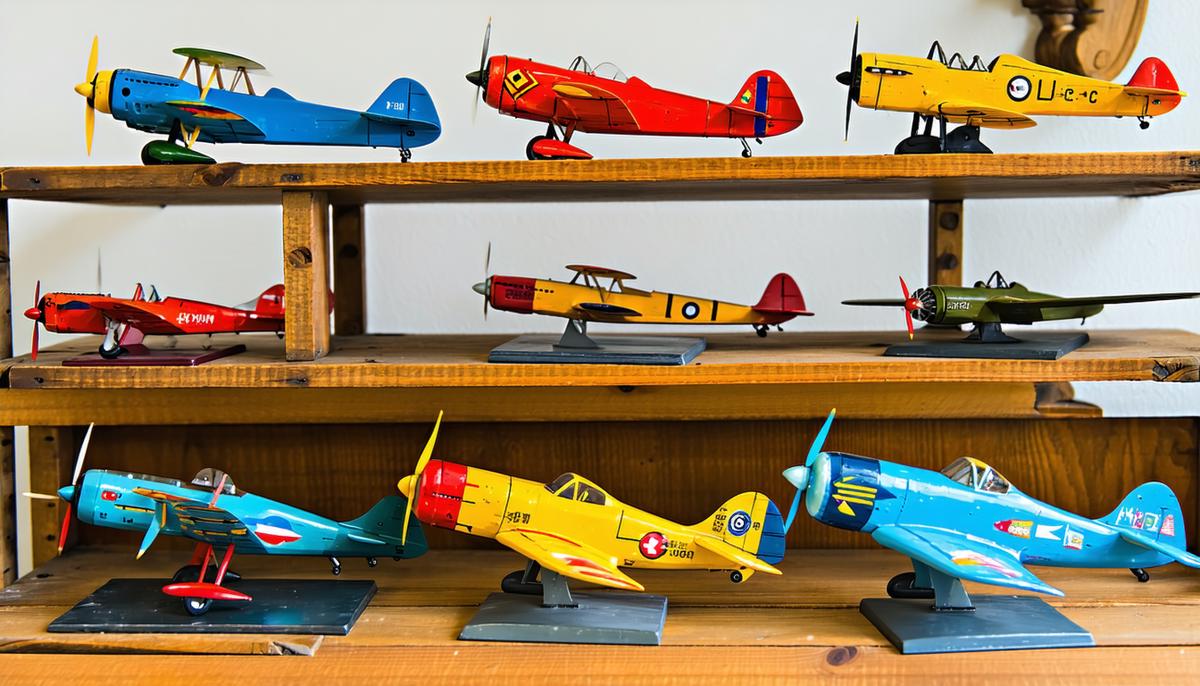
The 1950s tin litho airplanes were real eye-catchers. Their design elements were as flashy as a teenager's hot rod and more colorful than a Saturday morning cartoon. Every curve and line showcased mid-century artistry.
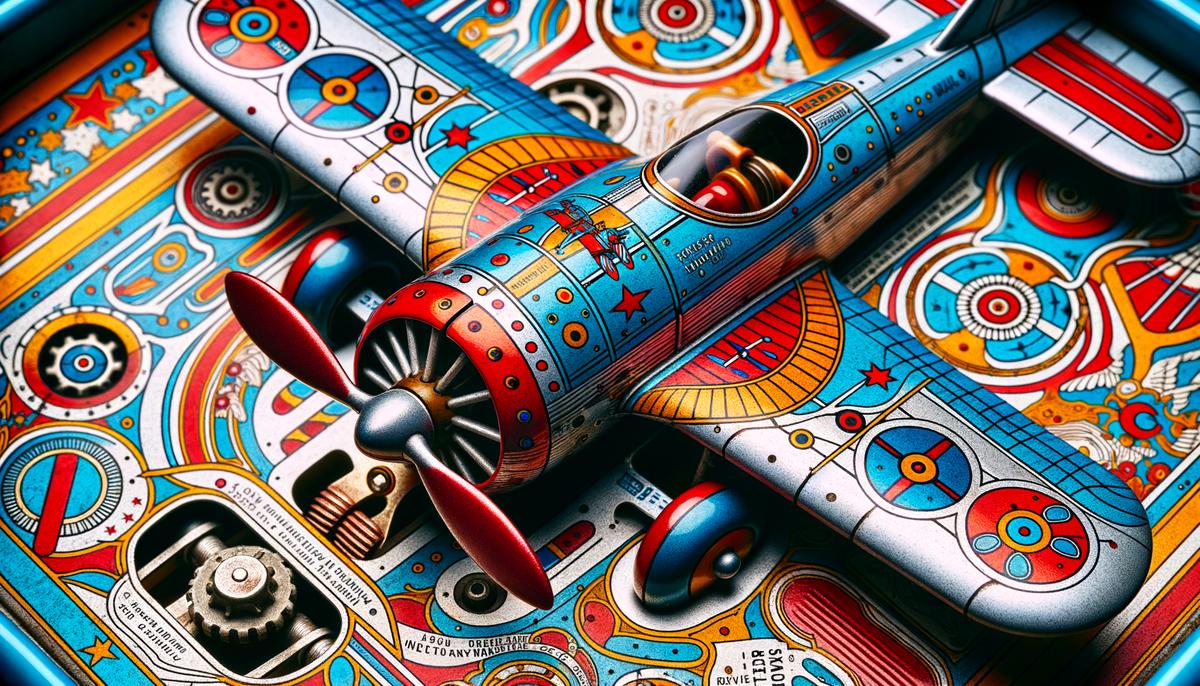
Those lithographed tin bodies were something special—like wrapping a comic book around metal. They sported bright, bold colors and carefully detailed art that made your eyes pop. Each plane felt alive with depictions of windows, rivets, and logos.
Many of these toy planes came with friction drives—a feature that was almost magical for kids back then. Give it a push, and off it would go, propelling forward with enthusiasm. This simple mechanism turned playtime into high-flying adventures.
The designers of the time didn't hold back on style. These weren't just toys; they were art on wings, standing out in any playroom. Hues and patterns rivaled the decade's most iconic fashion trends, with each plane sporting a mix of pastels and primary colors.
Some designs even included playful cartoon-like touches, featuring cheeky pilots or exaggerated details. These little extras added just the right amount of whimsy to spark a child's imagination.
Manufacturers and Notable Models
When it comes to 1950s tin litho airplanes, certain manufacturers stand out. These were the wizards behind those delightful metallic marvels that colored so many childhoods.
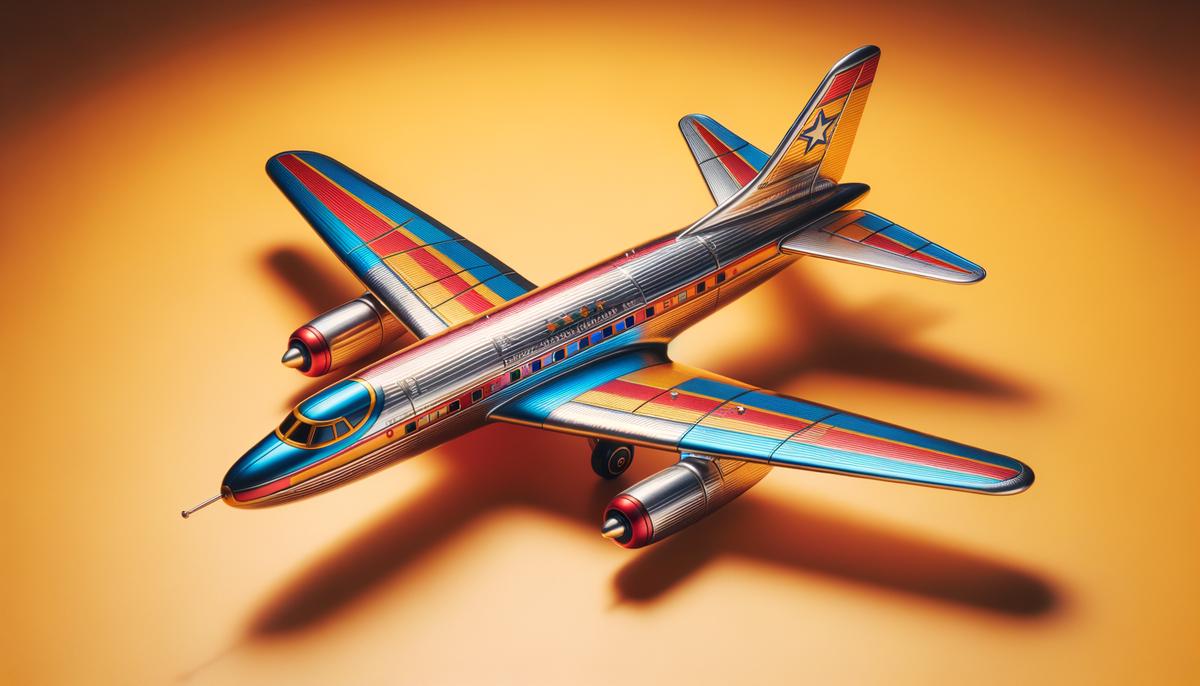
- Marx Toys was a big name in the industry. Their "Skycruiser Stratoliner 700" was a hit, known for its sleek lines and bold presence. Collectors today still prize this model for its ability to capture the imagination.
- Japanese companies like Yonezawa and TPS brought fresh ideas to the table. The "SPARKLING USAF Jet Fighter" from Yonezawa, with its 7.5" wingspan and detailed design, became instantly collectible.
- France's Jouef contributed the JF 815 windup Roll Over Airplane, blending tin and bakelite in a stylish package. It wasn't just a toy; it was an experience.
Other notable models included the "F80 AIRPLANE" and "PATROL PLANE" from Japanese brands. These toys were tough enough for playtime yet detailed enough for display.
Each manufacturer had its own style, making their planes as recognizable as popular soda brands. They weren't just making toys; they were creating memories and sparking imaginations.
Collecting and Valuing Tin Litho Airplanes
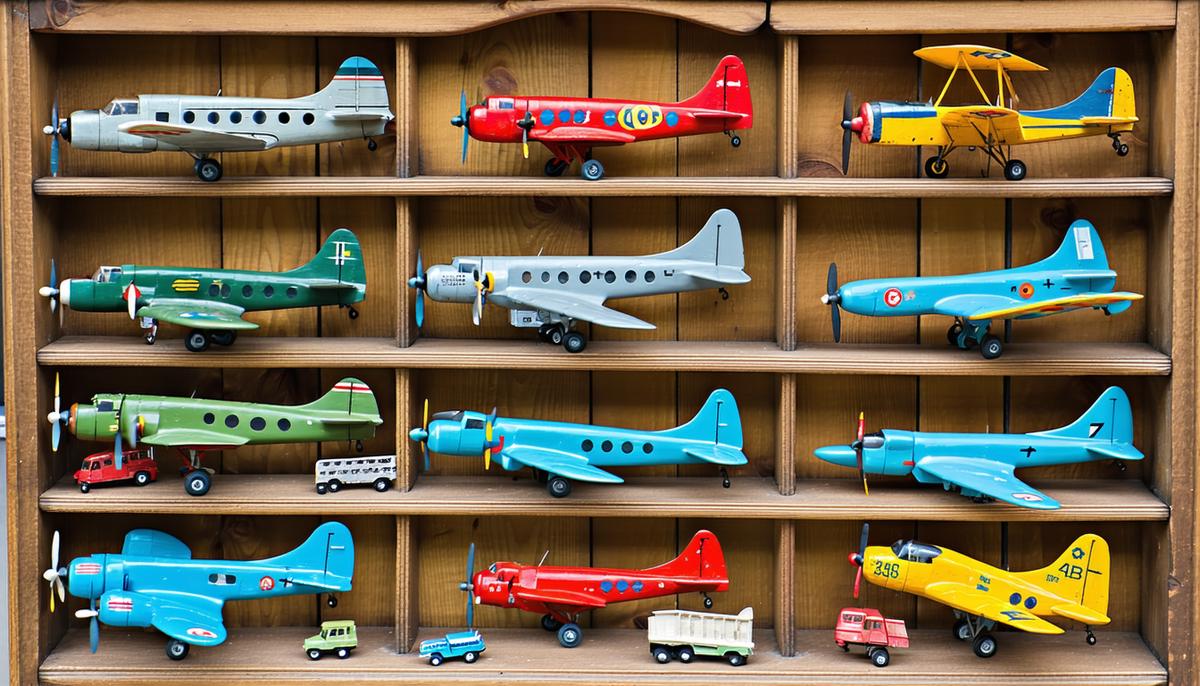
Collecting tin litho airplanes is like going on a treasure hunt. The thrill of finding that perfect piece adds excitement to the hobby. Today, these charming toys are sought after by collectors who see them as links to the past.
What makes these planes valuable? A few key things:
- Condition is crucial. A tin litho airplane in mint condition—no rust, perfect lithography, and all original parts—is what collectors dream of.
- Rarity plays a big role. Planes made in smaller numbers or by lesser-known companies often fetch higher prices. It's all about supply and demand.
- Provenance can boost value. If a model has an interesting backstory or connection to a famous person, it might be worth more.
For new collectors, here are some tips:
- Learn about the history of these planes. Knowing who made them and when is key.
- Keep an eye on auctions and collector forums for insights and opportunities.
- Remember, it's not just about value. Collect what you love and enjoy the stories behind each piece.
Whether you're just starting or adding to your collection, approach it with a sense of adventure. Each tin litho airplane you find is a piece of history, a reminder of a time when the future seemed full of possibilities.
Tin litho airplanes from the 1950s were more than just toys. They captured the spirit of an era filled with dreams and possibilities. These colorful creations continue to inspire and delight, reminding us of a time when imagination took flight.