
1950s Dance Styles and Popularity
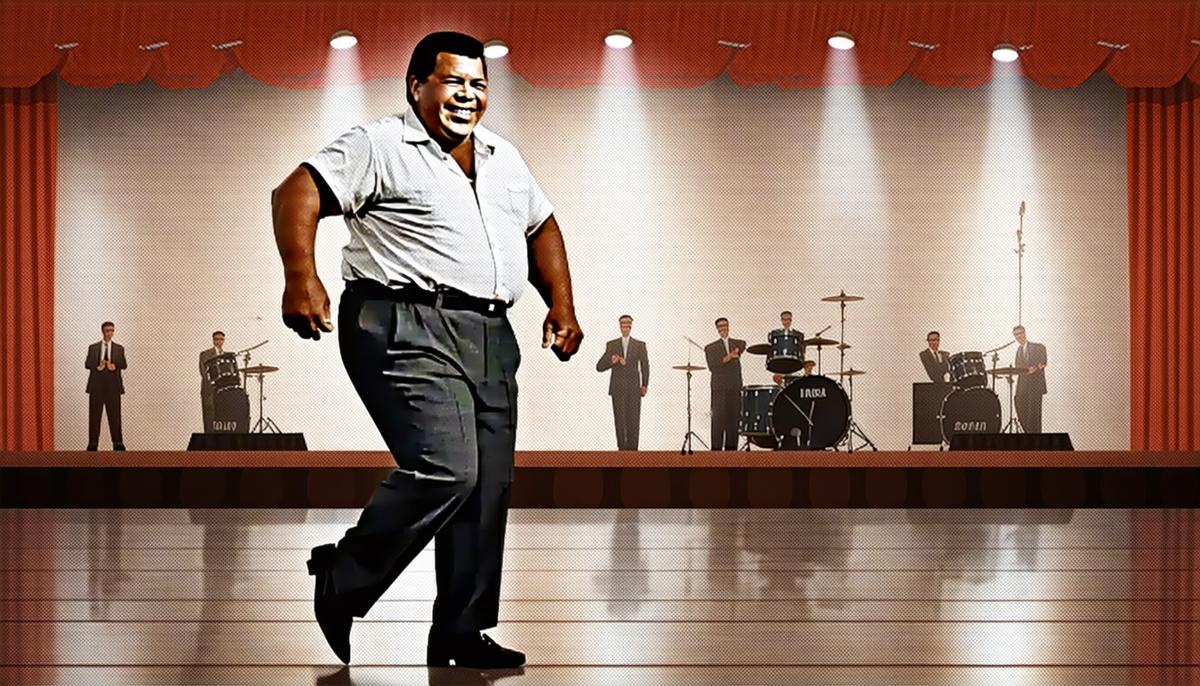
The 1950s saw some of the most iconic dance styles that got people moving. The Twist, made famous by Chubby Checker, had everyone swiveling their hips. Its charm was in its simplicity – no partners needed, just twist and let the music take over.
TV shows like American Bandstand helped popularize dances, turning everyday teens into stars. The Jitterbug, a high-energy Swing dance, matched the fast-paced lifestyle of the time.
The Hand Jive, born out of necessity in crowded spaces, crossed the Atlantic and became a hit. The Stroll, a line dance that created a runway-like atmosphere, found popularity through TV music programs.
Rock'n'Roll wasn't just a dance style, but a catch-all term for the lively moves of the era. Teens learned these steps through music shows and movies, bringing the energy of the dance hall into living rooms across America.
These dances weren't just fun – they were cultural markers of a society learning to let loose and enjoy life. Each move told the story of a nation spinning into a new era, one song at a time.
The Social and Cultural Impact of Dance
Dance in the 1950s was more than just moves – it was a social lifeline. Dance events became the heartbeat of communities, where people of all ages shared in the spirit of unity and joy. The post-war optimism of the era was reflected in these twirling dances, showing a growing zest for life.
For teenagers, dance gatherings were a chance to assert their independence. The dance floor became a canvas for self-expression, with each song an invitation to be part of something bigger.
These dances weren't confined to halls – they spilled over into living rooms and school gyms. Wherever there was a turntable, there was a potential party. The dance floor was a great equalizer – you just needed enthusiasm and a willingness to move.
TV helped spread this energy, showing a united youth culture that believed in fun and possibility. As people danced, friendships blossomed and romances sparked under the glow of fairy lights.
The exuberance of these dances mirrored America's entrepreneurial spirit and growing consumer culture. Malls offered new meeting places for teens before they danced the night away.
In many ways, dance reflected the era's attitude. The fast tempos echoed the pace of change, while the freedom of movement symbolized growing individual expression. Beyond the steps, dance in the 1950s captured the social energy of a remarkable decade, showing how shared rhythms could form communities and shape culture.
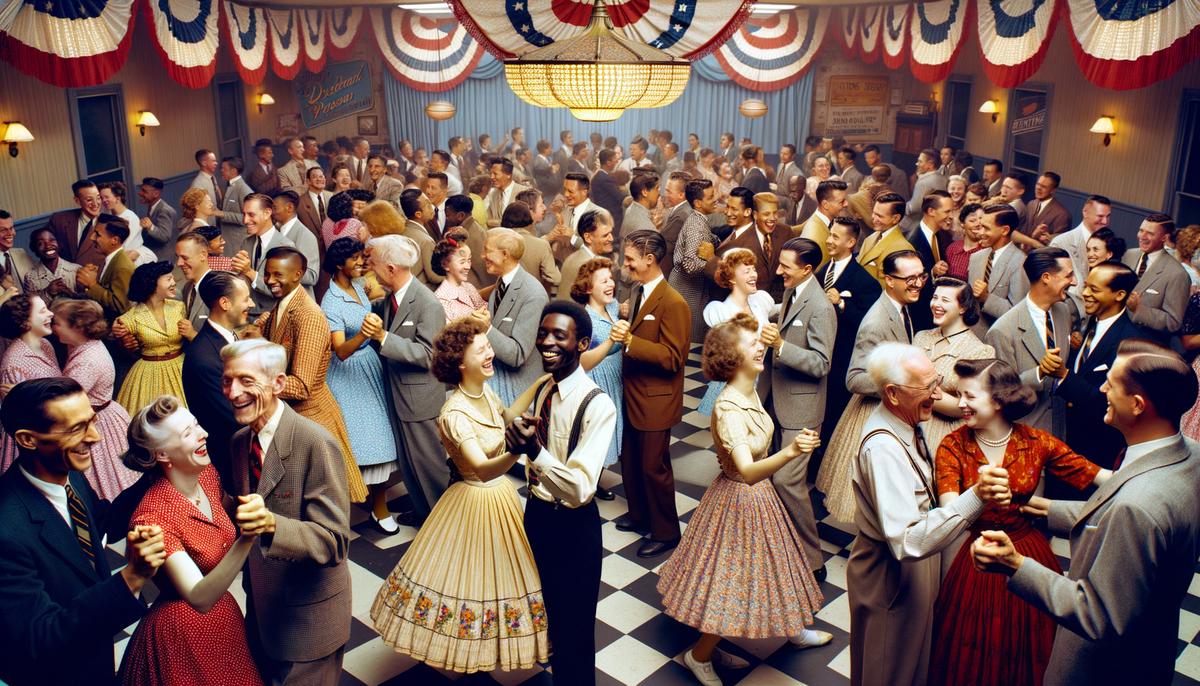
As the music of the 1950s filled dance halls and living rooms alike, it wasn't just about rhythm and steps; it was a reflection of an era bursting with optimism and change. The dance floor became a stage for self-expression, community connection, and youthful exuberance. In every twist and turn, there was a story being told—a story of freedom, joy, and the spirit of a decade that danced its way into history.
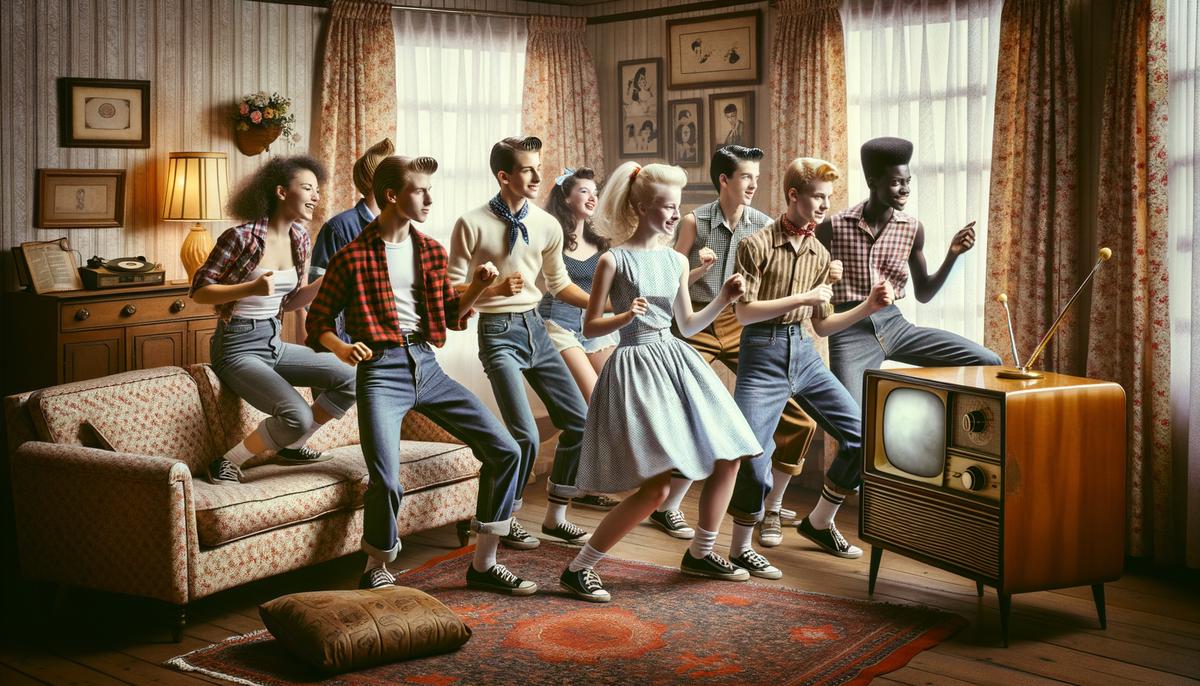
- Russell K. Teenagers dancing the 'Hand Jive' in London. 1957.
- Otis J. Willie and the Hand Jive. Capitol Records; 1958.
- Ballard H, Checker C. The Twist. Parkway Records; 1959.
- Bryant R. It's Madison Time. Columbia Records; 1959.
- The Olympics. (Baby,) Hully Gully. Arvee Records; 1959.