
Origins and Evolution of View-Master
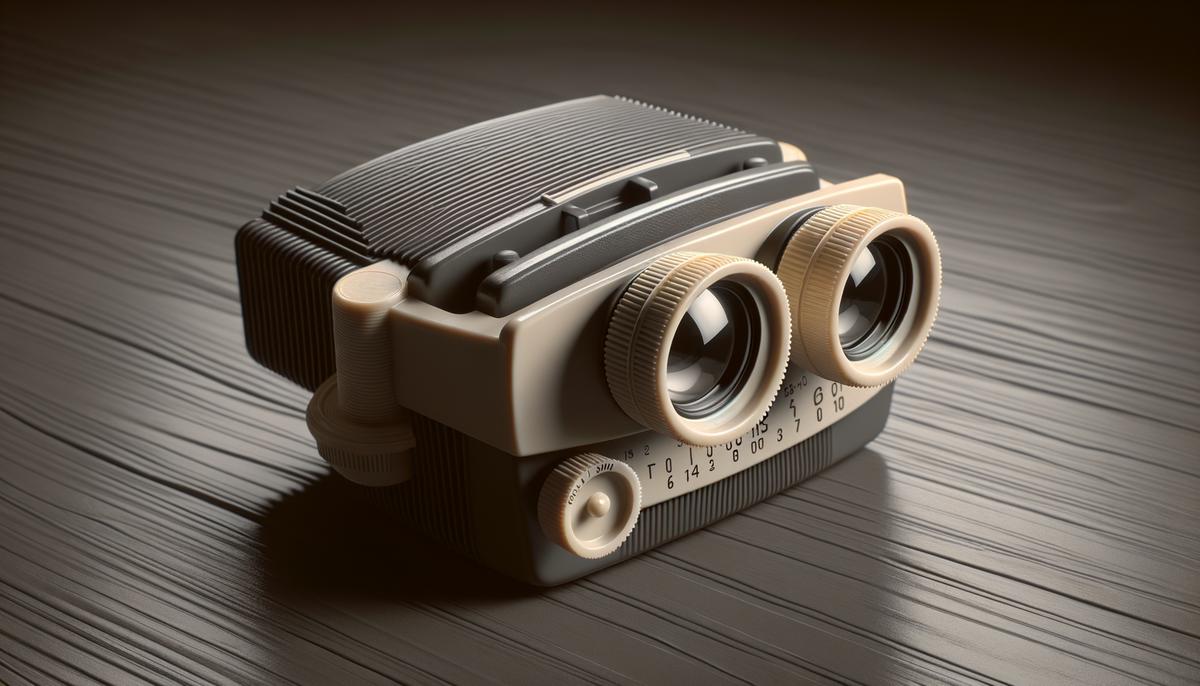
William Gruber teamed up with Sawyer's Inc. to create the View-Master in the 1930s. It debuted at the 1939 New York World's Fair, initially aimed at adults as a sophisticated entertainment device. The first Model A was made with Kodak Tenite plastic, offering a new way to view images.
At the time, stereoscopic images were popular. The View-Master stood out by offering seven shots on a single reel, more than the old stereograph cards. It also featured color thanks to Kodachrome film.
The 1950s saw a shift when Sawyer's acquired Tru-Vue and got the Disney license. This move made View-Master a hit with kids, featuring Disney characters in 3D.
Evolution of View-Master Models:
- Model A: Made of Kodak Tenite plastic
- Model B: Constructed from bakelite
- Model C: Introduced a slot for reels
- Model D: Known for durability and focus lenses
- Model G: Embraced bright colors of the 1960s and '70s
By the 1960s and '70s, View-Master embraced the plastic revolution. The content evolved too, shifting from landscapes to pop culture, featuring cartoons, Westerns, and even Queen Elizabeth II's coronation.
Under GAF Corporation, View-Master focused more on entertainment reels than educational ones. This period saw characters and spaceships replacing scenic views.
Today, View-Master holds a special place for collectors and nostalgists. There's something satisfying about the tactile experience of clicking through those reels, like revisiting an old friend.
Collectible Value of 1950s View-Masters
The value of 1950s View-Masters depends on rarity, condition, and nostalgia. Some reels are particularly sought after, like those of Queen Elizabeth II's Coronation. These rare snapshots of history have collectors willing to pay top dollar.
National Park reels are also popular, reminding us of simpler times when family road trips were the ultimate adventure. The Disney collaboration adds another layer of appeal, with Mickey Mouse and friends appearing in 3D.
The models themselves are crucial to value. A well-preserved early Model D is highly prized by enthusiasts for its bakelite design and focusing lens. It's a piece of craftsmanship that represents a bygone era of quality and style.
"For many baby boomers, these devices were magical, offering a glimpse into unknown worlds."
Now, they serve as a nostalgic link to childhood memories. This emotional connection drives the collector's market, turning simple plastic viewers into treasured artifacts.
Owning a 1950s View-Master with reels is like holding a tiny museum of mid-century dreams. They're more than just antiques; they're connections to our shared past, evoking memories with each satisfying click.
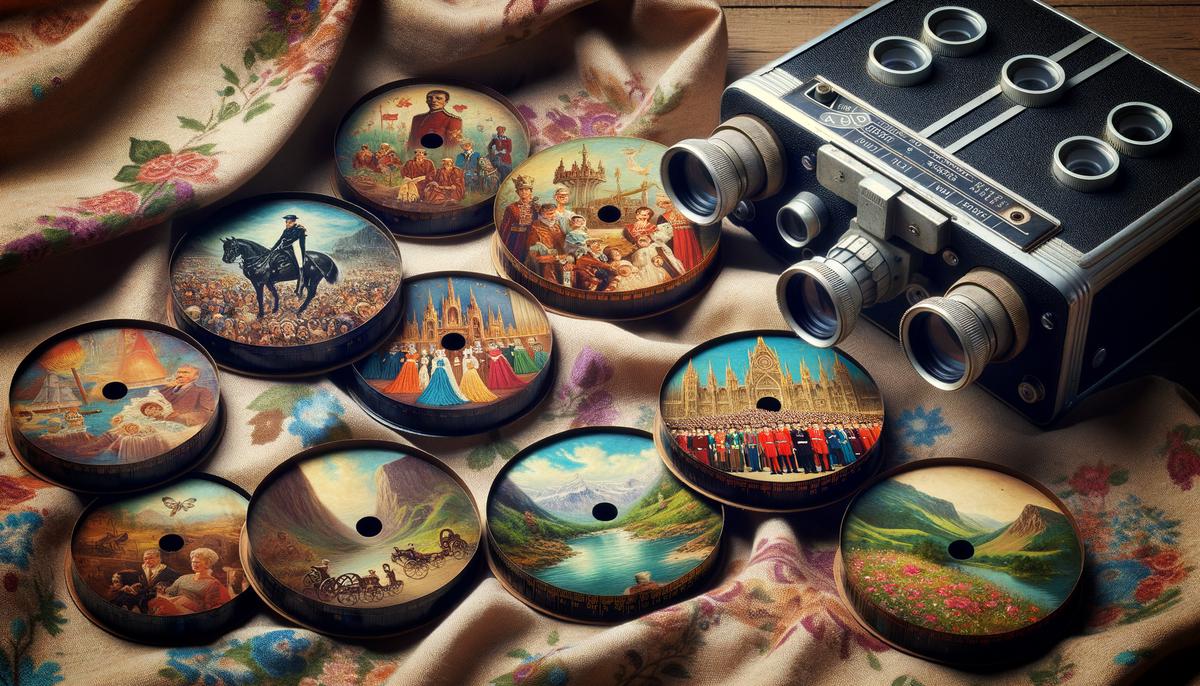
View-Master reels from the 1950s are enduring treasures that continue to capture hearts, reviving memories and stories of a simpler time with each click.
- Gruber W. The View-Master Story. Portland, OR: Sawyer's Inc; 1959.
- Fisher D. The History of View-Master. Stereo World. 1983;10(4):6-11.
- Dennis J. View-Master Memories. Portland, OR: Collectors Press; 1998.