
Rise of Plastic Figures
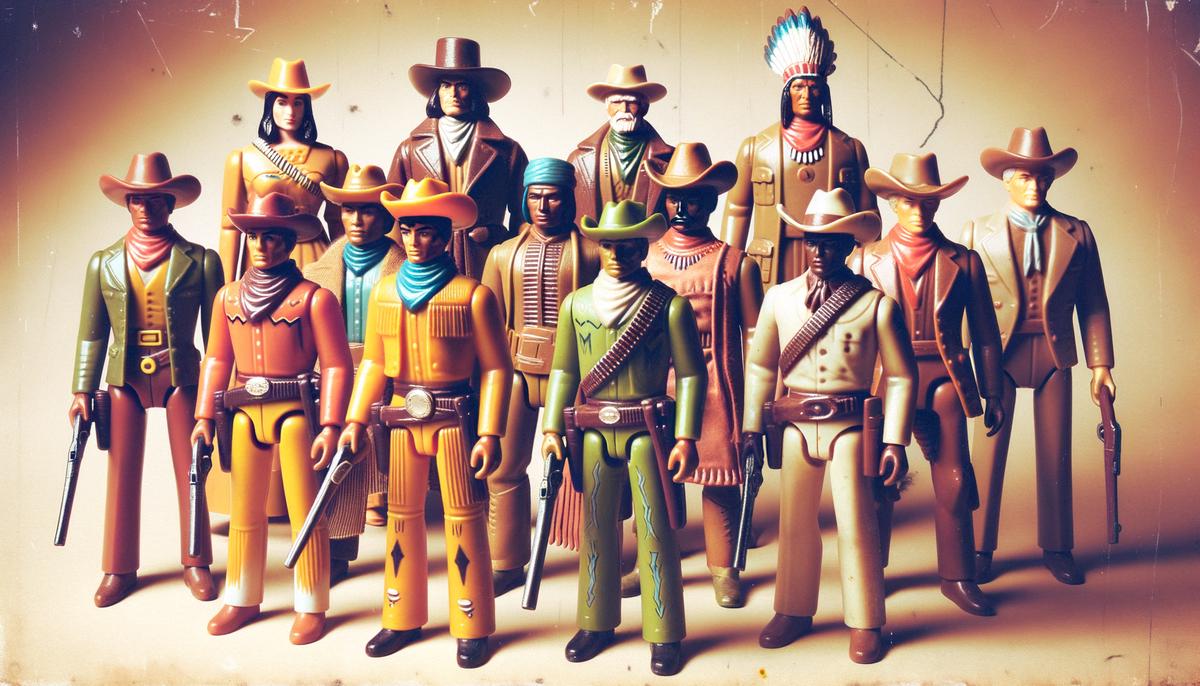
Back in the 1950s, toy rooms were filled with plastic cowboys and Indians ready for adventure. These figures didn't need batteries, just imagination. A big change happened when toy makers switched from metal to plastic, making production cheaper and faster.
With plastic injection molding, companies like Marx Toys could make cowboys, Indians, and even astronauts quickly. This meant lower prices, so more kids could have their own set of tiny adventurers.
In 1950s America, these colorful, lightweight figurines were all the rage. Kids weren't just playing; they were directing their own westerns at home. Marx Toys became a leader in this field, offering a variety of detailed figures.
The magic was in the details – from a gunfighter's stance to a brave's feathered headgear. Each figure was carefully made, bringing dime novel plots to life. Thanks to their affordability, even budget-conscious parents could buy these toys for their kids.
This shift to plastic changed playtime itself. These toys could handle both wild imaginations and washing machines. With each plastic cowboy made, a new story was ready to unfold in playgrounds across the nation.
Tim Mee Cowboys and Indians
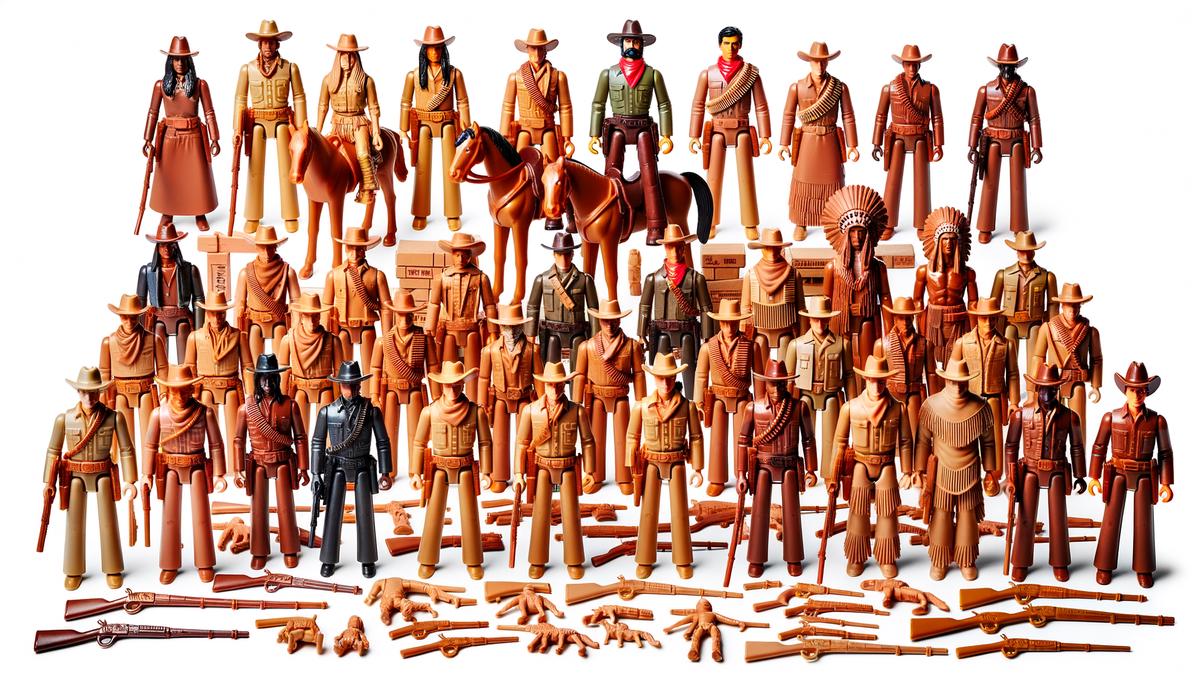
Tim Mee Toys was a big name in plastic adventure toys. Their Cowboys and Indians figures were more than just toys; they were tools for storytelling. Each figure was a unique character ready for action in a kid's imaginary frontier town.
These toys came in sets of 40, with 20 tan and 20 rust brown figures. They stood about 2.75 inches tall and were made from slightly flexible LDPE plastic. This made them durable enough for rough play and easy cleanup.
- Figures: 40 total (20 tan, 20 rust brown)
- Height: Approximately 2.75 inches
- Scale: 1:29
- Material: LDPE plastic
The design of these figures captured the Wild West spirit. They included a mix of gunfighters, horsemen, and chiefs, all with impressive detail for their size. Kids could create sprawling tales with these toys, using nothing but their imagination.
For many adults today, these toys bring back fond memories of childhood adventures. They're not just plastic figures; they're a link to simpler times when imagination ruled playtime.
Tim Mee's Cowboys and Indians also reflect the 1950s fascination with western themes. They show how popular cowboy stories and frontier justice were in movies, TV, and play.
Cultural Impact and Collector Value
Cowboy and Indian toys from the 1950s did more than fill toy boxes; they became a big part of American childhood. These simple toys encouraged kids to make up their own stories, turning living rooms into wild west adventures.
These toys fit right in with the 1950s love for westerns. TV shows like "Gunsmoke" and "The Lone Ranger" inspired kids to act out their own frontier tales with these figures.
Today, these toys have become collector's items. For many, they're not just old toys but pieces of history. Finding a well-kept set is exciting for collectors, who often have fond memories of playing with them as kids.
"Whenever we think of our childhood, we think of our toys. I started collecting G.I. Joe and Johnny West figures, buying, selling and trading them," says Craig Blankenship, a collector and restorer of vintage figures.
Collectors value these toys for more than just their price. They represent childhood memories and a simpler time. It's common to hear collectors happily sharing stories about their childhood adventures with these figures.
In the collector market, complete sets and rare figure poses can be worth a lot. But for many, the real value is in the connection to their youth and the imagination these toys sparked.
These 1950s cowboy and Indian toys remind us that great adventures come from our imagination. They continue to be popular with collectors, bringing back memories of a time when the Wild West was as big as a child's dreams.
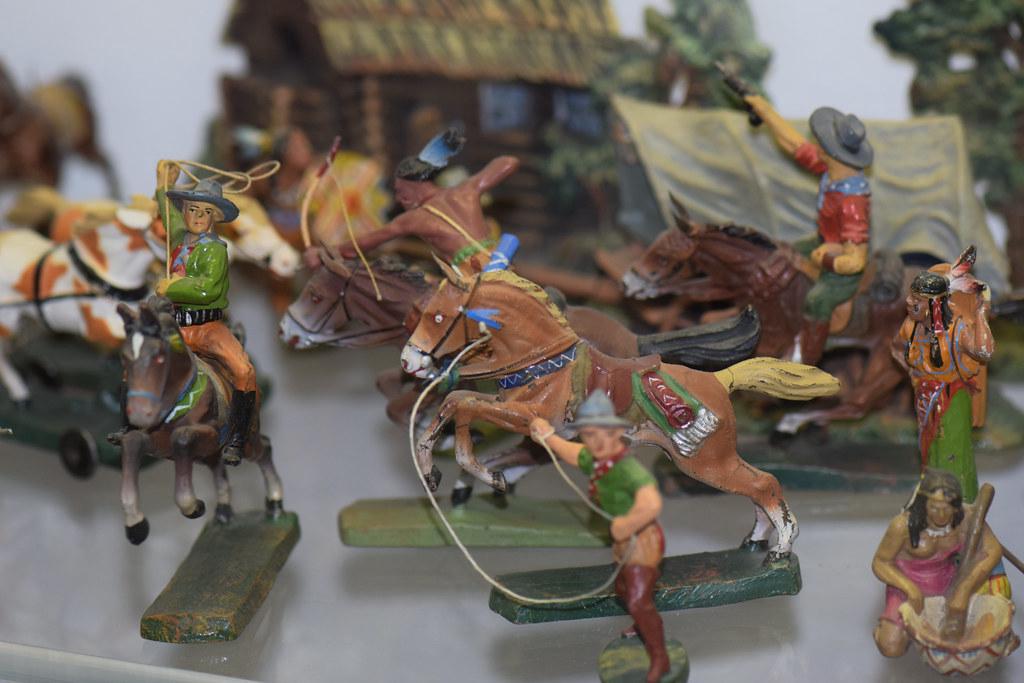
These small plastic figures were more than just toys; they were gateways to a world of imagination. They remain cherished reminders of a time when adventure was as close as the nearest toy box, and every child could be a hero in their own story.
- Blankenship C. Interview on vintage toy restoration. People Magazine. 2010.
- Evans D. The G.I. Joe Collector's Guide. Toy Soldier Press; 2005.
- Marx Toys: A History of American Toy Manufacturing. Playthings Museum; 2000.