
1950s RCA Radio Innovations
The 1950s saw RCA make its mark with radio tech innovations that had everyone talking. Remember gathering around the radio, hanging onto every word? RCA offered models that became household staples and defined the era's tech leap.
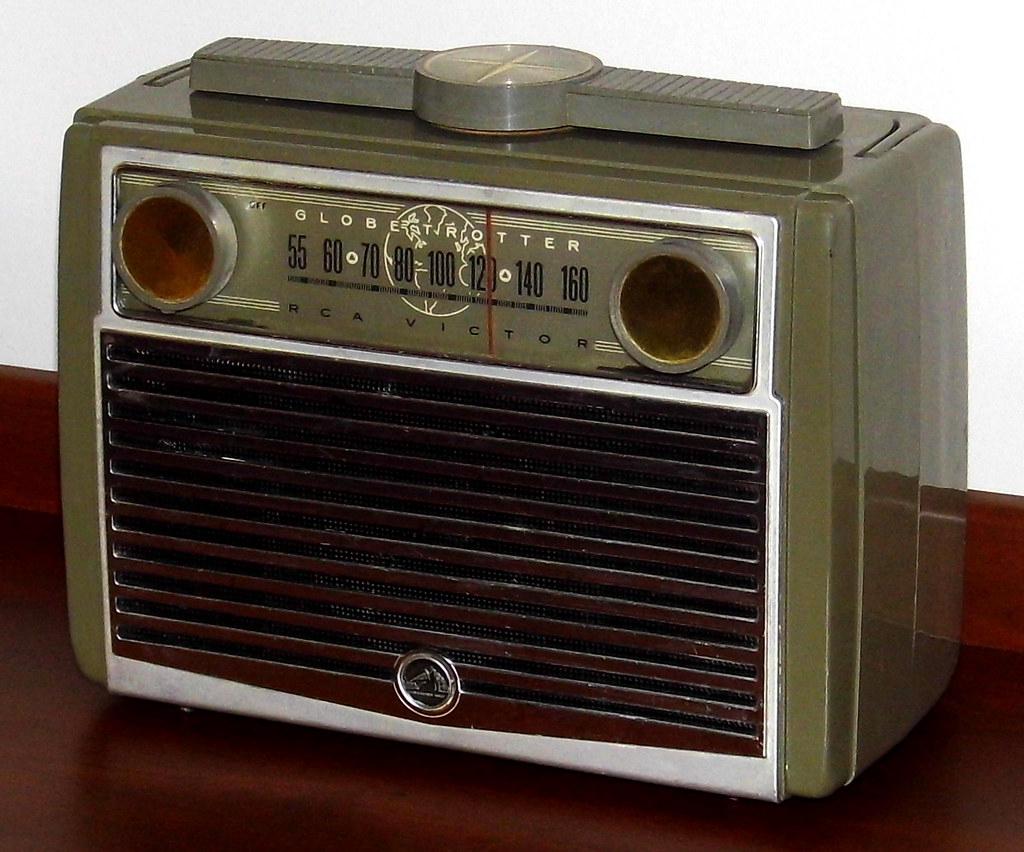
The RCA 6X8 "Globetrotter" brought the world to your living room with shortwave capabilities. Listeners felt like explorers, tuning into broadcasts from far-off lands with a twist of a dial.
RCA's 45-rpm record player, like the 45-EY-3, had teenagers toe-tapping to the newest hits, changing how folks enjoyed music. A weekend without a stack of 45s? Unthinkable!
The "Livingston" series, with its sleek design and big sound, became a living room centerpiece. It was like having a concert at home—just add friends and some Cokes.
As TV was becoming popular, RCA kept radio relevant. By adding FM capabilities, they improved sound quality and kept listeners tuning in.
These innovations showed RCA's knack for blending progress with nostalgia, making their radios trusty companions in homes across America.
RCA's Promotional Strategies
RCA had a way of capturing people's imagination through smart promotions. They weren't just selling radios; they were offering a piece of the future with a dash of nostalgia.
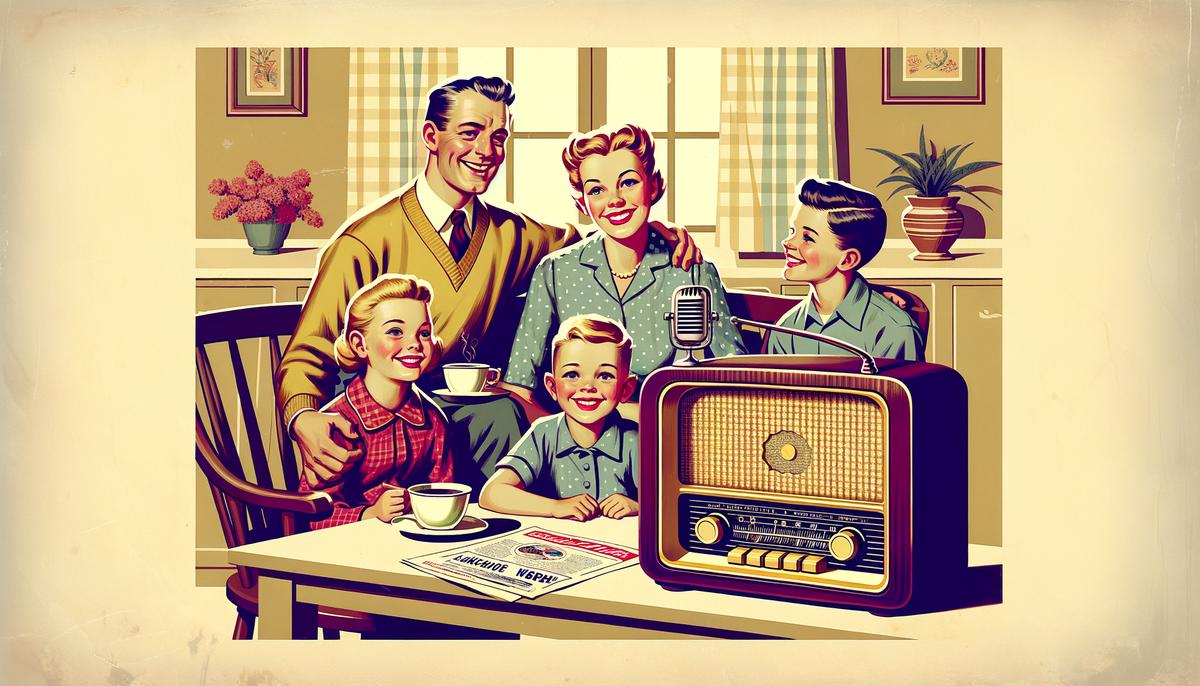
Their print ads often showed happy families around an RCA radio, making you want to be part of that joyful scene. RCA's classic slogan, "The Most Trusted Name in Electronics," was simple but effective, promising both reliability and innovation.
RCA also used promotional films to drum up excitement. These short movies, shown at company meetings or industry events, made their products feel essential to every home.
Through a mix of print, film, and early TV ads, RCA did more than promote radios—they made them part of American home life. It was clever marketing that turned their gadgets into beloved household items.
Cultural Impact of RCA Radios
In 1950s living rooms, an RCA radio was more than just a device—it was the center of family life and a window to the world. Picture everyone gathered around on a Friday night, listening to the latest hits or catching up on news.
RCA radios let you hop from Bill Haley & His Comets to sports updates with just a twist of the dial. They brought the excitement of the outside world right into your home.
These radios weren't just about sound; they looked good too. Stylish and modern, they fit right in with mid-century decor, showing off a family's up-to-date taste.
Even as TV was gaining ground, RCA radios held their own. They encouraged using your imagination and became part of evening family rituals. Sitting around the radio was a cherished pastime that brought people together.
RCA radios shaped social interactions, sparked dinner table chats, and created shared experiences. They weren't just devices; they were the narrators of the 1950s, telling tales of ambition, community, and the joy of tuning in.
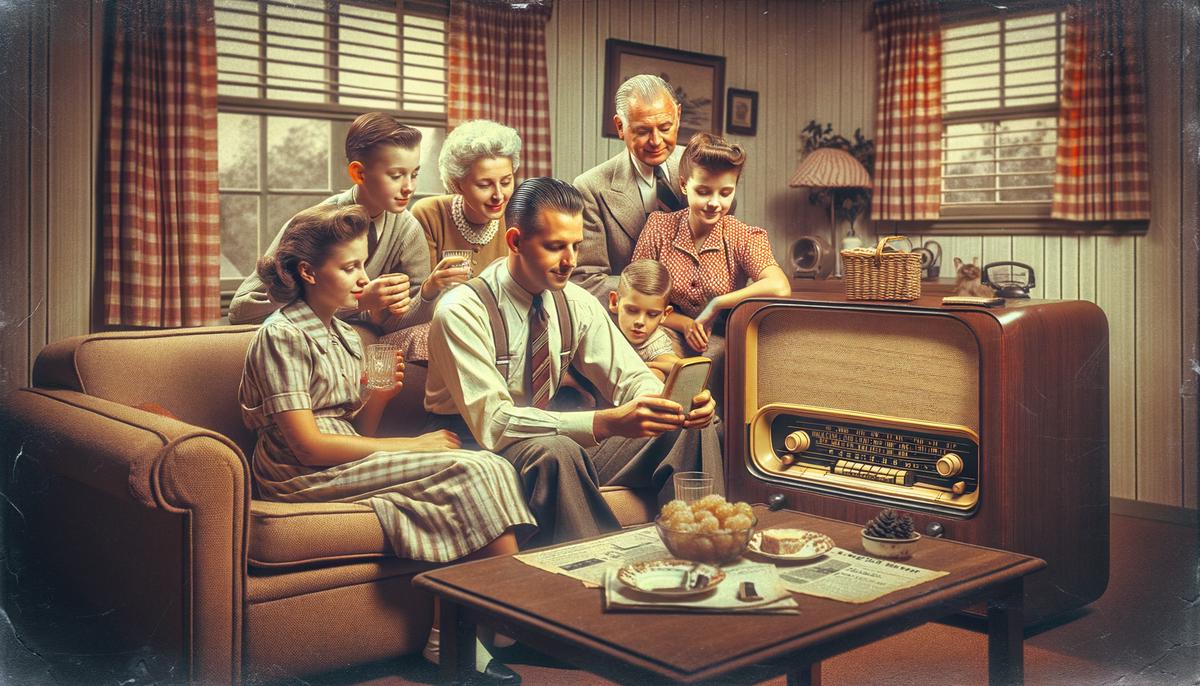
As we look back on the 1950s, RCA radios stand out as beloved symbols of an era where technology brought people together. They weren't just gadgets; they were companions that sparked joy and curiosity, reminding us of the simple pleasure of shared listening experiences.
Did You Know?
- The RCA Radiola Super-Heterodyne from 1924 was one of the first radios that didn't need a separate antenna.
- In 1924, an RCA Radiola Super-Heterodyne cost $256, equivalent to $4,621 in 2024!
- The inventor Edwin Armstrong developed the superheterodyne radio receiver system, improving amplification and sound quality.
- RCA's Superheterodyne portable radio from 1925 was among the first with a built-in speaker.
- Armstrong E. The super-heterodyne – Its origin, development, and some recent improvements. Proceedings of the Institute of Radio Engineers. 1924;12(5):539-552.
- Kellogg EW, Rice CW. History of the development of the loudspeaker. Journal of the Acoustical Society of America. 1937;8(3):211-219.
- Magoun AB. David Sarnoff Research Center: RCA Labs to Sarnoff Corporation. Arcadia Publishing; 2003.