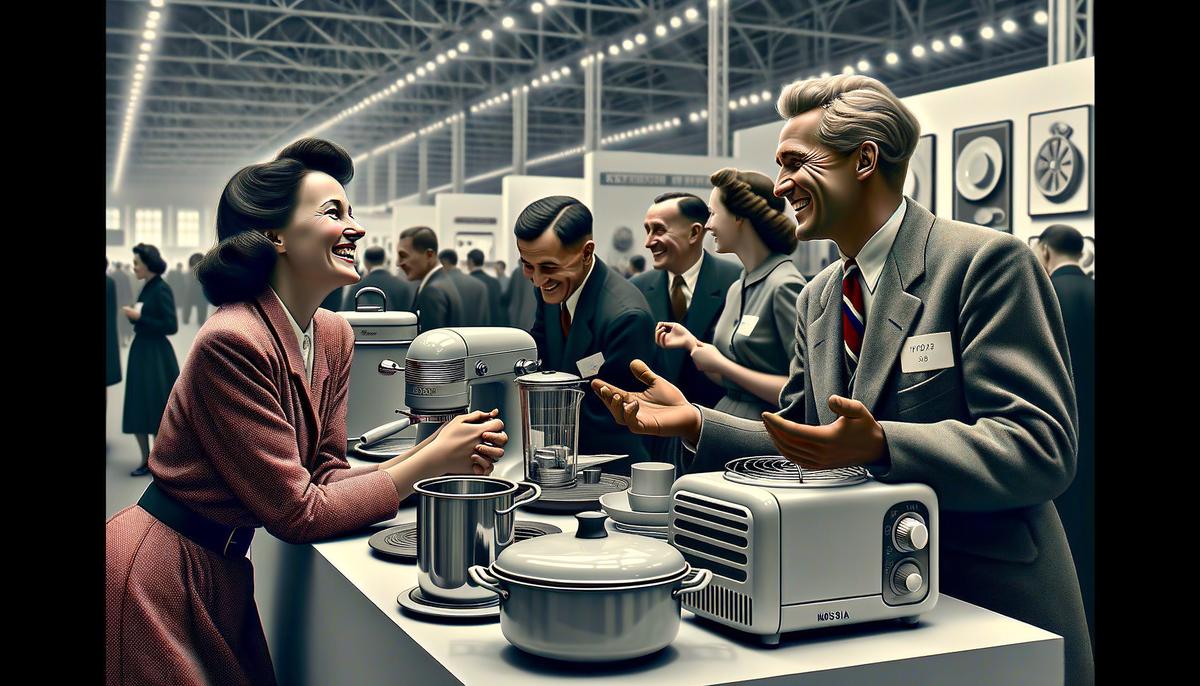
The 1950s was a time of progress, pride, and prosperity in America. Meanwhile, behind the Iron Curtain, the Soviet Union painted the West as a crumbling empire built on greed. But when the American National Exhibition arrived in Moscow, the truth was impossible to ignore.
Could a dishwasher represent freedom? Could a television prove democracy was the future? And more importantly – did the Soviets realize what they were missing?
The Day America Tried to Sell Capitalism
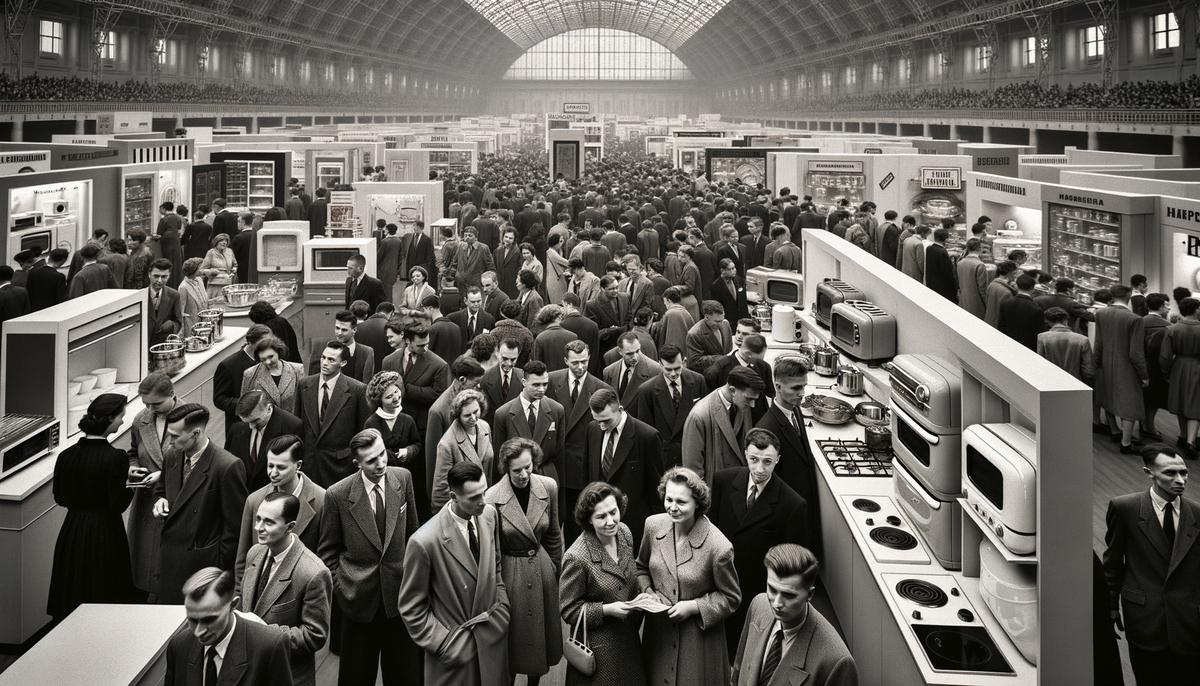
In 1950s Moscow, the air buzzed with excitement. The American National Exhibition had arrived, turning a park into a showcase of Western marvels. Crowds gathered to see electric dishwashers and shiny cars, all part of a cultural exchange during the Cold War.
The Americans aimed to dazzle with kitchen gadgets that promised to make life easier. Refrigerators packed with food showed off the American way of life. It was like stepping into a TV show, with happy housewives and modern appliances everywhere you looked.
But this wasn’t just about showing off cool stuff. It was a battle of ideas, with each side trying to prove their way of life was better. As people walked through the displays, you could feel the weight of history in every curious glance and raised eyebrow.
Nixon and Khrushchev Face Off
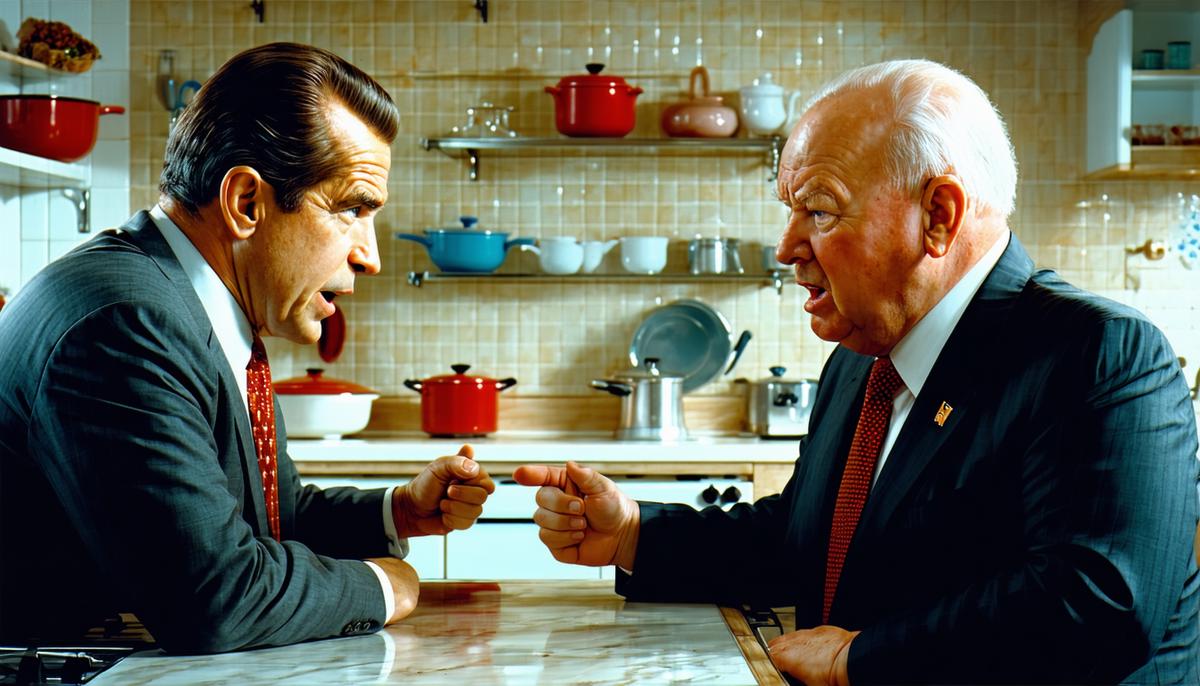
The real show began when Richard Nixon and Nikita Khrushchev arrived. Nixon, smooth and polished, moved through the exhibition with ease. Khrushchev, fiery and quick-witted, was ready for a challenge.
Their meeting crackled with tension. Nixon thought,
"This guy could argue with a brick wall and win."
Khrushchev might have been thinking,
"Let's see how much this American can handle."
As they talked, each word carried hidden meanings. The crowd leaned in, eager to catch every detail of this political theater. Behind the smiles and handshakes, both men knew that one wrong move could tip the balance of world opinion.
In this unusual setting, among kitchen appliances and curious onlookers, two world leaders engaged in a dance of words and wit, each hoping to win the hearts and minds of those watching.
The Kitchen Debate Heats Up
In the model kitchen, Nixon and Khrushchev squared off. Nixon boasted about American ovens and refrigerators, saying they represented progress and a better life. Khrushchev countered, arguing that Soviet values focused on what really mattered.
The crowd hung on every word, fascinated by this clash of ideas played out among pots and pans. Nixon praised the American dream, while Khrushchev spoke of shared success for all.
As the debate sizzled on, it became clear this wasn’t just about kitchen appliances. It was about two different visions for the future, each side convinced their recipe for success was the right one.
Did Nixon Win, or Did Khrushchev Cook Him Alive?
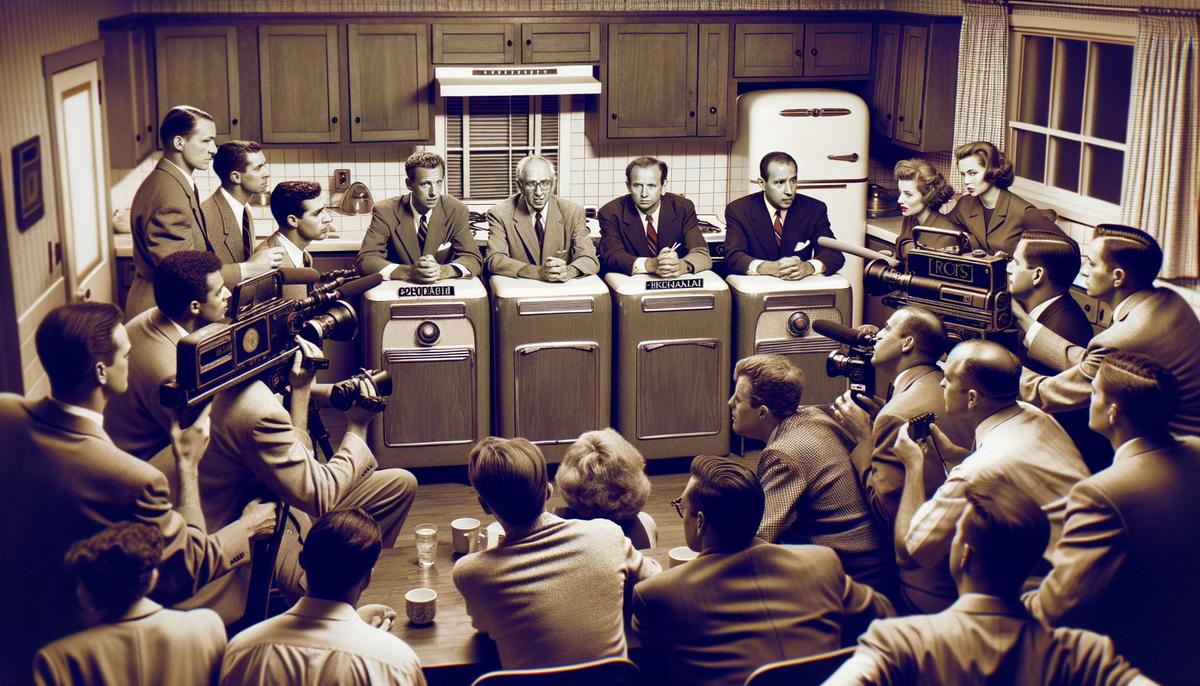
After the kitchen showdown, news spread like wildfire. Reporters rushed to capture every detail, and headlines shouted:
- “Kitchen Clash: Nixon and Khrushchev Stir the Pot!”
- “Oven vs. Ideology: Who Won the Appliance Argument?”
TV screens flickered with images of the two leaders, their gestures larger than life. The whole world seemed to tune in, eager to hear about this unusual political face-off.
Newspapers debated who had won. Some praised Nixon’s charm, while others admired Khrushchev’s quick wit. Behind the scenes, both leaders celebrated what they saw as their own victory.
The public ate it up, following each new development like chapters in an exciting story. Whether American shine or Soviet grit would win the day depended on which side of the Iron Curtain you called home.
The Bigger Picture
As the excitement faded, people realized the Kitchen Debate was about more than just appliances. It showed a new way of handling Cold War tensions, using words and ideas instead of weapons.
This shift offered hope that maybe the future could be shaped by friendly competition rather than conflict. TVs, fridges, and dishwashers became symbols of progress, showing off different ways of life.
The debate hinted at a world where leaders might choose to talk things out instead of fighting. It proved that even in tough times, a little humor and humanity could go a long way.
In the end, the Kitchen Debate left a lasting mark. It showed that sometimes, the best way to connect with others is over something as simple as a kitchen table, no matter what language you speak or where you come from.