
Historical Significance of Cursive
Cursive writing has left its mark on history, from the founding fathers penning important documents to love letters whispering sweet nothings across the ages. It’s woven into the fabric of cultural communication, connecting generations in a flow of loops and swirls.
Documents like the U.S. Constitution, written in cursive, still resonate today. Reading these in their original form brings a connection to the past that print can’t match. Cursive has a kind of rhythm that echoes authenticity—try signing your name without a flourish and see how far you get!
Understanding cursive can be like a dance through time, granting access to historical texts our ancestors left behind. Diaries filled with doodles and thoughts lay bare their writers’ minds. Deciphering these connections can transport readers across eras.
In today’s digital world, cursive still holds sway. It helps in signing crucial documents:
- Contracts
- Checks
- Greeting cards
Without it, signatures lose their personality, becoming mere scrawls.
Cognitive and Real-World Benefits
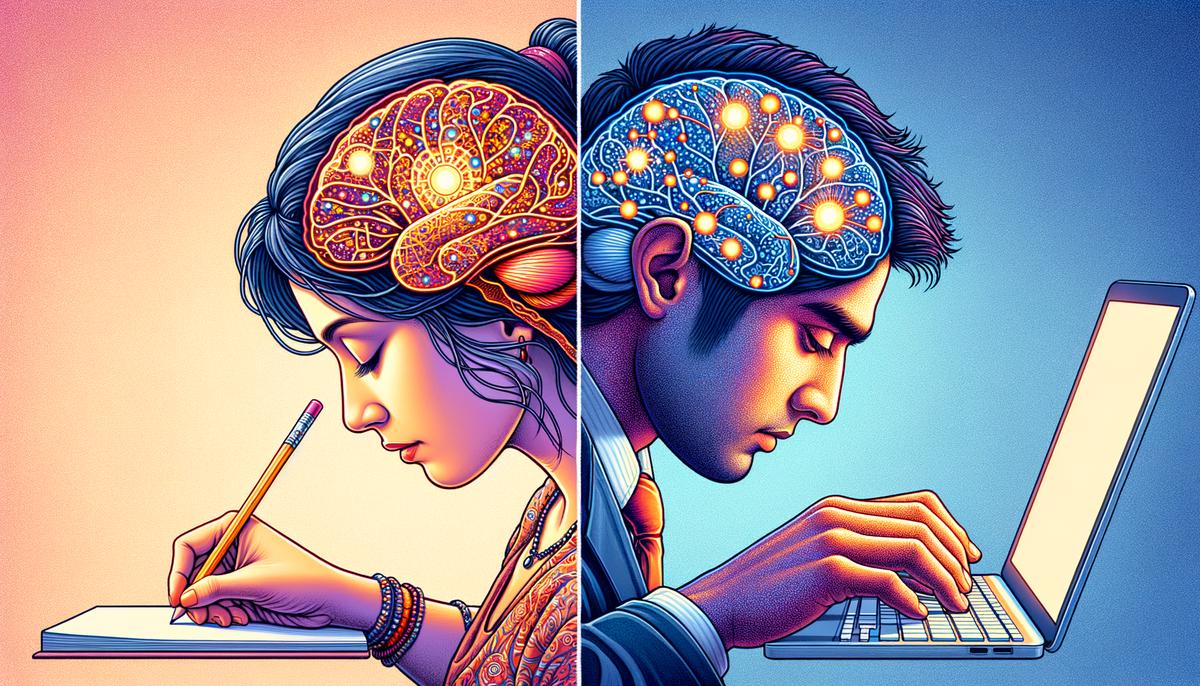
Cursive isn’t just about connecting to history—it gives our brains a boost too! Studies suggest that when we write in cursive, we tap into unique cognitive benefits. It’s like your brain is lifting weights, but without all the sweating.
While typing might make us speedy, handwriting, especially cursive, adds a dash of thoughtfulness. It encourages deeper processing, giving whatever we pen a certain weight and meaning. Cursive writing even enhances how well we remember information, which could be just the edge some of us need in a world full of digital distractions.
Beyond the brain benefits, cursive serves practical purposes. Imagine signing your name with a flourish on important documents. It’s a personal stamp of authenticity that digital signatures just can’t beat.
Plus, with cursive skills, we can decipher those original scribbles from the past. We’re talking historical analysis, folks. Without cursive know-how, accessing those old-timey documents becomes a bit of a treasure hunt.
Educational Shifts and Impact
The winds of change in education have been blowing for quite some time now. Much like cursive, several once-prized skills have quietly tiptoed out of classrooms. Take mental math, for instance—it taught generations of kids to tackle arithmetic with just their noggins. Now, with calculators and apps, we’re producing speed without necessarily cooking up comprehension.
And let’s not overlook home economics, a class that was once a rite of passage into adulthood. Learning to sew, cook, and manage a household budget in school equipped the budding grownups of yesteryear with the skills to tackle life’s curveballs. Can today’s students patch up their own clothes or whip up a simple meal without a microwave?
Then there’s the topic of basic manners—how many times were we schooled in the art of the polite handshake or the well-timed “please” and “thank you”? These fundamentals woven into daily lessons have shifted under the weight of digital communication.
The broader impact of these shifts goes beyond mere nostalgia for the golden classrooms of yesteryear. Are we trading foundational life skills for the allure of screen-based learning?
The reality is, some aspects of education now seem to prioritize convenience over independence.
But here’s the silver lining: recognizing these shifts opens the door to revival. Whether that means threading a little more mental math into lessons or championing home-cooked meals in the curriculum, there are opportunities to blend the old-school charm with modern-day relevance.
Cursive, with its graceful loops and swirls, continues to connect us to the past while offering practical benefits in our modern lives. It stands as a testament to the enduring power of personal touch and thoughtful communication.
- Mueller PA, Oppenheimer DM. The pen is mightier than the keyboard: advantages of longhand over laptop note taking. Psychol Sci. 2014;25(6):1159-1168.
- Berninger VW, Abbott RD, Jones J, et al. Early development of language by hand: composing, reading, listening, and speaking connections; three letter-writing modes; and fast mapping in spelling. Dev Neuropsychol. 2006;29(1):61-92.