
The Rise of Davy Crockett Fandom
Walt Disney turned the tale of Davy Crockett into a household phenomenon in the mid-50s. When "Disneyland," the anthology TV series, brought Crockett's adventures to the small screen, it sparked a frenzy. Kids were hooked, seeing Crockett as their frontier hero.
Fess Parker's portrayal of Davy on ABC-TV's "Disneyland" painted him as larger-than-life. With his sidekick Georgie Russel, Parker caught the imagination of children nationwide. The catchy "Ballad of Davy Crockett" had kids humming as they donned their coonskin caps.
As Disneyland opened in 1955, the Davy Crockett craze was peaking. Merchants cashed in with Crockett-themed goodies. From lunch boxes to toothbrushes, anything branded was popular. But it was that coonskin cap that every kid wanted.
Disney capitalized by repackaging the TV episodes into films for theaters. Families flocked to see them in color. The demand was such that Disney's story department planned more episodes, though they never made it past planning.
In theme parks, Davy's legacy lived on. Disneyland's Frontierland was a Crockett-inspired haven, with exhibits and attractions immortalizing the frontier hero. The popularity left a mark on places like Walt Disney World, where frontier-themed rides still nod to Crockett's adventures.
The Coonskin Cap Craze
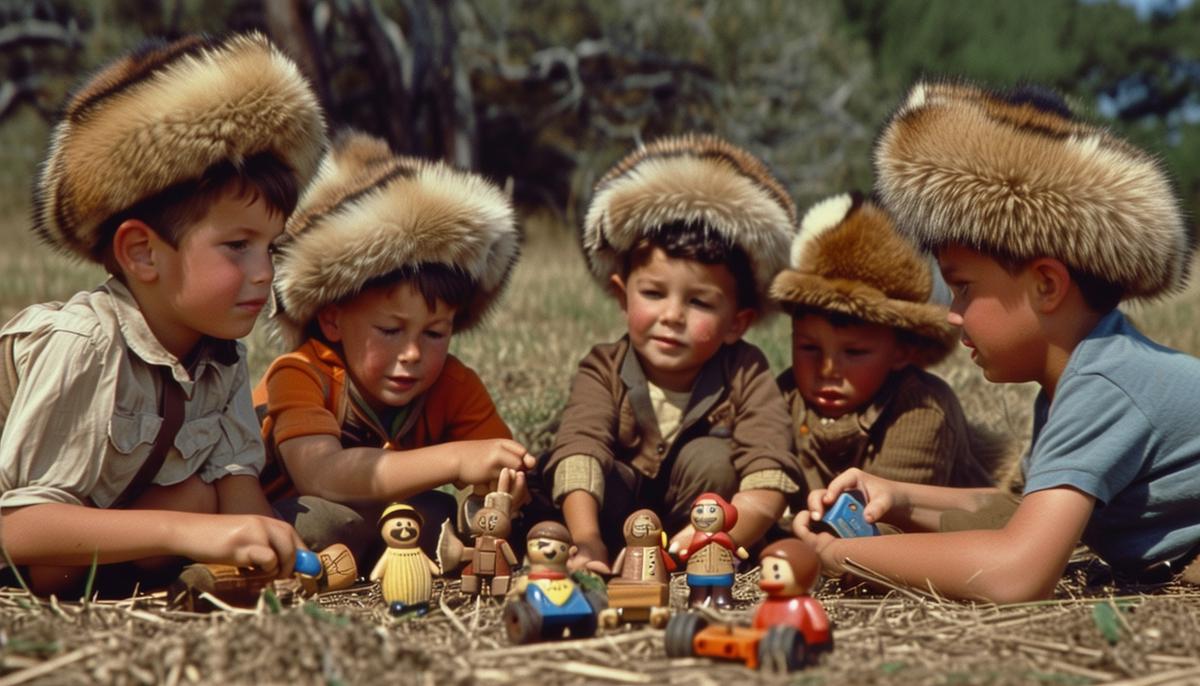
The coonskin cap became the crown jewel of the Davy Crockett craze in the 1950s. Kids flocked to stores, dreaming of wilderness adventures. Fess Parker's charismatic portrayal of Crockett, coupled with that catchy theme song, had every kid pleading for a slice of that pioneer spirit.
Manufacturers got creative to meet the surge in demand. When genuine raccoon fur became scarce, they used whatever fur they could find—muskrat, rabbit, even opossum. By the end of 1955, more than 10 million caps had been sold.
Stores were packed with these frontier essentials. Parents scrambled to secure these treasures as mementos of a boyhood dream fueled by Disney. It was as if every child had an inner compass pointing towards adventure, driven by the Crockett mythos.
The frenzy might have slowed down, but the iconic coonskin cap continues to hold a place in American lore. One look at that fuzzy tail, and you're taken back to a time when the call of the wild echoed through TV speakers, urging every child to grab a cap and dream up their own frontier journey.
Economic Impact and Legacy
The Davy Crockett craze had a big impact on the economy in the mid-1950s. Folks spent about $300 million on Crockett stuff in just a few months. That's like $2 billion today! The coonskin cap alone sold over 10 million units. Raccoon pelts went from 25 cents a pound to $8—a nice surprise for fur traders.
Stores were packed with Crockett gear. Here's a quick list of popular items:
- Lunch boxes
- Toy rifles
- Pajamas
- Comic books
- Wrist watches
This spending spree was good news for the economy, giving a boost to furriers, manufacturers, and stores.
But Davy Crockett wasn't just about money. He left a mark on American culture that's still around today. People still hum that catchy tune, and the coonskin cap is still a symbol of adventure. You can even see Crockett's influence in Disney parks and pop culture references.
While the craze cooled down, its impact hasn't faded. It left behind economic ripples and cultural echoes that still inspire folks to dream big and face life's challenges with a bit of frontier spirit.
The Davy Crockett phenomenon may have been short-lived, but it made a big splash. It got a whole generation dreaming and left its mark on American culture. That coonskin cap still reminds us of the wild adventures that made the 50s so exciting.
- Thompson B. Born on a Mountaintop: On the Road With Davy Crockett and the Ghosts of the Wild Frontier. Crown; 2013.
- The New York Times. Davy Crockett Craze Booms Into $300,000,000 Industry. 1955.