
The Rise of Licensed Lunchboxes
In the 1950s, lunchboxes became more than just containers for sandwiches. They turned into symbols of childhood identity, showcasing TV heroes and idols. Hopalong Cassidy kicked off this trend in 1950 with a steel lunchbox featuring his cowboy image. The Roy Rogers and Dale Evans lunchboxes in 1953 cemented this as more than a passing fad.
These lunchboxes were like mini TV sets on the playground, displaying characters from Saturday morning shows. They became status symbols, reflecting a kid's interests and style. By the 1970s, some parents worried about metal lunchboxes being used as weapons. By 1986, plastic lunchboxes took over in schools for safety reasons.
Today, collectors cherish these old lunchboxes. Each one tells a story of childhood dreams and adventures, offering a glimpse into the past.
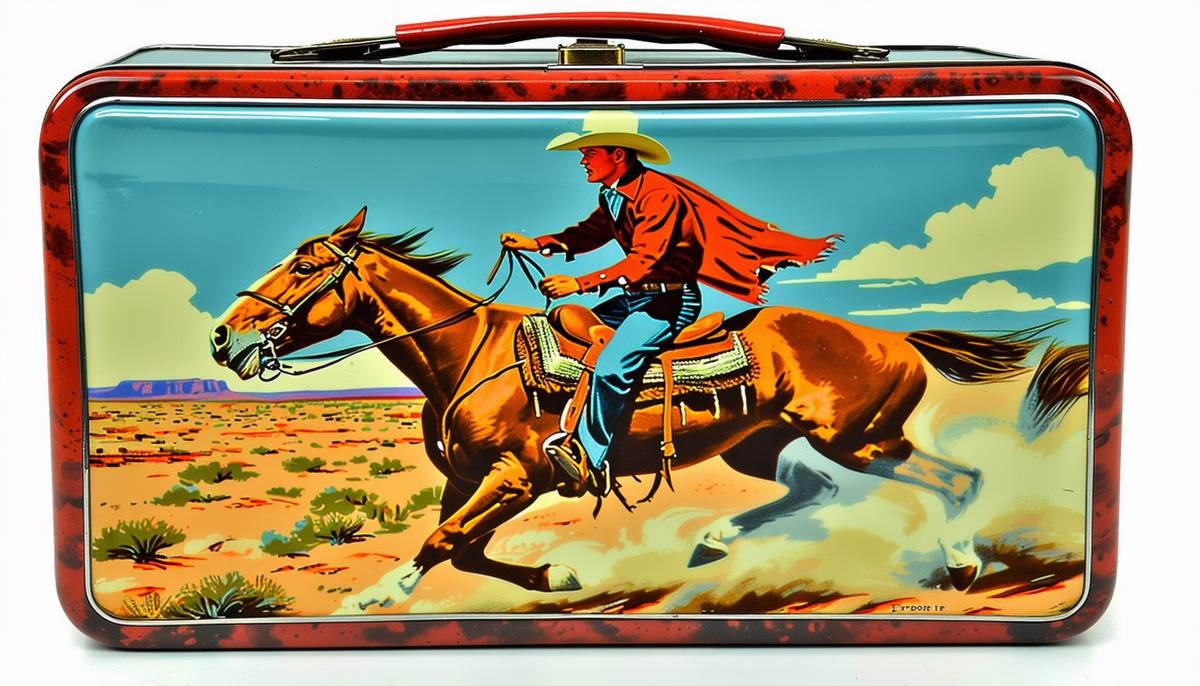
Roy Rogers Lunchbox Design and Appeal
Roy Rogers lunchboxes were a hit in the 1950s. Thanks to full-color lithography, they featured vivid scenes from the Wild West. Each box showed Roy Rogers, the King of Cowboys, riding across plains with his trusty firearms. Dale Evans was there too, giving girls their own hero to look up to.
These lunchboxes weren't just useful; they were gateways to adventure. Kids could almost hear hooves and cowboy songs each time they opened their lunch. Owning a Roy Rogers lunchbox was like wearing a badge of coolness. It showed you were part of the cowboy crowd.
The appeal was no accident. The makers knew how to capture kids' imaginations. By using bright images of beloved heroes, they created something every kid wanted. These lunchboxes spoke to a love of adventure, heroism, and cowboy grit.
Years later, these lunchboxes still have that magic. They take us back to simpler times when a colorful box and some imagination could lead to big adventures.
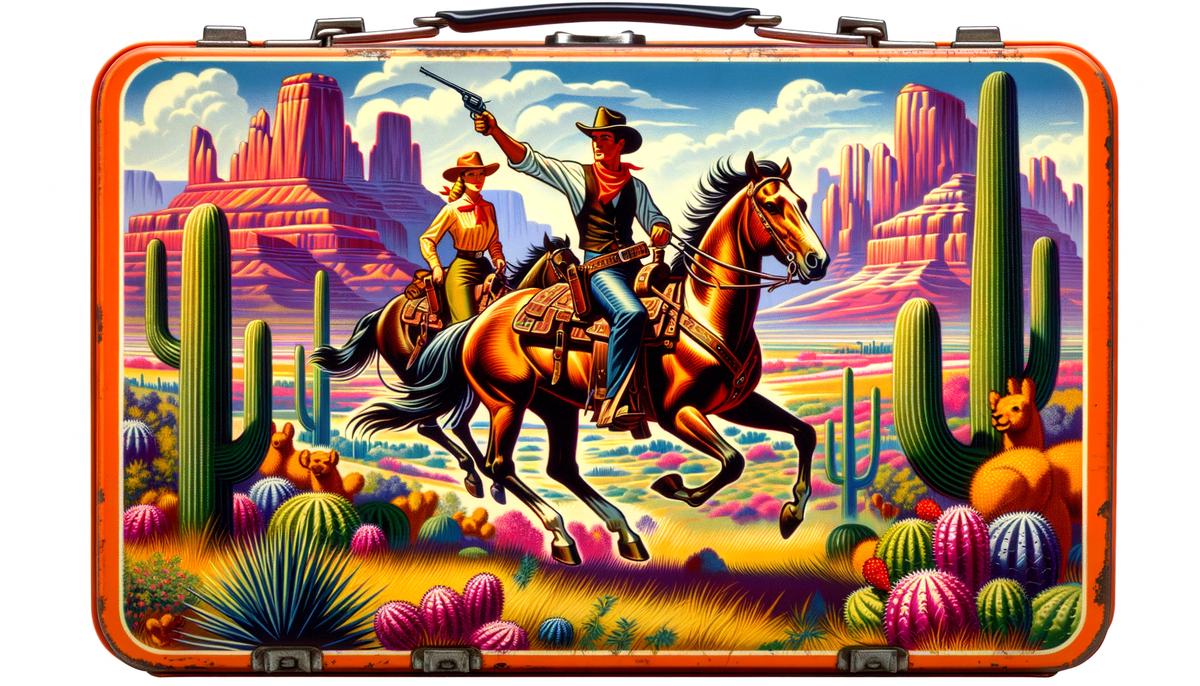
Collecting Roy Rogers Lunchboxes
Collecting Roy Rogers lunchboxes is like gathering pieces of the 1950s. It's not just about having a bunch of old boxes; it's about holding onto bits of childhood memories.
Rarity makes these lunchboxes special. Finding one in perfect shape, with the original thermos, is pretty tough. The harder they are to find, the more people want them.
What collectors look for:
- Condition: Boxes without scratches or rust
- Completeness: Original thermos and cork
- Rarity: Uncommon designs or limited editions
- Nostalgia factor: Boxes that evoke strong memories
But what really makes these lunchboxes special is nostalgia. Each one reminds people of their childhood, bringing back memories of school days and lunchtime fun. Roy Rogers boxes take you back to imaginary cowboy adventures.
Over the years, some of these lunchboxes have sold for a lot of money at auctions. Serious collectors think of it like investing, hoping the boxes will be worth more in the future.
"At a landmark sale of lunch boxes last spring, a child of the Fifties paid almost $300 for that same Hoppy lunch box ($2.39 when new)."
If you're thinking about collecting Roy Rogers lunchboxes, know that you're not just buying old lunch containers. You're collecting stories, dreams, and a bit of cowboy spirit from the past.
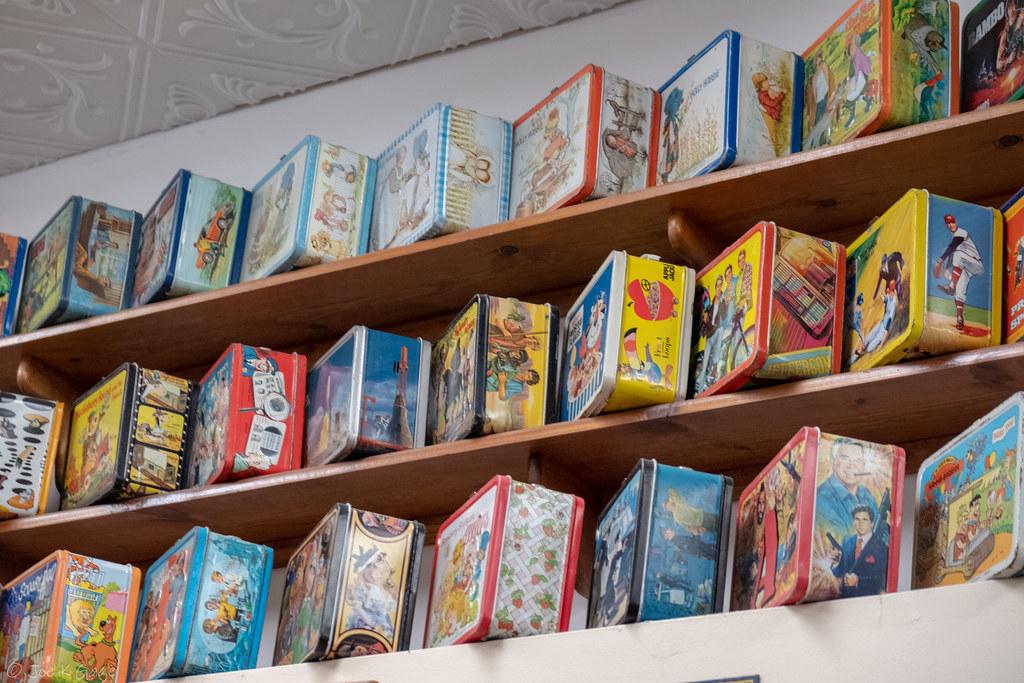
Roy Rogers lunchboxes were more than just lunch carriers. They were colorful reminders of childhood dreams and cowboy adventures. Even today, these boxes bring back memories of simpler times, inviting us to remember the fun and excitement of being a kid in the 1950s.
- Skinner Auction House. The Montifiore Collection of Lunchboxes. Boston; 1987.
- Kelehan M. The Durham Museum Lunchbox Exhibit. Omaha; 2023.