
Popularity and Cultural Impact
Howdy Doody was a genuine TV superstar in the 1950s. This cowboy marionette burst onto the scene in 1947 and transformed children's entertainment. Buffalo Bob Smith, in his buckskin outfit, led the show that became a Saturday morning ritual for kids.
The "Peanut Gallery," a group of youngsters cheering from the studio's bleachers, made children feel part of the magic. The show featured clever stories and characters like Clarabell the clown, known for his seltzer bottle antics.
Howdy Doody's popularity extended beyond TV. During the 1948 election, the show received 60,000 requests for Howdy Doody For President buttons. The show's finale was memorable, with the famously mute Clarabell surprising viewers by speaking a simple "Goodbye kids."
Peter Puppet Playthings produced a popular line of Howdy Doody marionettes and dolls. These toys became prized possessions for many children.
Even today, Howdy Doody remains a cultural touchstone, reminding us of a time when TV shows first began capturing our hearts and imaginations.
Character and Show Details
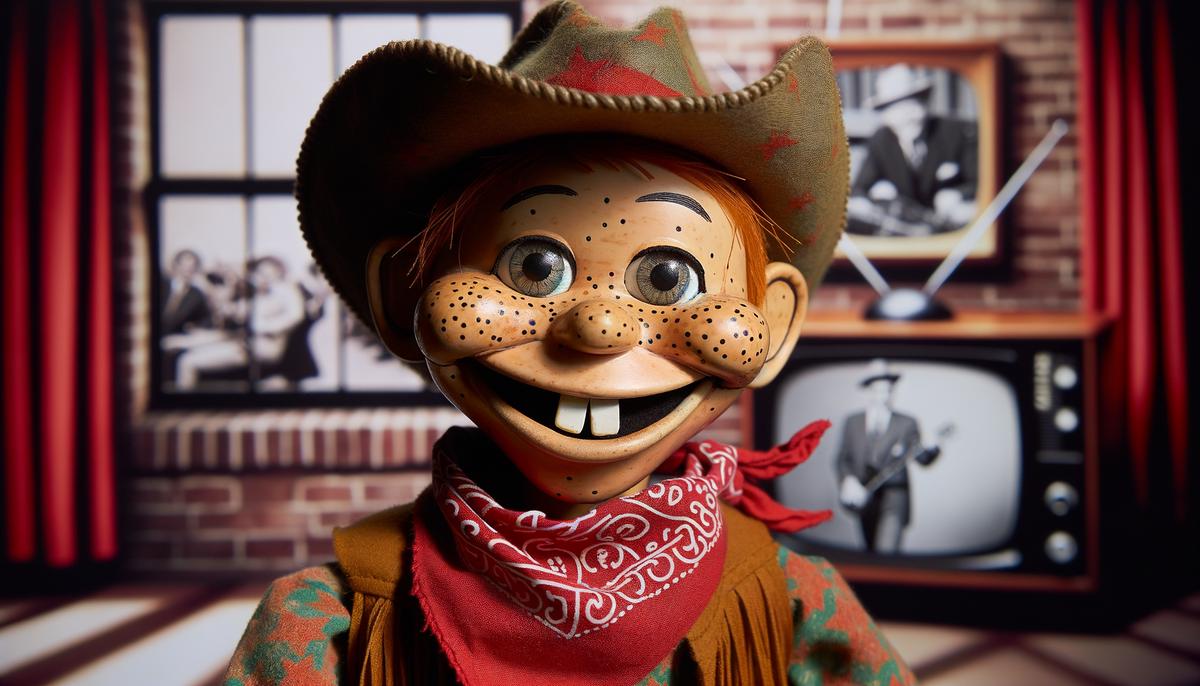
Howdy Doody, the star of the show, was a freckle-faced marionette with gap teeth and a wide-eyed expression. Dressed in cowboy boots and a red bandanna, he symbolized innocence and adventure, becoming a friend to kids across America.
Clarabell the Clown, played by Bob Keeshan (later Captain Kangaroo), was a silent comedian who communicated through honks and his trademark seltzer bottle. His perfectly timed antics left both kids and parents in stitches.
Buffalo Bob Smith, the charismatic host, tied everything together. His warmth and hearty "Howdy Doody to you!" greeting made the magical world of Doodyville feel close to home for every family.
The show featured other memorable characters like:
- Mayor Phineas T. Bluster, always scheming yet lovably hapless
- The jittery Dilly Dally
- Princess Summerfall Winterspring of the Tinka Tonka tribe
- Chief Thunderthud of the Ooragnak tribe
Plots often revolved around circus fun and foiling Mayor Bluster's plans. "Howdy Doody" set the stage for children's television, mixing whimsy and life lessons in a colorful spectacle. It showed networks that kids wanted more than just passive viewing – they craved an invitation to dream, laugh, and sometimes even scheme alongside their screen heroes.
Merchandise and Collectibles
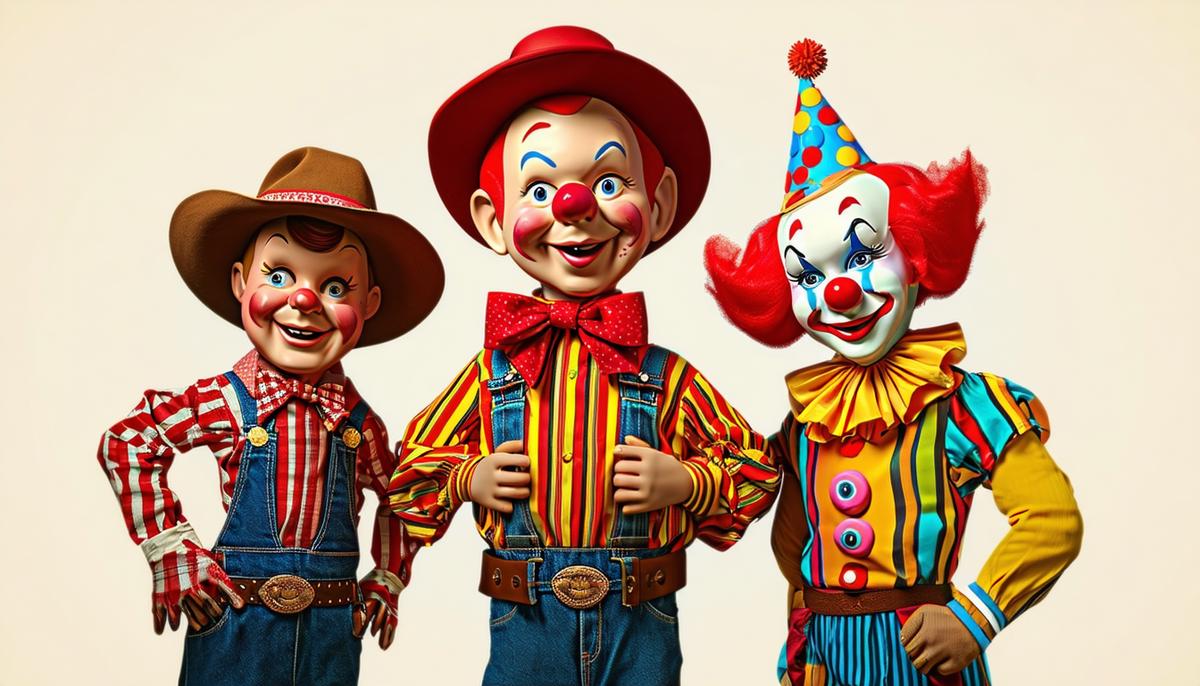
Howdy Doody marionettes, produced by Peter Puppet Playthings, were more than just toys. They brought the magic of the TV show into homes, allowing kids to create their own Doodyville adventures.
These puppets, dressed in Howdy's classic outfit, were must-haves for fans. Today, they're sought-after collectibles, often found in antique shops with price tags reflecting both their monetary and nostalgic value.
"Do you know Howdy Doody?" – Donna Payne, Hog Creek Antiques employee
Collectors appreciate these marionettes as links to a bygone era of children's entertainment. Owning one is like having a piece of history – a reminder of family moments spent around the TV.
The puppet sets often came with instructions and sometimes even a Howdy Doody ring. Collections might include other characters like Mayor Phineas T. Bluster or Dilly Dally, each capturing a different aspect of the show's charm.
These marionettes, with their slight variations depending on make and model, are fascinating collector's items. They represent not just toys, but artifacts of early television history, continuing to spark joy and nostalgia for fans old and new.
Howdy Doody remains a cherished symbol of an era when television first captured the hearts and imaginations of families across America. With its blend of whimsy, humor, and a touch of nostalgia, the show continues to remind us of simpler times filled with laughter and adventure.
- Smith RB. The Howdy Doody Show. New York, NY: Citadel Press; 1954.
- Davis S. Say Kids! What Time Is It? Notes from the Peanut Gallery. Boston, MA: Little, Brown and Company; 1987.