
Imagine a time when kitchen gatherings became more than just a place to swap recipes. In the 1950s, Tupperware parties were more than an event; they were a movement that reshaped how women engaged with their communities and found new avenues for independence. With each pop of a lid, these parties offered not just practical solutions but also sparked connections and opportunities in suburban America.
The Rise of Tupperware Parties
Step into the 1950s, when Tupperware parties were all the rage in suburban living rooms. These weren't your average get-togethers; they changed how America saw kitchen storage and the women who ran the show. At the center of this whirlwind was Brownie Wise, a trailblazer who turned simple parties into thriving business ventures.
Wise wasn't just a party planner; she was a dynamo transforming kitchen chats into business opportunities. Her salesmanship had women tossing bowls and sealing lids with the famous "Tupperware burp." These parties became lively competitions and social events, with women dressed up as if heading to a special occasion.
Picture living rooms buzzing with laughter and the pop of Tupperware lids. It wasn't just plastic sets changing hands but a new kind of independence. Housewives were becoming savvy sales agents, getting a taste of financial freedom.
Wise led the charge with charisma and marketing magic. She took her sales rallies coast to coast, coaching women to sell not just products but a lifestyle. Her ability to engage and excite made Tupperware not just reliable, but cool.
For many women, these gatherings offered more than new containers. They were outings that brought purpose and income, challenging ideas about where women belonged. The parties became a mix of commerce and community, with women finding a stage where they were the stars.
As we look back at Tupperware's rise, it's like opening a time capsule filled with determination and colorful bowls. Housewives wielding spatulas and sales slips became architects of their destinies. Brownie Wise carved out a new role that stood as the ultimate Tupperware superpower.
These parties laid foundations beyond just business success. They challenged norms with a simple lid and a burp, reminding us that opportunity sometimes comes in unexpected packages.
Impact on 1950s Suburban Culture
Tupperware's influence on 1950s suburban culture was as colorful as the products themselves. In post-war America, Tupperware wasn't just practical; it became a symbol of prosperity. As families moved into bigger homes with bigger kitchens, these containers filled a growing need for convenience and organization.
In the neat and tidy world of suburbia, Tupperware represented more than just food storage. Its pastel shades matched the optimism of a nation on the rise, as families settled into neighborhoods that felt secure and stable.
But Tupperware bowls were just part of the story. The real show was the Tupperware party, which transformed neighborhoods into social hubs. For housewives who sometimes felt isolated in their new suburban homes, these gatherings were a breath of fresh air. They weren't just about selling containers; they were chances to connect, chat, and even earn some money.
Tupperware parties became a lifeline, giving women an escape from daily routines. They were places to exchange ideas and aspirations, not just storage tips. While there was plenty of fun and laughter, these parties also wove together a supportive network of women.
These gatherings showcased a new kind of housewife – resourceful, informed, and ready to take on new challenges. Tupperware didn't just latch onto American households; it became part of the culture. The parties continue to be remembered as lively events that brought a hint of change to suburban life.
Indeed, these parties remind us that sometimes big cultural shifts can start right at the kitchen table, under a cheerful plastic lid.
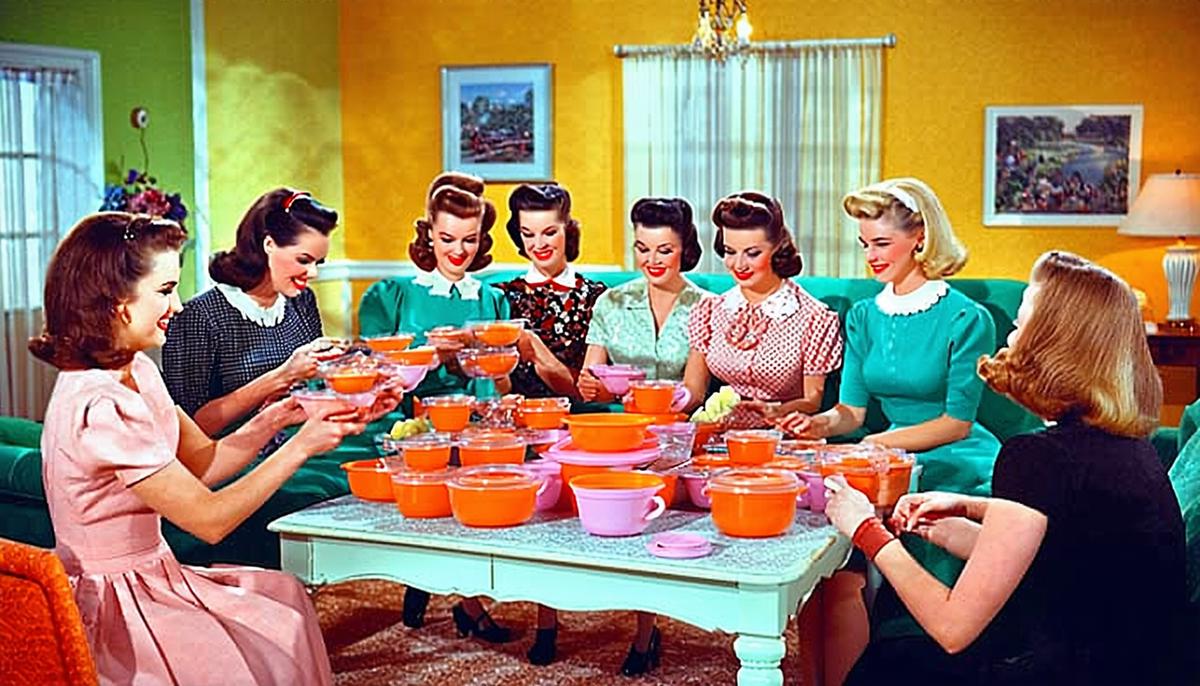
The heart of Tupperware's legacy lies in its ability to transform ordinary living rooms into vibrant hubs of empowerment and community. These gatherings went beyond mere sales pitches, fostering networks that celebrated both practicality and progress. As we look back, it's clear that sometimes the most enduring changes begin right at home, under the pastel glow of a simple plastic lid.
- Kealing B. Life of the Party: The Remarkable Story of How Brownie Wise Built, and Lost, a Tupperware Party Empire. Crown Archetype; 2016.
- Clarke AJ. Tupperware: The Promise of Plastic in 1950s America. Smithsonian Institution Press; 1999.
- Deutsch T. Building a Housewife's Paradise: Gender, Politics, and American Grocery Stores in the Twentieth Century. University of North Carolina Press; 2010.