
Eisenhower Takes Command: NATO's New Leader
Picture this: December 19, 1950. General Dwight D. Eisenhower steps into the spotlight as the Supreme Commander of NATO forces in Europe. This wasn't just any job; it was a big move in the post-World War II chess game, where the stakes were global peace.
Eisenhower's new gig wasn't about just shaking hands and posing for pictures. He had to wrangle NATO's military forces into a team ready to stand strong against the Soviet threat looming over Europe. It was like organizing a sock drawer, but on a global scale.
The appointment came as Cold War tensions were heating up. The Soviet Union was sending chills down spines, and folks needed to know somebody had their backs. Enter Eisenhower, bringing his WWII experience to the table.
With him at the helm, NATO beefed up its defense strategies. It was all about:
- Coordination
- Making sure every soldier was in sync
- Aligning tanks and plans
Eisenhower's role wasn't just about military might—it was about crafting a vision of peace and stability in a world on edge.
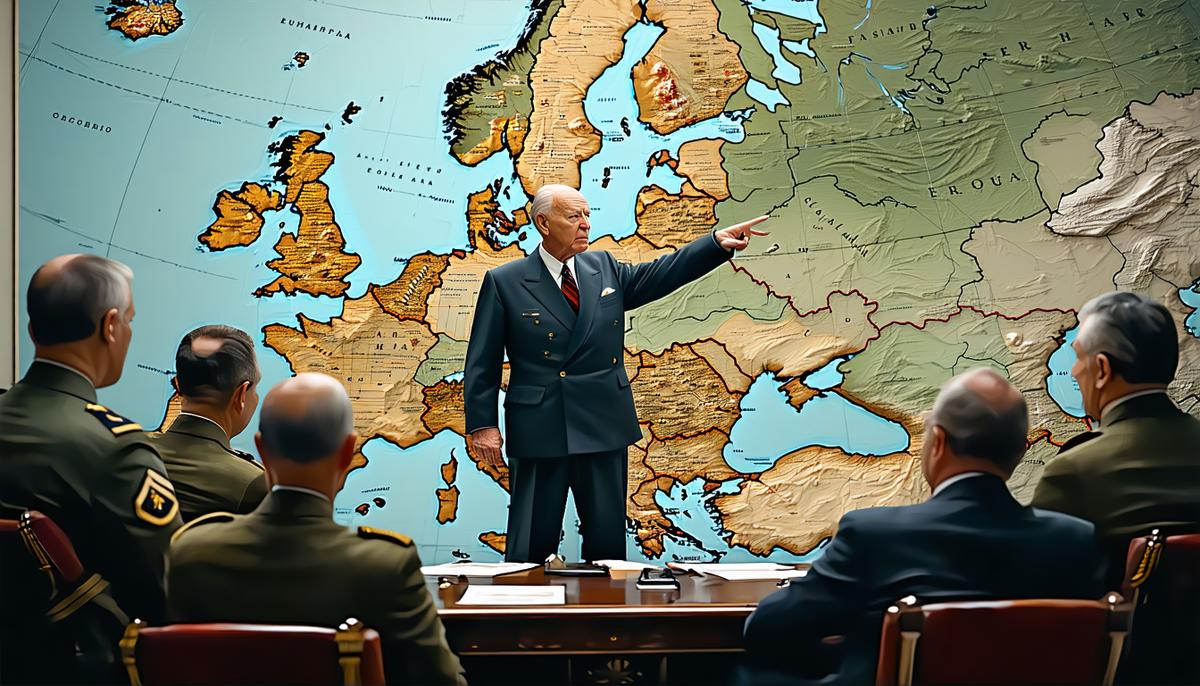
Ike's NATO Legacy: More Than Just Military Might
Eisenhower brought a wealth of experience to NATO. His background included leading the Allied Expeditionary Force during World War II and planning the D-Day invasion. He had a knack for seeing the big picture and could strategize like a pro.
Under his leadership, NATO operated like a well-rehearsed dance. He stressed the importance of forces working together smoothly, ensuring clear communication across the board. After all, a hiccup in communication could spell trouble when the stakes were so high.
"Eisenhower's influence went beyond military preparedness. His calm, commanding presence built trust among member nations."
He helped knit together a patchwork of countries into a sturdy quilt of collective security.
While orchestrating NATO's defenses, Ike made it look easy. His cool-headed diplomacy reassured a jittery Europe that they had more than just a seasoned commander; they had a leader who cared about peace as much as victory.
In the end, Eisenhower left a legacy at NATO that balanced vigilance with vision. His leadership helped steer the ship through the stormy seas of the Cold War, keeping a steady course toward peace.
Libya's Disarmament: A Shift in International Relations
Fast forward to December 19, 2003. In North Africa, Libya made waves in the international arena. Under Muammar Gaddafi's leadership, the country announced it was dismantling its weapons of mass destruction programs, including a secret nuclear weapons initiative.
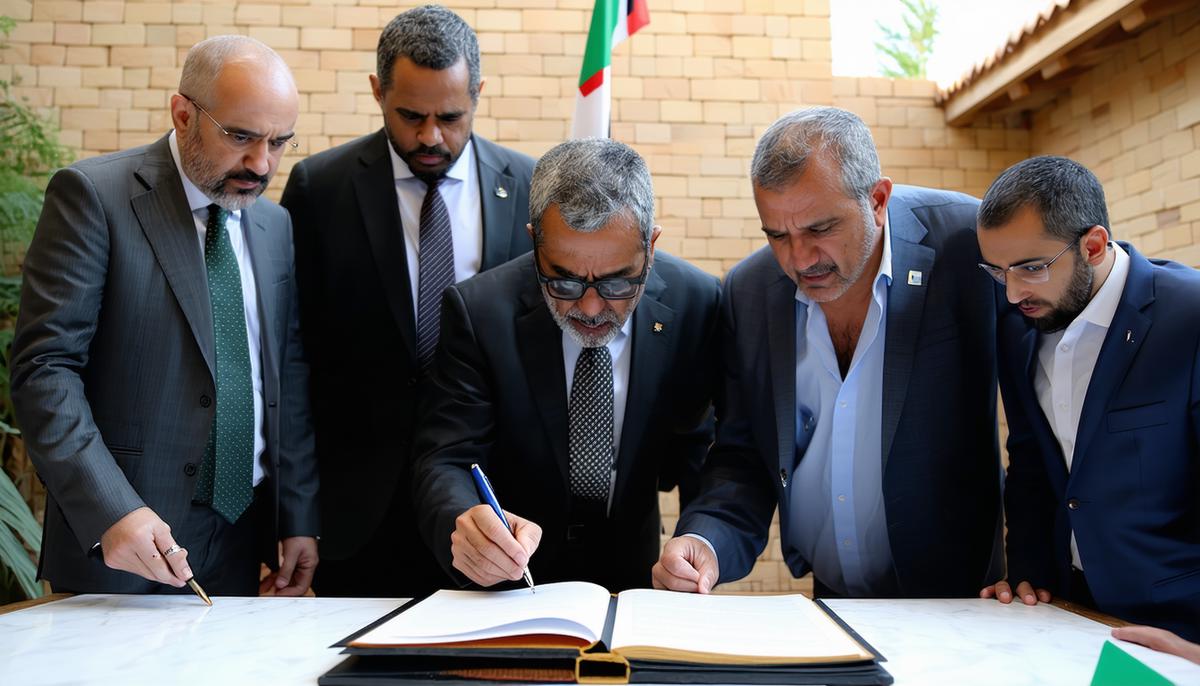
Libya signed up to allow the International Atomic Energy Agency (IAEA) full inspections and oversight. This decision was a big nod to global non-proliferation efforts. Libya was saying, "Hey world, count us in for a safer future."
Imagine diplomats and inspectors descending on Libya to watch history unfold. Gaddafi's surprise announcement played a key role in reshaping Libya's relationship with the world, flipping its image from wildcard to team player in international peace efforts.
This move echoed far beyond Libya's borders. It became an important chapter in the story of non-proliferation, showing how nations could switch from confrontation to cooperation. It was a reminder that change, when unexpected, can hit the right note in the often off-key tune of international relations.
Libya's decision to disarm sent ripples through the international community, whispering of unity and shared responsibility. It made its mark on the world stage, much like Eisenhower's calm yet strategic leadership decades earlier. Each step, whether in Libya's sands or NATO's meeting rooms, built a legacy of hope for a better tomorrow.
- North Atlantic Treaty Organization. The NATO Secretary General's Annual Report 2003. Brussels: NATO Public Diplomacy Division; 2004.
- Ambrose SE. Eisenhower: Soldier and President. New York: Simon and Schuster; 1990.
- International Atomic Energy Agency. Implementation of the NPT Safeguards Agreement of the Socialist People's Libyan Arab Jamahiriya. Vienna: IAEA; 2004.