
Elvis Presley Draft
December 20, 1957, marked a big day in rock and roll history when Elvis Presley got his draft notice. Fans were shocked; their heartthrob was going from swiveling his hips on stage to marching in line.
But Elvis took it in stride. His time in the Army actually boosted his image, showing fans he was a stand-up guy willing to do his duty. People liked that he didn't try to dodge the draft, like some might have expected a star to do.
While some thought his career might stall, the break only seemed to add to his appeal. His service laid the groundwork for a strong comeback, with hits and movie roles that cemented his legendary status.
Folks had mixed reactions. Some worried he'd change, but others found him more relatable. It made Elvis more than just a voice that made people swoon – he became a real American dream in action.
Elvis' draft wasn't just a blip in his career; it was a cultural moment. It showed the grit behind the glitz and made fans love him even more, turning the King into a household name who could charm folks all over.
Montgomery Bus Boycott Conclusion
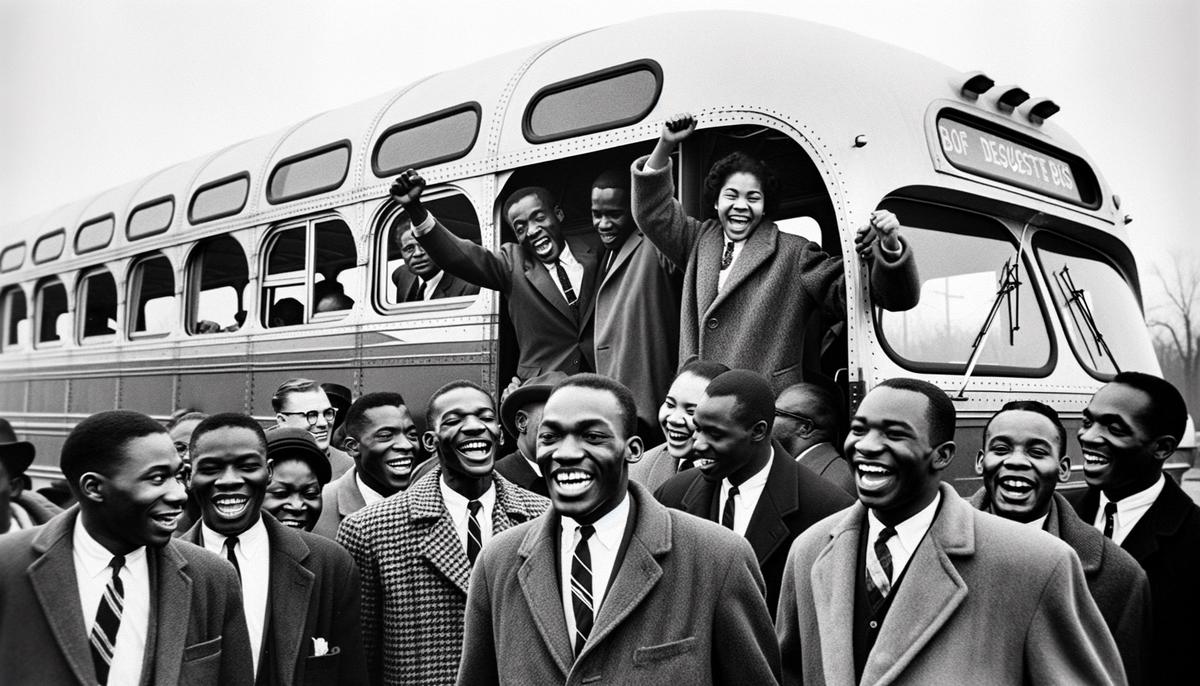
On December 20, 1956, history was being made in Montgomery, Alabama. The Montgomery Bus Boycott was ending after 382 days, led by the charismatic Martin Luther King Jr.
This wasn't just about bus seats; it was a stand against injustice and segregation. The boycott showed the power of people coming together, no matter how tough the road ahead looked.
King's belief in nonviolent protest wasn't just about turning the other cheek; it was about proving that dignity and talking things out could make real change happen.
The boycott changed minds across the country. Through carpools and long walks, Montgomery's black citizens taught America about sticking to your guns. The community pulled together with a spirit that really captures what makes the fifties special in our memories.
When the Supreme Court ruled against segregation on buses, it wasn't just about transportation. It opened doors for bigger changes in equality.
"We came to see that, in the long run, it is more honorable to walk in dignity than ride in humiliation," King said.
The end of the boycott built bridges between people. It showed that peaceful protest worked. The bravery of those who said, "We're here for freedom, and we're not budging till we get it" made waves far beyond Montgomery.
In the colorful tapestry of the 1950s, the bus boycott wasn't just a footnote—it was a starting gun. King and the brave folks of Montgomery wrote a song of unity that still plays in the fight for fairness today.
1950 Film 'Harvey' Premiere
On December 20, 1950, New York City's Astor Theater rolled out the red carpet for the premiere of "Harvey." Crowds lined up, eager to catch this soon-to-be classic from the golden age of movies.
James Stewart was the star of the show, playing Elwood P. Dowd. Stewart wasn't just any actor—he could do serious or silly with ease, and boy, did he nail it in this one! He played Elwood, a guy whose best friend was a giant invisible rabbit named Harvey.
"Harvey," based on Mary Chase's Pulitzer Prize-winning play, was perfect for the 1950s. People wanted to forget their troubles and enjoy a bit of magic. The movie was more than just laughs; it was about friendship and accepting others, even if they're a bit different.
Critics loved how "Harvey" mixed fun with heart. It hit home with what folks valued in the 50s: family, kindness, and the idea that everyone needs a friend, even if that friend is make-believe.
The film left its mark on 1950s movies. It showed you could blend fantasy and reality, giving people something to think about while they were chuckling.
"Harvey" was a bright spot in 1950s cinema, with James Stewart at his charming best. It reminded us that sometimes, the best things in life are the ones we can't see but can feel in our hearts.
Looking back at these 1950s moments, we see more than just events; we see turning points that shaped a generation. From Elvis in uniform to the brave folks in Montgomery to the whimsy of "Harvey," each story shows how people faced change with hope. These tales remind us that even when times are tough, there's always room for a fresh start and a little magic.
- TIME Magazine. Protection for Investors: The SEC is Unequal to the Job. TIME. 1956.
- U.S. House of Representatives Special Subcommittee on Legislative Oversight. Report on the Securities and Exchange Commission. 1959.
- Chase M. Harvey. Random House. 1950.