
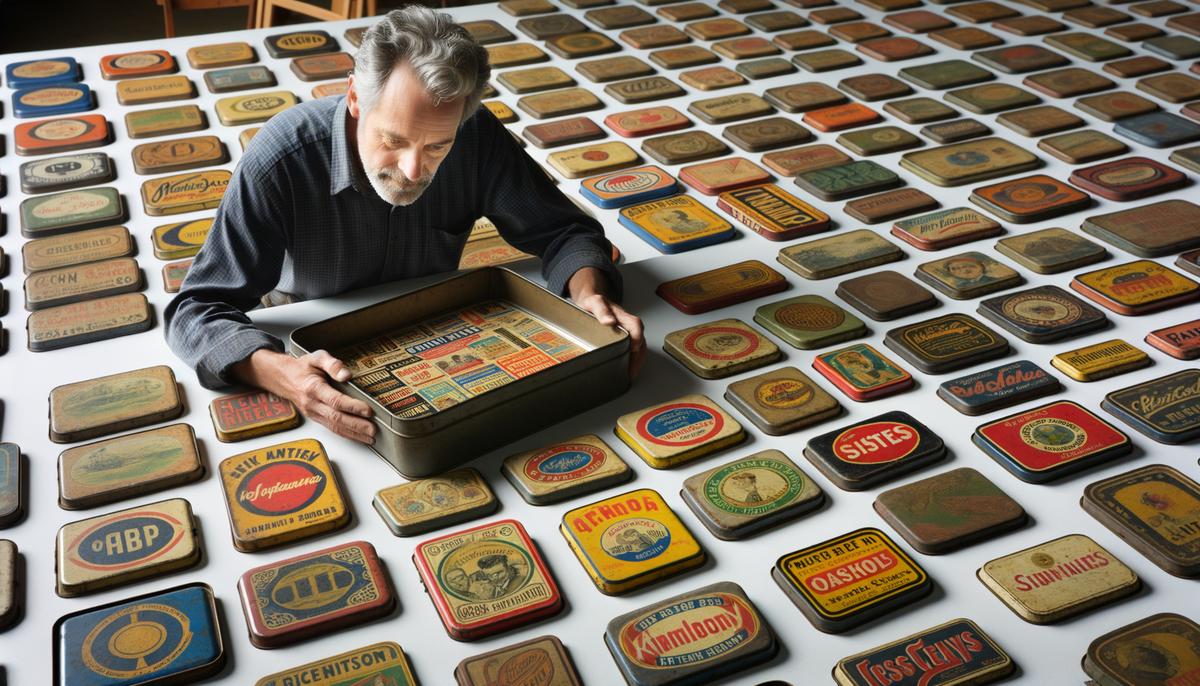
Variety of 1950s Tin Advertising Trays
The 1950s had a knack for making everyday items seem special. Take those tin advertising trays, for example. They weren't just metal; they were colorful canvases. Picture a Budweiser tray, showing off artwork as bold as the beer itself. Each tray reflected a product and a moment in American culture.
Falstaff trays were equally eye-catching, often decorated with vivid colors that grabbed your attention. There was a universal appeal to these designs, a visual style that matched the times. In a 1950s kitchen, you'd likely see a tin tray showcasing a product and eye-catching art once used to attract customers.
These trays weren't just about drinks. They were snapshots of a growing consumer culture, where design and marketing trends moved fast. We're talking about a decade when the bold logo was the star of the show. The colors on those tin canvases were as lively as a 50s dance party.
Looking for variety? The list of tray designs was impressive. There were tin lithographs with fine details that art fans could appreciate. Brands like Knickerbocker brought both art and advertising to life. Like a classic 50s accessory, these items were icons of their time, often connecting with folks who enjoyed a drink and the spectacle of selling it.
From old-timey labels to modern 50s graphics, each tray told a story. American Indian Chief designs, for instance, might interest history buffs or those who simply liked how they looked. These weren't just trays; they were conversation starters, mixing past and present.
Collecting Vintage Tin Trays
If you've taken an interest in vintage tin trays, welcome to a hobby that celebrates mid-century marketing. Starting a collection of these 1950s metal pieces means exploring a world where art meets history. Here are some tips to get you started:
- Choose your focus. Do you like Budweiser trays or Falstaff designs? Maybe you're drawn to American Indian Chief illustrations. Picking a specific interest will make your search more rewarding.
- Set a budget. There are plenty of reasonably priced treasures out there for beginners and experienced collectors. Plan your spending so you can enjoy the hunt without breaking the bank.
- Learn about condition. The brightness of colors, quality of materials, and absence of damage can affect a tray's value. Studying auction trends, joining collector groups, or talking to a trusted dealer can help you understand these details.
- Start your search. Explore auctions, flea markets, and specialty stores. Estate sales can be great for finding hidden gems. Don't forget online marketplaces, which offer lots of options for tray hunting.
- Take care of your collection. Use acid-free materials to protect your trays from time and the elements. Display them proudly, like you're setting up for a 1950s party.
With some know-how and enthusiasm, collecting these tin masterpieces can be a fun journey through the colorful world of the 1950s.
Historical and Artistic Significance
1950s tin advertising trays are more than just cool decorations. They're pieces of history that mix marketing smarts with artistic skill. These trays were art pieces that decorated homes, entertained guests, and created memories. Each one shows how American consumer culture and design were changing during this exciting decade.
For brands looking to make an impression, these trays were prime advertising space. They fit right in at local diners, showing off bright colors and bold designs that kept conversations lively. They weren't subtle – they proclaimed their messages loudly, but with a touch of artistic flair. It was a showcase of the fresh and daring design leading the way in 1950s advertising.
Companies put as much thought into a tray's design as they did into their products. Each piece told a story, drawing attention to drink options and creating memorable art. Imagine a Knickerbocker tray with intricate patterns or a Budweiser piece showing scenes from American history. These designs mixed nostalgia with eye-catching visuals.
The artists who created these trays were as skilled as those making posters and other collectible prints. Their work reflected the optimism and freedom people felt after World War II, using vivid colors and catchy images to celebrate life.
Today, these trays are cherished windows into the past. For folks who love the 1950s, they bring back warm memories, like flipping through an old photo album. Their lasting appeal comes from their ability to capture the spirit of the time, reminding us of the charm and simplicity of a bygone era.
When you look at a vintage tray, you're connecting with a lively piece of history painted in bright, nostalgic colors. It's a salute to a time when art and advertising danced together, leaving behind fun keepsakes that still spark joy today.
So, next time you find yourself looking at one of those vintage tin trays, remember you're not just seeing a piece of metal. You're connecting with a slice of history that captures the fun spirit and creativity of the 1950s. It's a reminder that even everyday objects can tell interesting stories about the past.
- Smith J. The Art of Advertising: A History of American Commercial Culture. New York, NY: Oxford University Press; 2019.
- Johnson M. Collecting Vintage Advertising: A Guide to Nostalgia and Design. Chicago, IL: Antique Collectors Club; 2018.
- Brown R. The Golden Age of Advertising: The 1950s. Cologne, Germany: Taschen; 2015.