
Development of the Fulton System
Picture this: it’s the early 1950s, and a bunch of clever aviators are scratching their heads over a tricky problem. How do you pick up people and gear from spots where landing a plane is a no-go? Enter Robert Edison Fulton, Jr., a guy with ideas as wild as his name suggests.
Back then, recovery systems were pretty basic – think clotheslines between poles. But Fulton had bigger dreams. He started tinkering with weather balloons, nylon, and test dummies. It was the kind of experiment that’d make your average thrill-seeker think twice.
The CIA and Air Force perked up their ears, seeing potential in Fulton’s crazy idea. Admiral Luis de Florez gave Fulton the nod, hooking him up with the Office of Naval Research. Soon enough, Fulton was playing with pressurized helium and super-tough nylon lines, turning the sky into his personal workshop.
Testing kicked off in the Colorado Desert. Picture a P2V Neptune soaring overhead, trailing a line like a kite string. Fulton’s big challenge? Crafting a sky anchor tough enough to handle high winds and speedy flights. These weren’t just any old steel horns – they were carefully designed to snag a line mid-air, like a giant game of catch.
It wasn’t all smooth sailing, but persistence paid off. In ’58, Staff Sergeant Levi Woods took the plunge, becoming the first human to test the system. Talk about a leap of faith! The Skyhook, as it came to be known, was more than just a neat trick. It was a game-changer, ready to tackle the high-stakes missions of the Cold War.
Mechanics of the Skyhook System
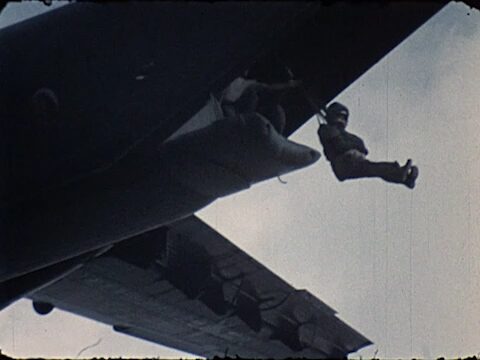
Let’s break down how this wild contraption actually worked. Imagine you’re the lucky soul about to take a ride on the Skyhook. First, you’d slip into a snug harness, complete with a self-inflating helium balloon. This balloon would lift a 500-foot nylon line – your lifeline to safety.
You’d stand facing the wind, balloon bobbing above you. Along comes a plane – maybe an MC-130E Combat Talon I or a B-17 Flying Fortress – sporting a big V-shaped yoke on its nose. This yoke is designed to catch your lift line, kind of like a catcher’s mitt for people.
As the plane swoops in, it aims for your line. At night, red flags with lights help the pilots spot their target. Once they make contact – bam! You’re airborne, literally swept off your feet.
The plane’s winch then reels you in, while the crew gets ready to welcome you aboard. Before you know it, you’re safely inside, probably wondering if what just happened was real or a scene from a sci-fi flick.
It’s the kind of system that’d make even the coolest cat’s jaw drop. Pure 1950s ingenuity at its finest.
Operational Use and Historical Context
The Fulton System wasn’t just for show – it played a starring role in some of the Cold War’s most hair-raising operations. Take Project Coldfeet in 1962, for instance. While most folks were worrying about their next sock hop, the CIA was eyeing an abandoned Soviet drift station in the Arctic.
Two gutsy operatives parachuted onto this floating ice platform, snagged some top-secret Soviet goodies, then got plucked out of there by Skyhook. Picture it: an MC-130 swooping in over the icy wasteland, snatching up our boys and their prize like a magician’s trick.
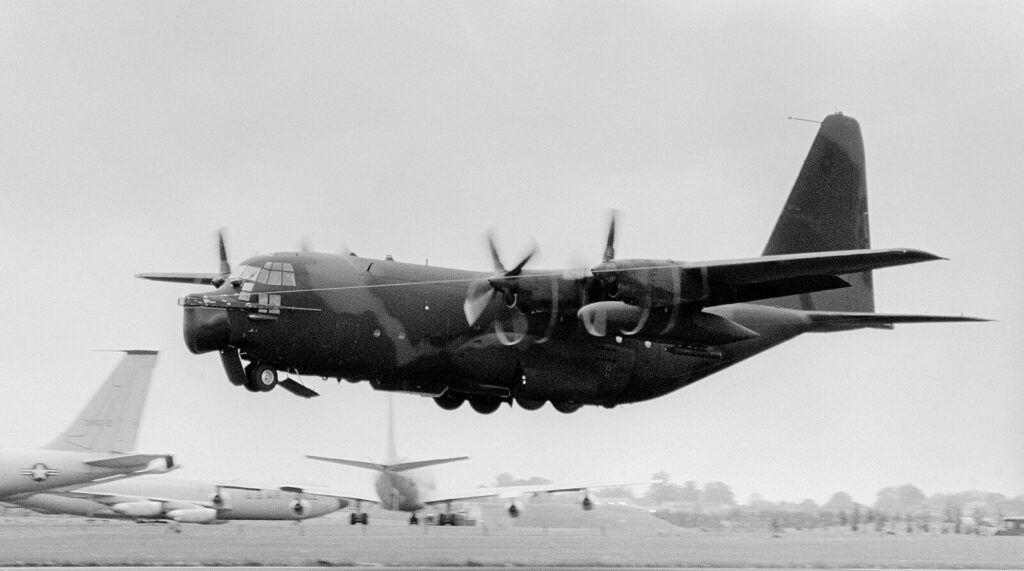
But Coldfeet was just the beginning. Skyhook became a go-to for all sorts of cloak-and-dagger stuff. It rescued stranded soldiers, picked up downed pilots from enemy turf, and even grabbed spies from far-flung corners of the globe.
For the CIA, Air Force, and Navy, Skyhook was the bee’s knees. It opened up a whole new playbook for missions where landing just wasn’t an option. Sure, newer tech like long-range helicopters eventually pushed it aside, but for a good while there, Skyhook was the coolest kid on the block.
Challenges and Limitations
Now, don’t go thinking the Fulton system was all peaches and cream. Developing this sky-high wonder was tougher than a two-dollar steak. The biggest headache? That sky anchor. It had to be strong enough to snag a line at breakneck speeds without snapping like a twig.
And let’s not forget the risks. Dangling a person from a balloon isn’t exactly a walk in the park. But get this – in all its years of use, there was only one tragic accident. In 1982, during a training exercise in Germany, SFC Clifford Wilson Strickland was lost when the line slipped. A sobering reminder that even the coolest tech can have its dangers.
As time marched on, Skyhook started to show its age. Newer, fancier helicopters came along, offering smoother rides without all the balloon fuss. By 1996, the Air Force decided to hang up its Skyhook hat for good.
But hey, don’t shed a tear for ol’ Skyhook. It had a good run, showing us that with a little elbow grease and a lot of gumption, even the wildest ideas can take flight.
Cultural Impact and Legacy
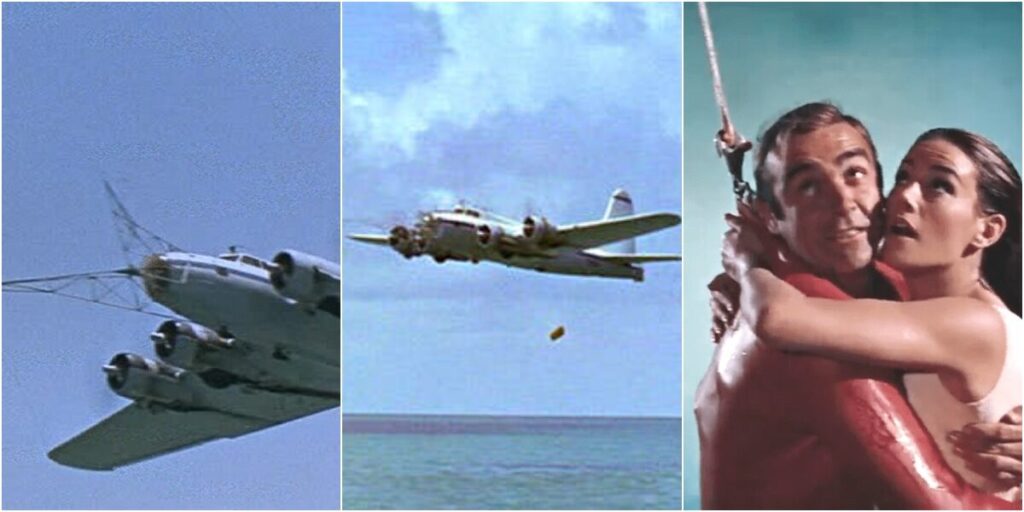
Skyhook didn’t just make waves in the military world – it became a bona fide pop culture star. Hollywood couldn’t get enough of this high-flying gadget. Remember that jaw-dropping scene in “Thunderball” where James Bond gets whisked away? That was Skyhook in action, baby!
Even Batman got in on the act. In “The Dark Knight,” the Caped Crusader used a Skyhook-style gizmo for a slick getaway in Hong Kong. Talk about a scene-stealer!
And for the joystick jockeys out there, Skyhook found new life in video games. “Metal Gear Solid V: The Phantom Pain” let players airlift everything from secret agents to confused sheep. Who says espionage can’t be fun?
So why does Skyhook still capture our imagination? Maybe it’s because it represents a time when the sky wasn’t the limit – it was just the beginning. It’s a reminder of an era when folks weren’t afraid to dream big and reach for the clouds.
Sure, Skyhook might be retired now, but its legacy lives on. It’s a testament to good old American know-how and the kind of can-do spirit that defined the 1950s. In a world of smartphones and space stations, Skyhook still manages to make us look up and wonder, “What if?”
The Fulton System stands as a high-flying tribute to 1950s ingenuity. It reminds us of a time when no idea was too out there, when the sky wasn’t a barrier but a playground. This airborne marvel, born from a mix of creativity and guts, continues to inspire us to reach for the stars – or at least a low-flying aircraft!
- Fulton RE Jr. Skyhook and Operation Coldfeet. Naval Institute Press; 2011.
- Central Intelligence Agency. The CIA and the U-2 Program, 1954-1974. Center for the Study of Intelligence; 1998.
- Haas PJ. Apollo’s Warriors: US Air Force Special Operations during the Cold War. Air University Press; 1997.