
They burned too hot to last, but oh, how they burned. Ava Gardner and Frank Sinatra weren’t just another Hollywood couple—they were a force of nature. Their love was a dazzling explosion of passion, scandal, and heartbreak that kept the tabloids spinning and left a permanent mark on Hollywood history. He called her “the love of his life”; she said he was her “one true regret.” Together, they were unstoppable. Apart, they never really let go.
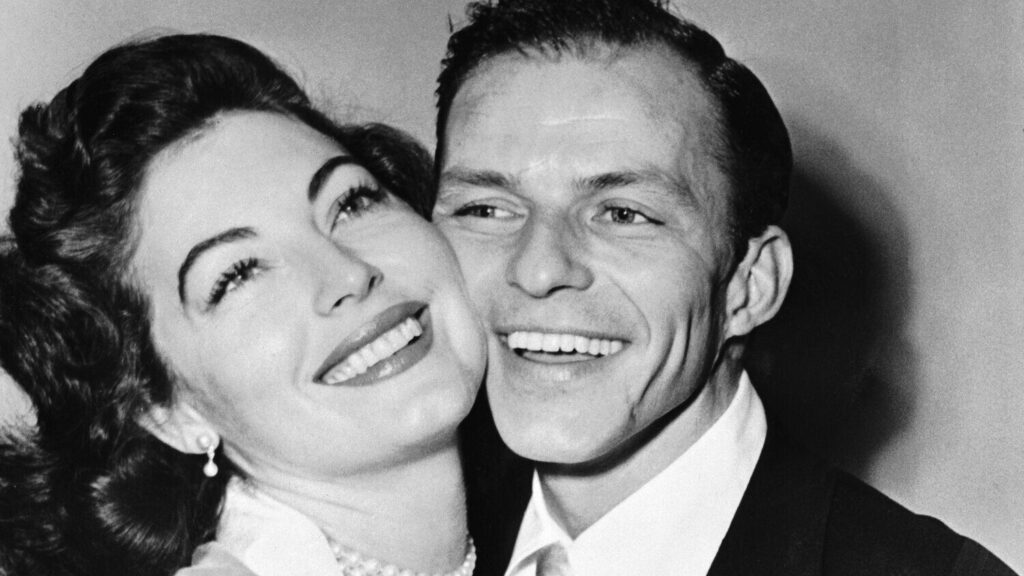
But Sinatra was hardly her first, and definitely not her last. Ava lived on her own terms, collecting lovers like she collected passports, each romance as tempestuous as the one before…
Ava Gardner’s Early Marriages
Ava Gardner, a Southern belle with a spark, found herself in Hollywood’s romance web early on. Her first marriage was to Mickey Rooney in 1942 when she was just 19. Mickey was already a star, but their marriage only lasted nine months.

Not long after, Gardner married bandleader Artie Shaw in 1945. This marriage also ended quickly, lasting about a year. These short-lived marriages taught Ava a lot about love and Hollywood life.
Through these experiences, Ava learned to approach love with more wisdom, but she never lost her enthusiasm for it. These early relationships helped shape her into the screen siren we remember today.
The Explosive Romance with Frank Sinatra
Ava Gardner’s romance with Frank Sinatra was like something out of a movie. They first met at an MGM Studios event in the 1940s, and the spark was instant. Frank, still married to Nancy at the time, called Ava his dream girl.
Their affair became public in 1949, causing quite a stir. As soon as Frank’s divorce was final in 1951, he and Ava got married. Their wedding was as fancy as you’d expect, complete with a getaway from the paparazzi.
Their relationship was a rollercoaster of highs and lows. One minute they were the picture of Hollywood love, the next they were fighting passionately. The press followed their every move, adding pressure to their already intense relationship.
"Frank told me that was a very intense relationship, a very tempestuous one. She could drink me under the table. As far as language, stuff came out of her mouth that could grow hair on the wall."
Even after they divorced in 1953, Ava and Frank still cared for each other. Ava always said Frank was the love of her life. Their story shows us a bit of what the 1950s were like – full of drama, passion, and larger-than-life personalities.
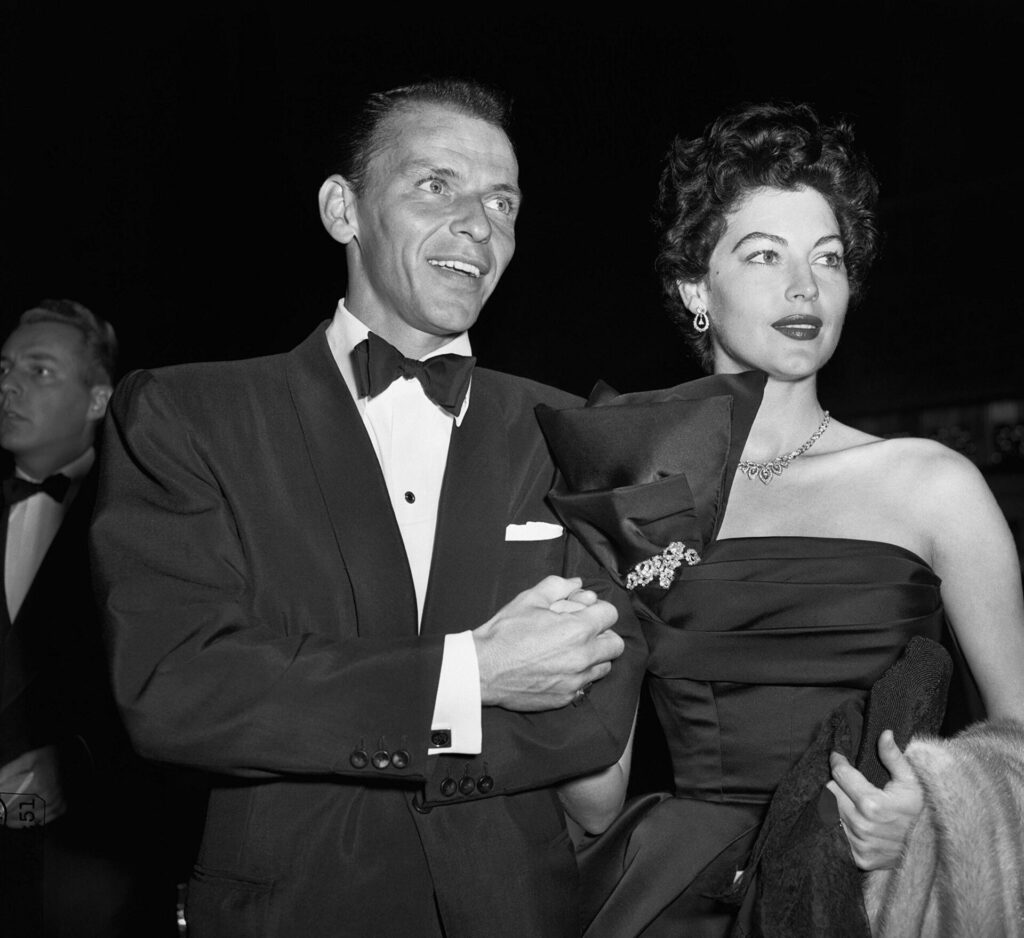
Life After Sinatra
After her divorce from Frank Sinatra, Ava Gardner continued to live life on her own terms. She traveled the world and made more movies, keeping her mysterious allure.
Ava formed a close friendship with Ernest Hemingway, finding comfort in his company and his Havana estate. She also had romances with Spanish bullfighter Luis Miguel Dominguín and actor George C. Scott, each bringing new excitement to her life.
In her later years, Ava reflected on her life with charm and honesty. She knew people saw her as a glamorous movie star, but she also longed for a simpler life and lasting love. Her autobiography, published after she died, shows us the real woman behind the Hollywood legend.
Ava Gardner’s life after Sinatra was full of adventure and reflection. She remained a bright star of the 1950s, reminding us of a time when glamour and real-life drama went hand in hand.
Frank Sinatra’s Marriages and Legacy
Frank Sinatra’s love life was as eventful as his singing career. His first marriage to Nancy Barbato was like a 1950s American dream, complete with three kids and a white picket fence.
But Hollywood had other plans. Sinatra’s whirlwind romance with Ava Gardner changed everything. Even after their divorce, he kept a bond with Nancy that lasted his whole life.
In the 1960s, Frank married actress Mia Farrow. Their May-December romance was brief but showed how Sinatra kept up with changing times.
His last marriage to Barbara Marx in the 1970s brought him stability. Together, they focused on charity work and enjoying life’s simple pleasures.
- Nancy Barbato (1939-1951)
- Ava Gardner (1951-1957)
- Mia Farrow (1966-1968)
- Barbara Marx (1976-1998)
Through all his marriages, Frank Sinatra’s image as a romantic crooner only grew stronger. His relationships with these different women showed us a man who was always learning and living life to the fullest.
Sinatra’s personal life, just like his music, helped define the style and romance of the 1950s. He loved intensely and sincerely, always with that classic Sinatra charm.
Ava Gardner’s Legacy and Reflections
Ava Gardner left a mark on Hollywood that goes beyond her movies. She wasn’t just beautiful; she brought depth and realness to her roles that made her stand out.
Coming from a small town in North Carolina, Ava’s rise to fame is a Hollywood story in itself. She wasn’t afraid to take on challenging roles, showing audiences what strong female characters could be like.
In her personal life, Ava was just as real. She spoke honestly about her relationships, especially her love for Frank Sinatra. She also talked about the gap between how people saw her and who she really was.
"One good man I could love and marry and cook for and make a home for, who would stick around for the rest of my life. I never found him. The trouble was that I was a victim of image."
Today, we remember Ava Gardner as more than just a movie star. She showed us that being true to yourself is important, even in the glitzy world of Hollywood. Her story still inspires people who want to be themselves in a world that often wants them to be something else.
Ava Gardner remains a big part of how we remember the 1950s – a time of elegance, adventure, and unforgettable personalities.
Ava Gardner and Frank Sinatra remind us of a time when Hollywood was full of glamour and excitement. Their stories show us that even big stars had real feelings and challenges, just like us. They help keep the charm of the 1950s alive in our memories.
- Oppedisano T. Sinatra and Me: In the Wee Small Hours. Scribner; 2021.
- Gardner A. Ava: My Story. Bantam Books; 1990.
- Evans P. Ava Gardner: The Secret Conversations. Simon & Schuster; 2013.