
Early Life and Musical Influences
B.B. King, born Riley B. King in 1925 in Itta Bena, Mississippi, grew up in a sharecropping family. His early musical influences came from gospel music in church. Later, legends like T-Bone Walker and Charlie Christian shaped his style.
Before music, B.B. worked mowing fields and driving tractors. In the late 1940s, he switched from gospel to rhythm and blues. His first recording was with Bullet label in 1949, but it was his 1951 hit “Three O’Clock Blues” that caught people’s attention.
B.B.’s playing style was unique, with a vibrato that became his signature. His transition from farm worker to blues icon showed his dedication and talent. He even became a DJ in Memphis, earning the nickname “Blues Boy” – which became B.B. for short.
The influence of Walker and Christian can be heard in B.B.’s music, especially in the interplay between his guitar and voice. Songs like “Rock Me Baby” and “Why I Sing the Blues” showcase his ability to convey emotion through music.
Early Education
King attended Elkhorn School, maintained by the Elkhorn Church, Primitive Baptist. His teacher, Luther Henson, taught Riley to read and instilled values of self-reliance, fair-mindedness, and devotion to self-improvement. Henson’s influence was lifelong. The school year was bounded by the growing season, with all children working in the fields.
Breakthrough and Rise to Fame
After “Three O’Clock Blues” topped the rhythm and blues charts, B.B. King’s career took off. He began touring extensively, playing over 300 shows a year. This grueling schedule helped spread his music and build his reputation.
B.B.’s influence extended beyond blues, inspiring rock guitarists of the 1960s like Eric Clapton and Jimi Hendrix. His performances at venues like the Fillmore Auditorium in San Francisco introduced him to predominantly white audiences, marking a significant crossover in his appeal.
"When Love Comes to Town," a collaboration with U2, brought B.B.'s blues to a new generation of listeners.
Through his tireless touring and musical innovations, B.B. King became more than just a musician. He became a symbol of the blues, touching hearts across the nation with his soulful expression.
Notable Performances
- 1965: Live album “Live at the Regal” captures the power of his live performances
- 1969: “Why I Sing the Blues” adds a politically charged layer to his music
- June 8, 1968: First standing ovation from a predominantly white audience at Fillmore Auditorium
- July 27, 1968: Plays the Newport Folk Festival in Newport, RI
Musical Style and Innovations
B.B. King’s guitar, Lucille, was more than just an instrument – it was his musical partner. His mastery of lyrical single-string solos and distinctive vibrato became his trademark, allowing him to convey deep emotion through his playing.
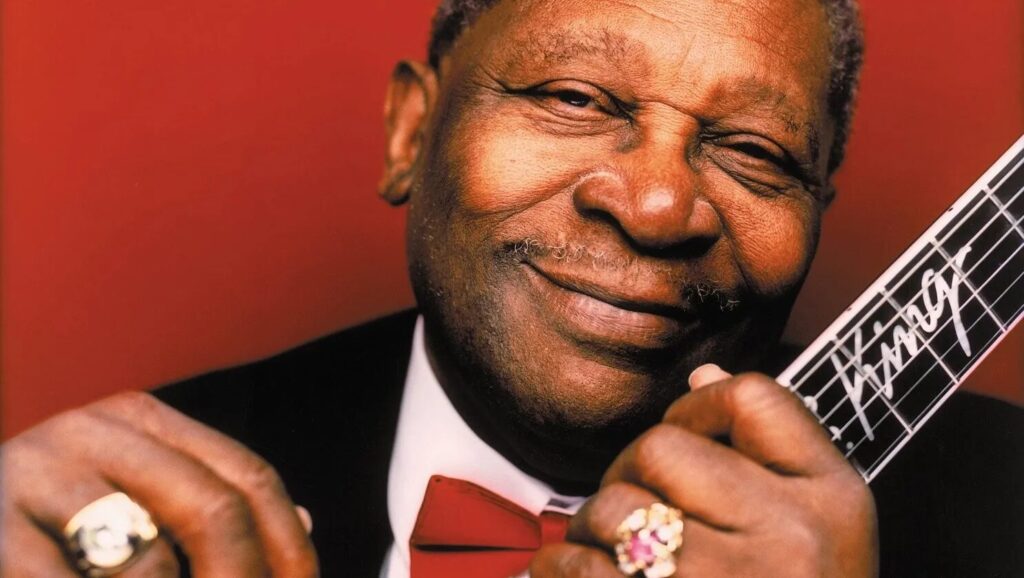
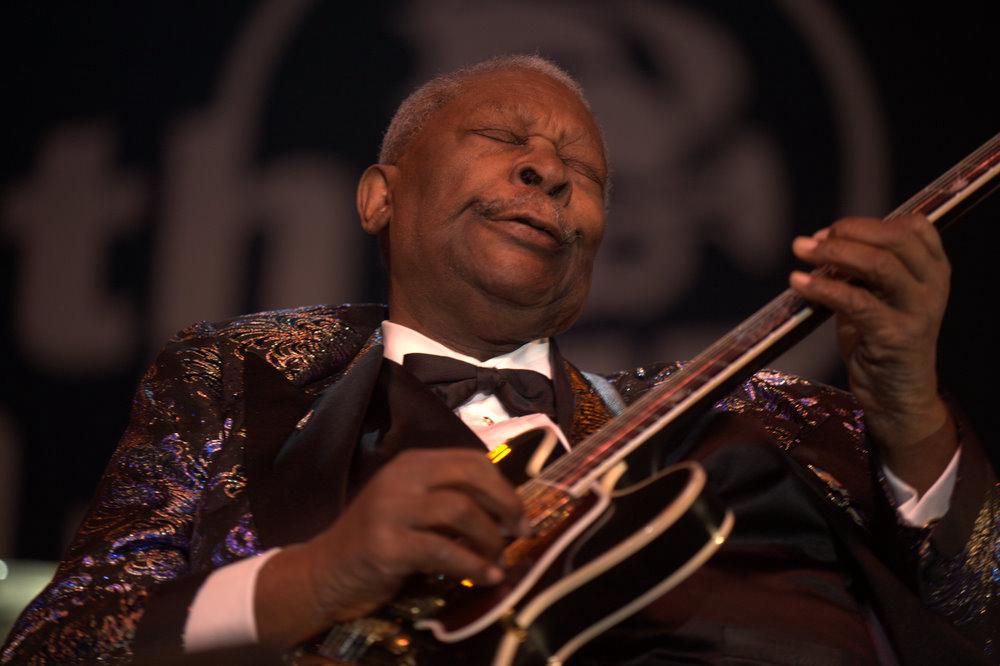
Live performances were where B.B. truly shone. He had a knack for connecting with audiences, turning concerts into shared experiences of human emotion. His shows weren’t just about the music; they were about storytelling and creating a bond with listeners.
What set B.B. apart was how he combined his guitar playing with his vocals. He didn’t overwhelm audiences with technical prowess but chose each note carefully to create a deeper emotional connection. This approach made him the standard-bearer for blues music, influencing countless artists across various genres.
B.B. King’s style solidified his reign as the ‘King of the Blues,’ a title earned through his emotional performances and distinctive sound.
Collaborations and Later Career
In his later career, B.B. King became a respected elder statesman of the blues. His collaborations with various artists showcased his adaptability and continued relevance in the music world.
His work with Eric Clapton on “Riding with the King” brought the blues to a new generation, winning a Grammy in the process. The collaboration with U2 on “When Love Comes to Town” blended blues with rock, appealing to a diverse audience.
B.B.’s album “One Kind Favor” saw him return to his Delta blues roots. Produced by T-Bone Burnett, it stripped away the frills, focusing on B.B.’s raw, soulful sound. The album felt like a musical autobiography, reflecting on his journey from Mississippi to worldwide fame.
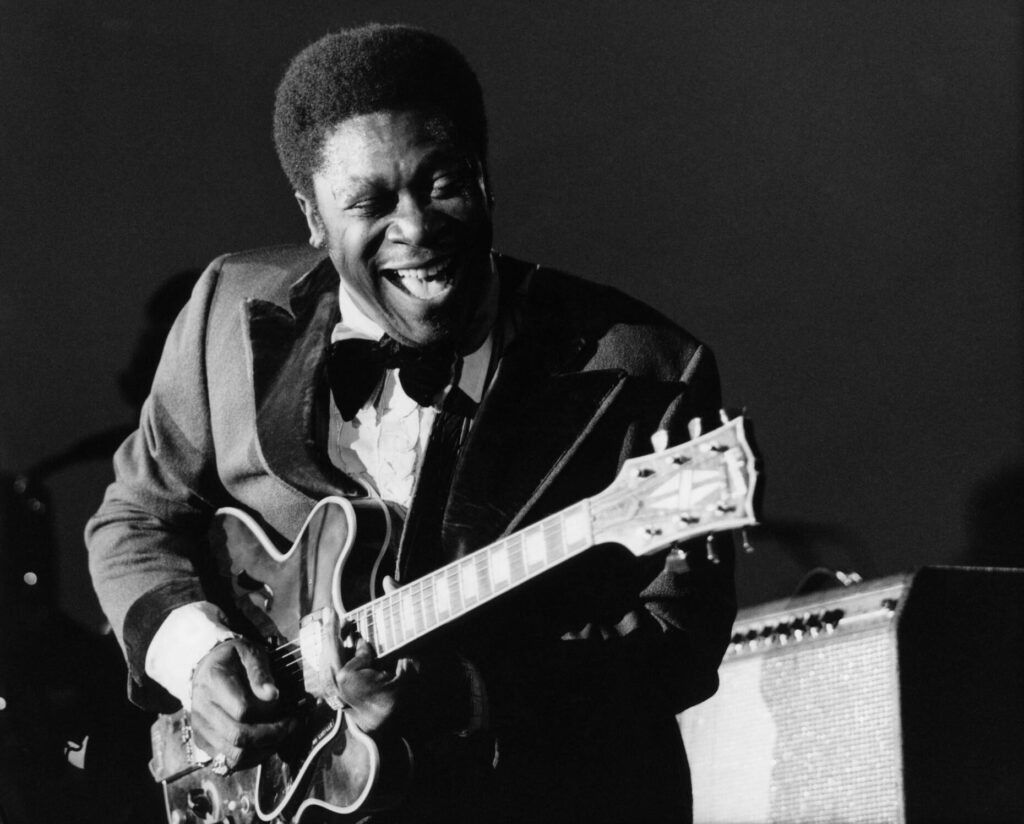
With each new release and collaboration, B.B. King expanded his influence. He continued to win Grammys and shape perceptions of blues music. His later career proved that his appeal was timeless, solidifying his status as a true music legend.
Awards and Honors
- 1980: Inducted into the Blues Hall of Fame
- 1987: Grammy Award for lifetime achievement
- 1987: Inducted into the Rock and Roll Hall of Fame
- 1990: Received the National Medal of Arts
- 1995: Kennedy Center honoree
- 2006: Awarded the Presidential Medal of Freedom
B.B. King’s legacy is a testament to the power of passion and perseverance in music. His journey from a Mississippi kid to the ‘King of the Blues’ is a story of heart, soul, and strings that continue to resonate with generations. His influence remains a timeless melody, echoing through the annals of musical history.
- King BB, Ritz D. Blues All Around Me: The Autobiography of B.B. King. New York: Avon Books; 1996.
- Sawyer C. The Arrival of B.B. King: The Authorized Biography. New York: Doubleday; 1980.
- Danchin S. Blues Boy: The Life and Music of B.B. King. Jackson: University Press of Mississippi; 1998.