
Ah, the 1950s—a time when board games brought families together around the dining room table. These classic games not only entertained but also mirrored the hopes and dreams of an optimistic era. Let’s take a stroll down memory lane to rediscover how they captured the spirit of their time.
7. Easy Money
Easy Money transforms your table into a Wall Street playground. Players become entrepreneurs, building empires of businesses, airlines, and hotels. It’s a blend of strategy and luck, where every move could lead to riches or ruin.
As you navigate the board, you’ll balance risky investments with careful planning. Your empire grows with each acquisition, but fortune can change quickly. Easy Money captures the ’50s spirit of endless opportunity, where each decision could lead to success or setback.
The game’s appeal lies in its mix of strategy and chance, creating moments of excitement and tension. It’s a fun way to relive the era’s optimism and dream of striking it rich, all from the comfort of your living room.

6. Monopoly
Monopoly, though created earlier, hit its stride in 1950s America. It perfectly captured the era’s optimism and consumer culture. Players become tycoons, buying properties from Baltic Avenue to Boardwalk, aiming to build an empire and bankrupt their opponents.
The game’s charm lies in its mix of strategy and luck. Every roll of the dice could lead to fortune or ruin. Monopoly fosters both rivalry and camaraderie, as friends become competitors vying for prime real estate.
Monopoly’s enduring appeal comes from its endless possibilities. Will you end up in Jail or hit the jackpot with Free Parking? The game offers a playful romp through economics and chance, perfectly capturing the ’50s ethos of accessible prosperity.

5. Stratego
Stratego, the game of cunning and subterfuge, puts you in command of an army with one goal: capture the enemy’s flag. It’s not just about strength, but outsmarting your opponent. Each piece is a mystery, potentially your champion or downfall.
The game’s brilliance lies in bluffing. You must move pieces confidently to mask your intentions, turning battles into a chess-like dance of wits. Since its U.S. debut in the early ’60s, Stratego has delighted players with its mix of strategy and secrecy.
In an age of fast-paced games, Stratego reminds us of a time when a single clever move could change everything. It’s a timeless battle of wits and bluffs on a simple 10×10 grid.

4. Risk
Risk, released by Parker Brothers in 1959, challenges players to achieve global domination. The game spreads a world map before you, with colored armies ready for conquest. It’s a test of strategy, patience, and maybe a bit of cunning.
What makes Risk exciting is the balance between alliances and betrayals. Will your partnerships hold, or will they crumble? The thrill comes from knowing when to defend and when to attack. Each dice roll represents a battle, as you imagine your forces marching across continents.
In a world of quick digital games, Risk reminds us that sometimes the best strategy takes time and thought. It captured imaginations in the ’50s and continues to do so today, letting players plot world takeover from the comfort of home.

3. Clue
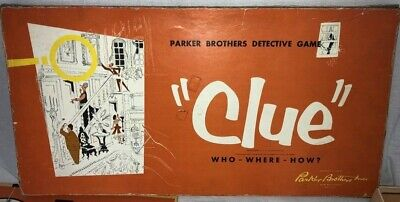
Clue, introduced in the late 1940s and embraced in the ’50s, turns players into detectives. Your mission? Solve who committed the crime, with which weapon, and where. Picture Colonel Mustard in the library with the candlestick, or Miss Scarlet plotting in the conservatory.
The game’s appeal lies in its blend of strategy and suspense. Players must use deduction, not luck, to crack the case. Clue transforms any evening into a thrilling whodunit, allowing families to become part of a mysterious story right from their living room.

2. Candy Land
Candy Land, created in 1945, became a 1950s staple. This simple racing game takes young players through a world of Gum Drop Mountain, Candy Cane Forest, and Gramma Nutt. It embodies the era’s innocence, where the biggest worry was whether Lord Licorice would trap you or Queen Frostine would speed you along.
Despite the rise of digital games, Candy Land’s charm persists. Drawing cards and moving through sugary locales still captivates kids today. Every game is a journey to King Kandy’s Castle, perfect for young imaginations to run wild in a sweet, colorful landscape.

1. The Game of Life
The Game of Life, introduced by Milton Bradley in the 1950s, simulates life’s journey with a spin-and-move mechanic. Players start with $2000 and a car, aiming to reach that million-dollar mark. Each turn represents life’s unpredictable path, with opportunities to strike it rich or go bankrupt.
Art Linkletter added family-friendly charm to the game, where decisions shape your destiny. It’s all about cashing paychecks and navigating adulthood’s challenges. Today, the game remains a symbol of choice-driven fun, offering life lessons wrapped in cardboard nostalgia.


These beloved games from the 1950s offer more than just entertainment. They reflect an era that celebrated imagination and togetherness, reminding us of simpler times when joy came from shared experiences and friendly competition.
- Hasbro. The Game of Life. Milton Bradley, 1960.
- Abbott E. Candy Land. Milton Bradley, 1949.
- Pratt A. Clue. Waddingtons, 1949.
- Lamorisse A, Levin M. Risk. Parker Brothers, 1959.
- Mogendorff J. Stratego. Milton Bradley, 1961.
- Darrow C, Magie E. Monopoly. Parker Brothers, 1935.
- Easy Money. Milton Bradley, 1956.