
Origins and Development
Before Howdy Doody became a TV star, he started on radio. In 1947, “The Triple B Ranch” aired on NBC’s New York station, featuring Big Brother Bob Smith. Bob’s catchy “Oh, ho, ho, howdy doody” catchphrase was a hit with listeners.
Howdy Doody evolved from a radio character into a puppet with red hair and 48 freckles – one for each state. When TV took off, Howdy made the jump. The show began as Puppet Playhouse in December 1947, quickly changing to The Howdy Doody Show.

Howdy wasn’t alone in Doodyville. A cast of colorful characters joined him, making the transition from radio to TV exciting for families across America.
Popularity and Influence
The Howdy Doody Show wasn’t just about Howdy. Characters like Mayor Phineas T. Bluster and Flub-a-dub added to the fun. The show pushed boundaries with split-screen technology, allowing Howdy to interact with Buffalo Bob from different cities.
In 1954, The Howdy Doody Show went color, making Howdy’s grin even more dazzling. This move helped usher in TV’s golden age. Howdy’s face even became NBC’s color test pattern.
The show mixed entertainment with education. In 1948, Howdy ran for “President of the Kids of America,” teaching children about democracy. This blend of fun and learning made The Howdy Doody Show a family favorite.
Cultural Impact
The Howdy Doody Show was more than just puppet antics. It taught kids important lessons in a fun way. Howdy’s presidential campaign wasn’t just a silly plot – it introduced children to the basics of the American political process.
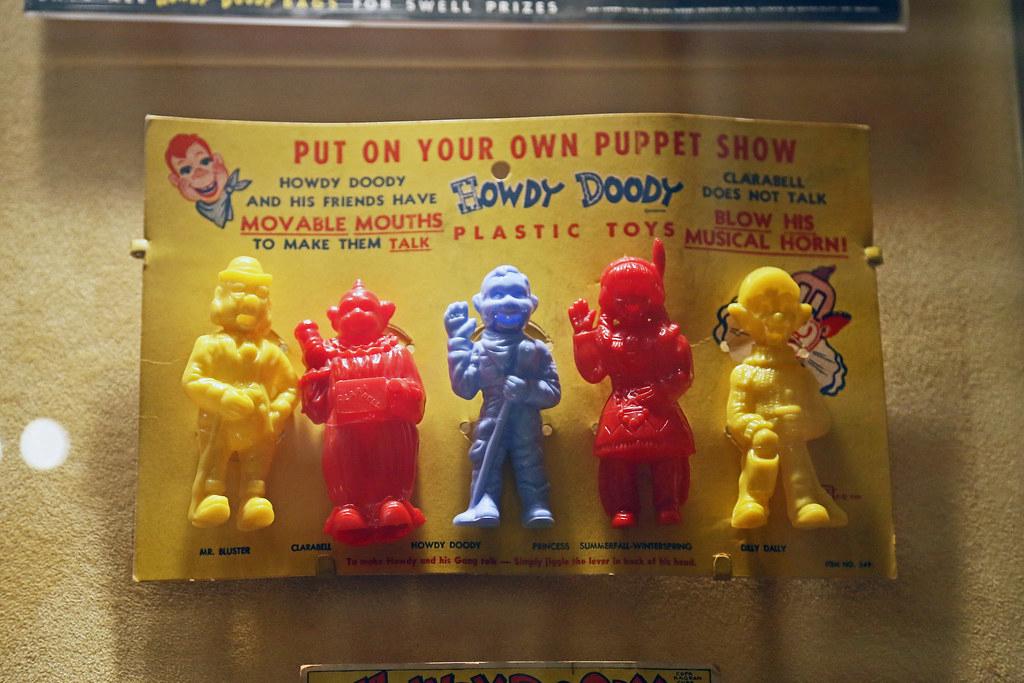
The show was also ahead of its time in TV advertising and merchandising. Howdy Doody campaign buttons became must-have items for kids. This success showed the show’s influence on young consumers.
From lunchboxes to puppets, Howdy Doody merchandise was everywhere. The show proved that TV could entertain, educate, and sell products all at once.
Broadcast and Legacy
The Howdy Doody Show aired five days a week, becoming a daily treat for kids rushing home from school. It even spread internationally, with versions in Cuba and Canada.
After 2,343 episodes, the show ended on September 24, 1960. The final episode was memorable, with Clarabell the Clown speaking for the first time, saying “Good-bye, kids.”
A brief revival in 1976, The New Howdy Doody Show, lasted 130 episodes but couldn’t match the original’s charm.
Today, Howdy Doody remains a TV icon, remembered for its creativity and ability to spark young imaginations.

Notable Cast Members
- Buffalo Bob Smith: The heart of the show, bringing Howdy Doody to life with his personality and voice.
- Clarabell the Clown: Played by Bob Keeshan (later Captain Kangaroo), communicated through honks and gestures.
- Princess Summerfall Winterspring: Added to Doodyville’s charm.
- Chief Thunderthud: Another colorful character in the Doodyville ensemble.
- Tim Tremble: A minor character contributing to the show’s whimsical world.
These performers weren’t just doing a job – they were creating a magical place that entertained millions of kids. Their work on The Howdy Doody Show left a lasting mark on TV history.
The Howdy Doody Show was more than just puppets and laughs. It brought families together, sparking imaginations and leaving a lasting impact on TV. Howdy and his pals remind us of a time when simple joys could create unforgettable memories.
- Davis S. Interview by Terry Gross. Fresh Air. NPR. 1987.
- Spark S. The Early Days of Television. Television History Quarterly. 2005;12(3):45-67.