
1. Air Conditioning in Cars
Car air conditioning made its cool debut in the 1950s, transforming the driving experience. Chrysler introduced the 'Airtemp' system in their Imperial model in 1953, quickly followed by General Motors in Cadillacs. Nash Motors blended heat and air to create the all-season comfort we enjoy today.
The integration of heating with air conditioning was a game changer, making long drives more enjoyable. The whirring AC unit turned road trips into pleasure rides. As time rolled on, the innovation continued to refine itself, ensuring every modern car rumbles with this chilled luxury. Whether hitting the highway or just tooling around town, car air conditioning took stepping into a vehicle from surviving to thriving.
2. Optical Fiber
In 1956, Harold Hopkins and Narinder Singh Kapany transformed communication by inventing optical fiber, hair-thin strands of glass that now crisscross our globe. These fibers could zip data faster than ever before, improving the clarity and speed of information exchange.
Thanks to optical fiber, we can now stream shows, binge-watch classic '50s flicks, and download tunes for road trips with ease. It transformed the static-filled news into vivid living color, delivered faster than you can say "superhighway."
From phones to homes, offices, and even "the cloud," optical fiber is busy spinning its web. It's like having the most extensive high-speed cable network imaginable, but without the mess of tangled wires. Optical fiber wasn't just an invention; it was a revolution—an express ticket into the digital age.

3. The Barcode
Let's give a nod to the barcode, an invention we might overlook but that's nothing short of revolutionary. In the early '50s, supermarkets were bustling more than ever, but checkout lines were a hassle. Enter Joseph Woodland and Bernard Silver, who saw the checkout chaos and thought, "There's got to be a better way!"
Inspired by Morse code, they whipped up a series of parallel lines that would come to be the barcode, first intended for tracking railroad cars in 1952. This unassuming grid of lines and numbers would soon become the universal translator of pricing and inventory, turning checkouts from outposts of anxiety to a cashier's best friend.
The barcode became ubiquitous, sneaking its way onto everything. It saved time and transformed retail, making it possible to keep track of items quickly and reduce long receipts into models of organized efficiency. From its humble beginnings tracking train cars to everyday items in our shopping carts, the barcode is a quiet innovator, ensuring our modern-day needs are met faster than ever.
4. Three-Point Seatbelts
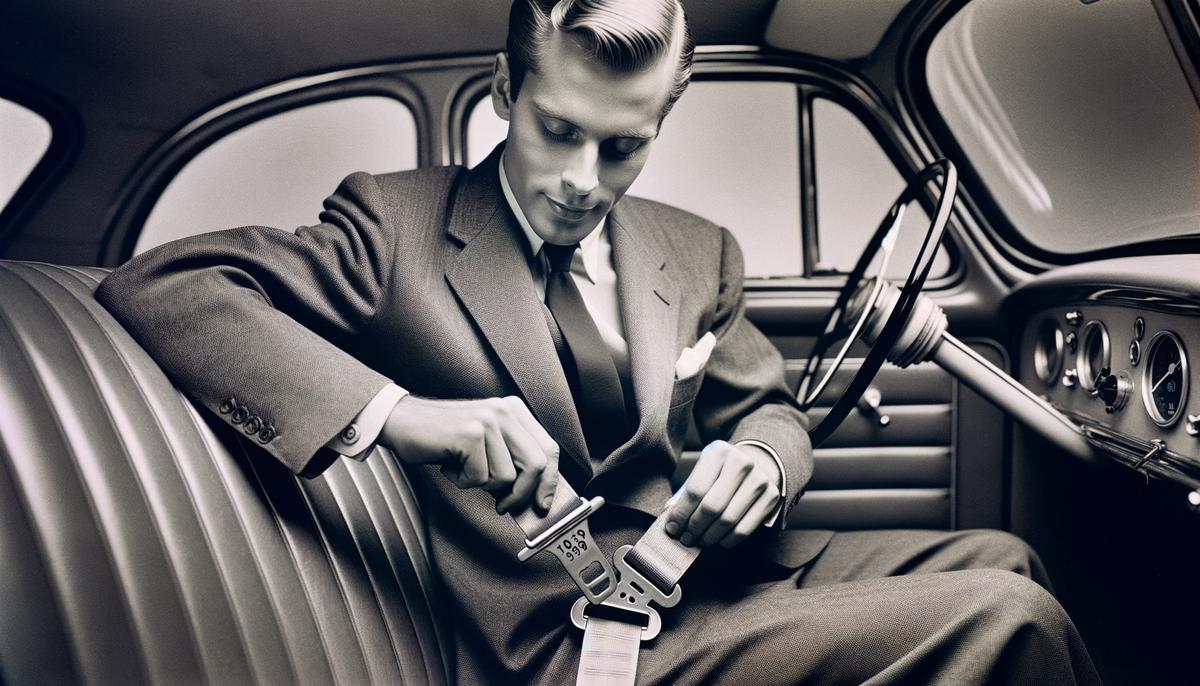
In 1959, when fins on cars were as high as everyone's hopes, Swedish automaker Volvo dared to make safety a top priority. Enter Nils Bohlin, whose three-point seatbelt design dispersed crash forces over the body's sturdier parts and drastically altered the fate of every driver and passenger from that moment forward.
As cars were becoming faster and roads busier, the three-point seatbelt quickly went from novelty to necessity, wrapping its way into automotive safety standards around the globe. It was like sneaking some spinach into your smoothie—a little something that was good for you without cramping your style.
Since then, the three-point seatbelt has avoided countless calamities without demanding any complex understanding to operate—click, pull, and you're strapped in for whatever the open road might throw your way. It's stuck around as the silent hero that belts us into safety with every turn of the ignition.
5. Power Steering
In 1951, Chrysler's 'Hydraguide' answered every driver's dream—power steering. Before this innovation, maneuvering a car was like wrestling with a grizzly, especially when parallel parking or making tricky turns. But thanks to Chrysler, you could now glide down the streets with just a gentle touch.
The 'Hydraguide' made it a lot easier to handle those bigger beasts rolling off the assembly line. This hydrodynamic wizardry meant that even Grandma could pilot a gargantuan Imperial with ease—no more mimicking Popeye just to survive the grocery run.
Over the years, power steering has been refined from its hydraulic beginnings to today's high-tech electric systems, steering us effortlessly into an ever-sleek and speedy future. It's that smooth, easy handling that started with a simple twist of fate and continued to put the joy in joyride.
6. Cruise Control
In 1958, Ralph Teetor's brilliant invention, known as "Speedostat," came swooping in to save the day. Teetor, a mechanic maestro despite a visual impairment, had an epiphany while riding as a passenger. "Why can't we just set our speed and forget it?" he mused. And lo and behold, we got cruise control.
This nifty device wasn't just about making life easier; it was also about efficiency. Maintaining a steady speed optimizes your engine's performance, saving on gas and keeping wear and tear at bay. It made those endearing endless road trips just a bit more bearable, especially when left confronting the hypnotic mile markers during cross-country journeys.
Fast forward to today, cruise control has evolved with the times, and now we're even seeing adaptive systems that match your speed with traffic ahead, projecting Teetor's idea into a future he probably could only dream of.
7. The UNIVAC I
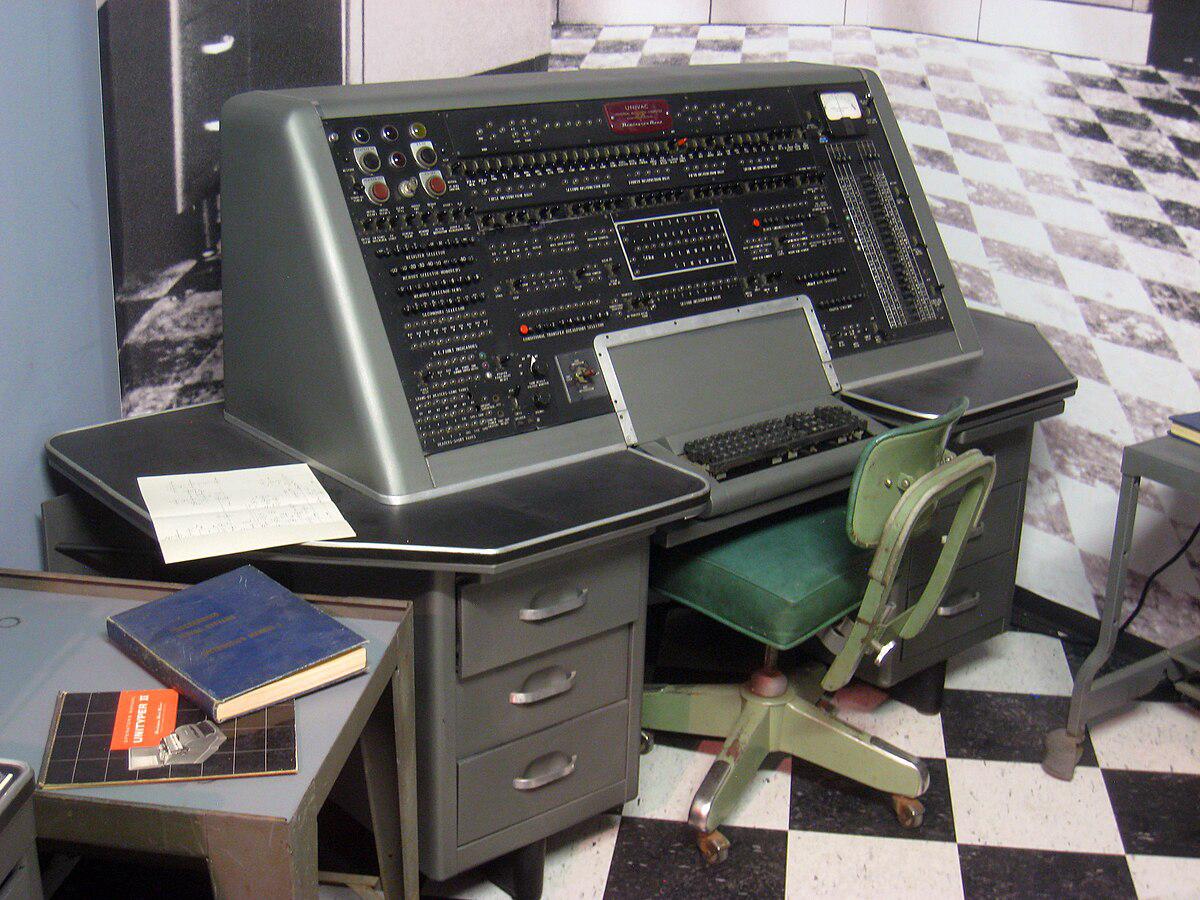
In 1951, the UNIVAC I (Universal Automatic Computer) made its grand debut as the very first commercial computer. Picture a behemoth the size of a small room, with enough blinking lights and mechanical whirrs to inspire awe. Before this, calculators were barely past beads and abacuses; now, here was something that could tackle real computations and data processing.
While it couldn't quite pop on a playlist or scoot you down memory lane, it sure put brains behind not only a desk but eventually—garnering headlines in 1952—correctly predicted the landslide victory of Eisenhower in the presidential election.
The UNIVAC was a game-changer, fundamentally transforming sectors from business to government and sparking interest in this grand new world of computing. It fueled imaginations and underscored the need for further advancements—truth be told, it was the cheeky grandparent of that smartphone gleaming in your back pocket.
As we reminisce about the golden era of the 1950s, it's clear that innovation was at the heart of transforming everyday life. From making cars safer and more comfortable to revolutionizing communication and computing, these advancements have left a lasting impact. The decade's legacy continues to resonate today, reminding us of a time when imagination met reality in remarkable ways.
- Kroc R. Grinding It Out: The Making of McDonald's. St. Martin's Paperbacks; 1992.
- Cockerell C. The Invention of the Hovercraft. The Journal of the Royal Society for the Encouragement of Arts, Manufactures and Commerce. 1958;106(5025):723-729.
- Kapany NS. Fiber Optics: Principles and Applications. Academic Press; 1967.
- Woodland NJ, Silver B. Classifying apparatus and method. US Patent 2,612,994. October 7, 1952.
- Bohlin N. Three-point seat belt. US Patent 3,043,625. July 10, 1962.