
History and Popularity of Jell-O in the 1950s
Jell-O molds were a hit in 1950s America. After World War II, people wanted simple yet fun ways to spice up family dinners. Jell-O fit the bill perfectly. With just a box, you could make a dish that was as fun to look at as it was to eat.
It was like a kitchen magic trick, turning regular ingredients into colorful, wiggly creations. Housewives loved how easy it was – just boil water, mix, and let it set. You could throw in fruits, veggies, or even meats and call it a salad. It didn't matter if it was a side dish or dessert. It was entertainment on a plate.
The Jell-O folks struck gold with their marketing. They teamed up with celebrities and put out their own cookbooks. Jack Benny spelled J-E-L-L-O on the radio, and suddenly everyone was showing off Jell-O like it was the latest fashion trend.
Cookbooks displayed Jell-O molds like they were fancy dinner centerpieces. Each recipe seemed to promise your family would love it. You could picture your Jell-O creation stealing the show at your next dinner party or church potluck.
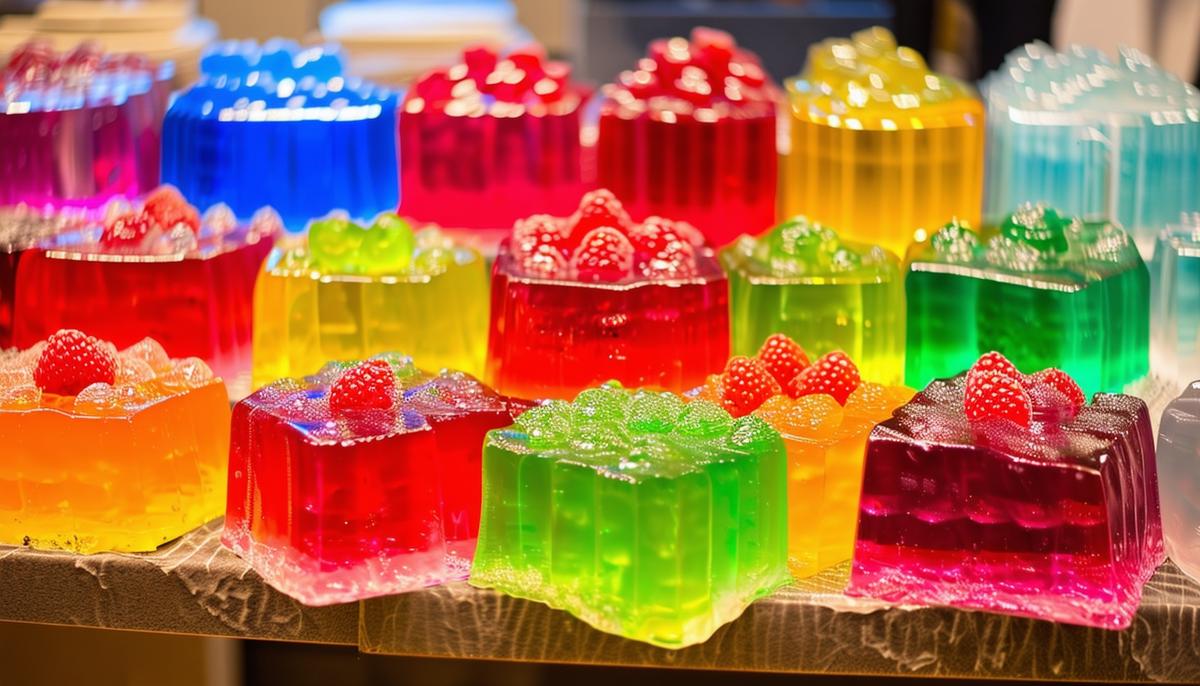
The colors were amazing! It was like having a rainbow for dinner. Lime, cherry, orange – pick your favorite. If you ever wondered what joy on a plate looked like, a good Jell-O mold had the answer.
Jell-O wasn't just food; it was an experience. Bringing one to the table was like showing off your own masterpiece. You'd get compliments and feel like the neighborhood's top chef. Let's face it, Sloppy Joe never got that kind of reaction.
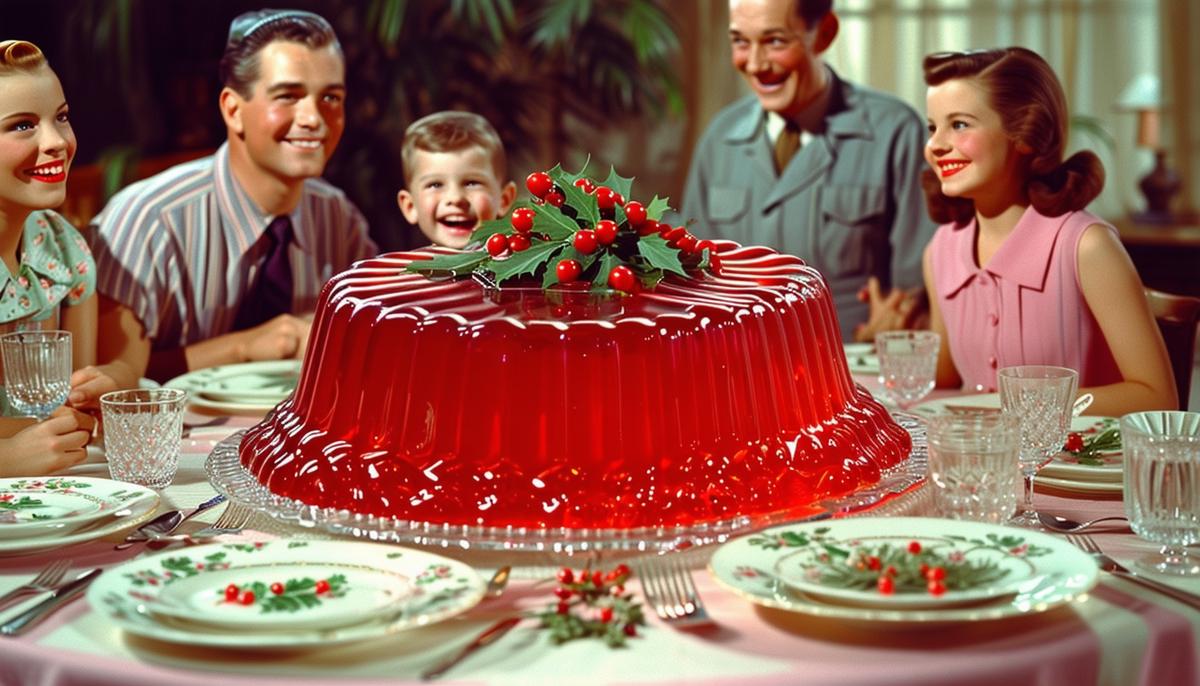
The Art of Jell-O Mold Creations
Jell-O mold creation in the 1950s was all about creativity. Sweet or savory, what mattered was the wow factor – a showstopper for every family dinner.
On the sweet side, you had treats like the strawberry cottage cheese mold. It wasn't just dessert; it was dessert with pizzazz, mixing juicy strawberries and creamy cottage cheese in a jiggly delight. These molds were perfect for adding some fun to the dinner table.
Then there were the savory creations like aspics. Picture a clear tomato Jell-O mold with veggies or meats inside. Bringing an aspic to a potluck was like unveiling a new piece of art. It was always a bit of a gamble, but often paid off for those brave enough to try.
And let's not forget the wild experiments. Olive bits in Jell-O? Ham and cheese gelatin? Why not! It was the kind of daring cooking that might make even today's chefs raise an eyebrow. Sure, it might have made people wonder about Grandma's ideas, but that's what made it fun!
A Jell-O mold didn't just add to a meal; it made it an event. Each one showed that dinner could be curious, chatty, and full of laughs. From picnics to holiday dinners, these wobbly wonders weren't just trendy; they showed off the playful spirit of 1950s kitchen creativity.
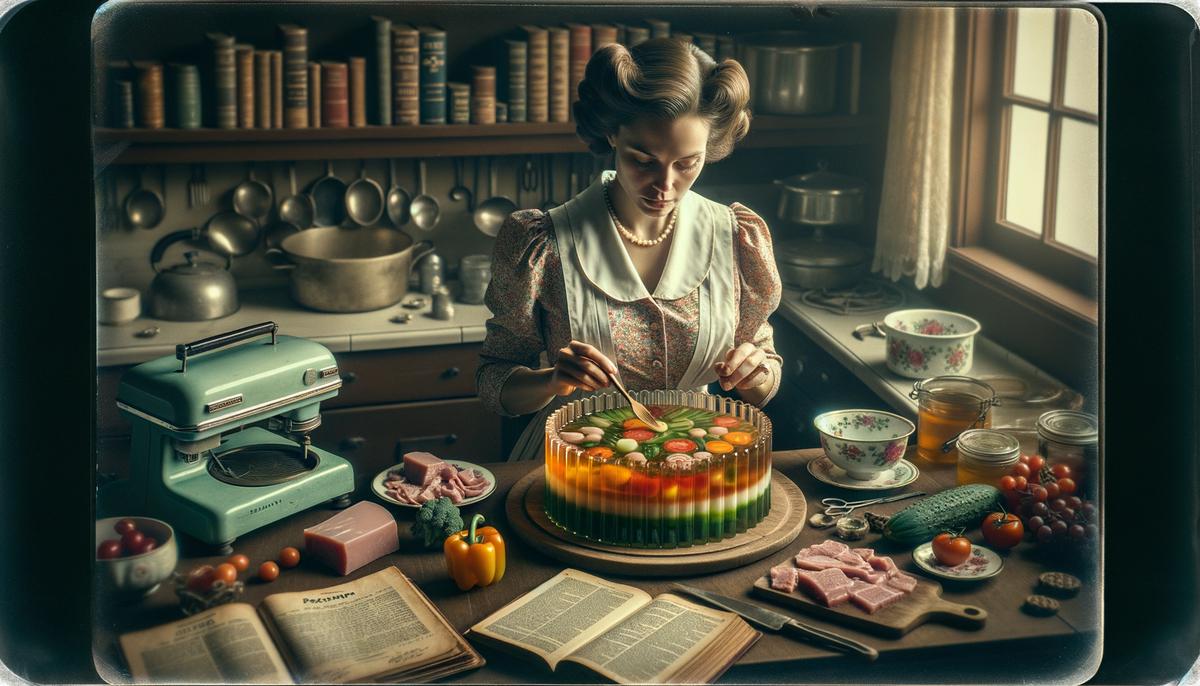
As you whip up some Jell-O, remember you're not just making dessert; you're joining a fun tradition that's brightened up countless tables. It's a cheerful nod to the past, where every jiggly creation was a chance to smile.
Fun Facts about Jell-O:
- Gelatin is a protein extract derived from collagen in connective tissues and bones.
- Jack Benny became famous for spelling "J-E-L-L-O" on his radio show.
- The "Tunnel of Fudge" cake, a popular Pillsbury recipe, originally used a frosting mix that no longer exists.
- Food encased in Jell-O can stay fresh longer than without it.
- Savory Jell-O flavors like celery and tomato were once produced but are no longer available.
"I don't think that the vintage recipes used enough flavoring in their aspics to appeal to modern tastes," says Ruth Clark, author of The Mid-Century Menu blog. "I think if we were to bring aspics up to modern standards of spiciness and flavor, it might be possible to have people enjoy them again. As long as they can get over the texture."
- Shapiro L. Something From the Oven: Reinventing Dinner in 1950s America. Viking; 2004.
- Clark R. The Mid-Century Menu. [Blog]