
She wasn’t born into fame. She wasn’t raised in luxury.
In fact, she spent most of her childhood being passed from home to home, never staying in one place long enough to belong.
She was the kind of girl no one expected to make it – the kind of girl who dreamed of Hollywood while sleeping in someone else’s spare room. But dreams have a way of outshining even the darkest beginnings. And this girl? She would become the most famous woman of the Golden Era.
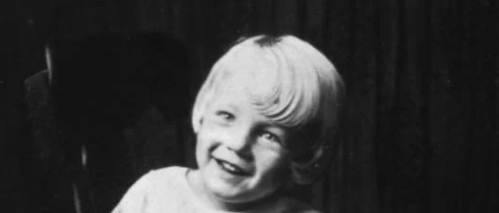
 1929 – with her mother, who suffered from paranoid schizophrenia





A Childhood of Uncertainty: Lost in the System
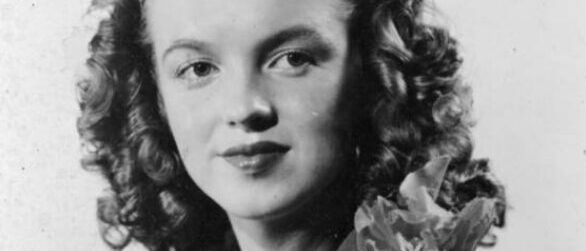
Norma Jeane Baker’s family tree was a tangled web of uncertainty. Born on June 1, 1926, in Los Angeles, her mother Gladys worked as a film cutter but struggled with mental health issues. Norma’s father remained a mystery – officially listed as Edward Mortenson, but rumors suggested C. Stanley Gifford was her biological dad. He vanished upon learning of the pregnancy.
Unable to cope with motherhood, Gladys placed Norma with the Bolenders, a religious couple, when she was just 12 days old. Norma grew up there alongside their adopted son Lester, often mistaken for twins. Life with the Bolenders was stable, albeit strict, with Gladys making occasional Saturday visits.
When Gladys suffered a breakdown in 1934, Norma’s life became a whirlwind of change. She bounced between family friends and foster homes. Grace Goddard, Gladys’s friend, attempted to provide stability but couldn’t always manage. Norma’s aunt Ana Lower offered one of the few periods of constancy in her young life.
Growing up in such tumultuous circumstances, Norma learned to adapt and dream. She’d fantasize about Clark Gable being her father and imagine a glamorous Hollywood life – a far cry from her reality, but a coping mechanism that would shape her future.
Foster Homes, Orphanages, and the Making of a Survivor
Norma Jeane’s childhood was a carousel of instability. She spent time at the Los Angeles Orphans Home Society, an experience that taught her to blend in while secretly nurturing her dreams.
The Bolenders’ home was her first real sanctuary. Ida Bolender was deeply religious, and life there had a comforting routine. But like all good things in Norma’s life, it didn’t last.
Grace Goddard became her legal guardian, though this was more a matter of paperwork than emotional support. Aunt Ana proved to be the true pillar of support, providing the love and encouragement Norma craved.
"I was never used to being happy, so that wasn't something I ever took for granted. You see, I was brought up differently from the average American child because the average child is brought up expecting to be happy." – Marilyn Monroe, 1954
Each new placement was a chapter in Norma’s story, teaching her resilience and fueling her dreams, even in the face of adversity.
The Silver Screen: A Window to Another Life
For young Norma Jeane, movies were more than entertainment – they were a lifeline. The glamour of Hollywood stars offered a glimpse into a world beyond foster homes and orphanages. It was as if the silver screen whispered, “You could be one of us!”
She absorbed every detail: the actresses’ movements, their smiles, their poise. It wasn’t just about beauty; it was about reinvention. Norma saw herself in these stories of transformation, igniting a fierce ambition within her.
- Favorite stars: Greta Garbo, Joan Crawford, and Jean Harlow
- Loved to mimic actresses’ mannerisms and expressions
- Dreamed of dyeing her hair platinum blonde like Jean Harlow
The cinema became her classroom, teaching lessons in grace and charm that no regular school could provide. With each film, her dreams of stardom grew stronger. She wasn’t just watching; she was studying for her future role.
Norma knew she was writing her own script, transforming her “once upon a time” into a “happily ever after.” As the credits rolled on her early years, the first glimpses of Marilyn Monroe were beginning to shine through.
In the face of a childhood marked by instability and hardship, Norma Jeane Baker’s journey was a testament to her unwavering determination. Her story reminds us that even in the darkest times, dreams can serve as guiding lights, illuminating the path to transformation and hope. The young girl who once placed her feet in the footprints of stars at Grauman’s Chinese Theater would one day leave her own imprint, both literally and figuratively, on the world of cinema and popular culture.

- Banner L. Marilyn: The Passion and the Paradox. Bloomsbury Publishing; 2012.
- Monroe M. My Story. Taylor Trade Publishing; 2006.
- Spoto D. Marilyn Monroe: The Biography. Cooper Square Press; 2001.