
Santa Cruz's Cultural Climate in 1956
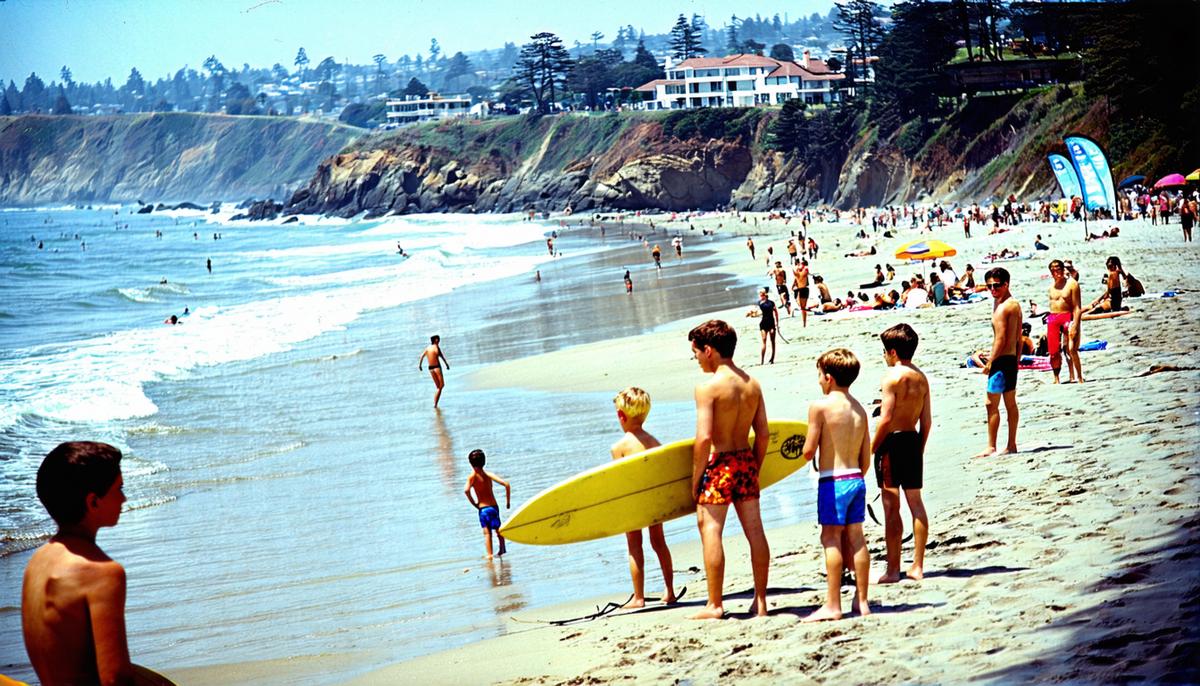
Santa Cruz in 1956 was a different place than the progressive hub we know today. Picture a little beach town steered by a Republican compass, where rock 'n' roll had some folks clutching their pearls. The town was more like a slice of white bread – basic and a little stale, politically speaking.
The ban on rock 'n' roll wasn't just about music. To the authorities, it was a threat to the town's morals. Teens moving to sax-heavy beats posed a problem for the town elders. The society was tidy on the outside, with everything tucked away neat and tight.
For the older generation, the music was less melody and more menace. The police reports dripped with anxiety over "suggestive" moves and "tantalizing" rhythms. Rock 'n' roll was a new language that the older folks couldn't translate at the time.
The city council leaned into their fears. They gave the power to cut the cord on any tunes deemed not "clean and acceptable" to the auditorium manager. But like any good teenage spirit, rebellion brewed right back up. The ban's weak scaffolding crumbled faster than a sandcastle at high tide.
Young Arlene Freitas openly challenged the double standards, pointing out a clear racial prejudice. Her courage illuminated the underlying bias woven into the very fabric of the ban. The teenagers saw rock 'n' roll as more than a mere rhythm—it was a bridge over racial divides.
As the summer faded, the music of change didn't quiet. Santa Cruz found out the hard way that you can't put a lid on dynamic rhythms without blowing the top off a slow-cooking cultural stew. Rock 'n' roll rolled on, and each note played was a reminder of how swiftly things could change.
The Chuck Higgins Incident
Chuck Higgins and his band had barely started playing at the Santa Cruz Civic Auditorium when the night took an unexpected turn. The city's guardians saw something they didn't like—a new beat that threatened to upset their carefully stacked dominoes.
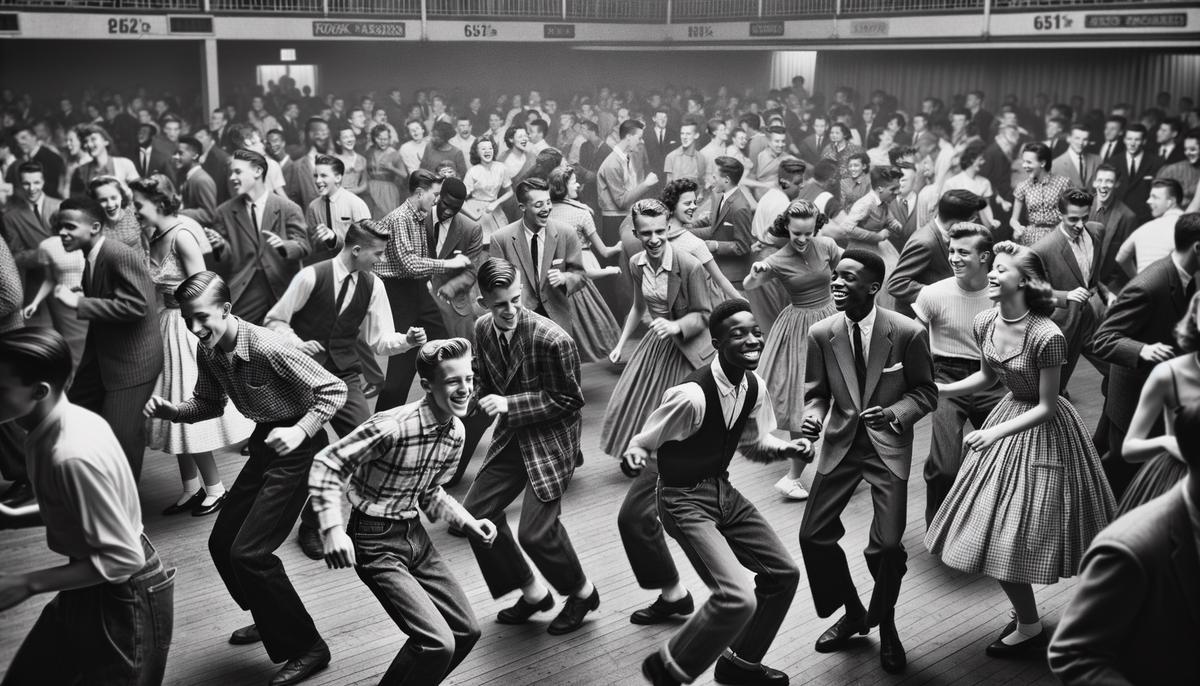
Lieutenant Richard Overton was about to witness dancing that didn't follow the approved footwork from old city hall playbooks. As teenagers swayed to the electric enthusiasm of Higgins' saxophone, Overton found himself in a quandary. To him, it was closer to chaos on a vinyl platter.
The hammer fell after midnight. Police officers cut the music short, evicting the revelers and leaving the band with a temporary town pass: exit only, no return ticket offered. News spread swiftly, and what might've stayed a local flair went national.
"It is quite obvious that this type of affair is detrimental to both the health and morals of our youth and community." – Lieutenant Richard Overton
Santa Cruz found itself in an unexpected spotlight. Teenagers protested; their letters to newspapers echoed the deeply felt sentiments of seeing their music splashed with the brush of prejudice. Their voices turned an isolated ban into a dialogue about race, music, and the stifling lull of old norms not making room for new sounds.
In one fell swoop, a performance meant to fill the auditorium with song harmonized into a discordant melody of cultural clash. But as often with the resolve of youth—each strike against their favored tunes only made them swing harder. They knew the easy moves weren't just dance steps; they represented an idea as compelling as the songs they grooved to.
The Chuck Higgins incident was more than a note in history—it highlighted the dissonance between a generation tied to tradition and those tuning their lives to the harmonics of change.

National Reaction and Racial Tensions
As the echoes of Chuck Higgins' saxophone faded out that night, Santa Cruz was caught in a national spotlight. Media outlets across the country picked up on the story, turning a local skirmish into a nationwide discussion.
Rock 'n' roll, already a hot topic, suddenly found itself at the center of more than music appreciation. Outsiders watched with a mix of amusement and judgment as Santa Cruz embarked on its crusade against the new sound. Was the town trying to pin down a cultural marauder, or was it just scared of the youthful undertones shaking those civic floors?
The national reaction was infused with an awareness of racial undertones. The fact that the performance group was an "all-Negro band" struck a chord that resonated beyond Santa Cruz. Many recognized the racial implications underlying the ban, prompting discussions that entered the sphere of civil rights and equality.
This wasn't an isolated case. Cities like Asbury Park, New Jersey, and San Antonio, Texas, were grappling with similar sentiments. The Capri pants-wearing teens and their new musical love embodied a burgeoning desire for change, for a world promising more than just black and white.
- National media coverage depicted these scenes as the front lines of an evolving America
- The cautious babble about music began shifting into a dialogue about unity and division
- Radios spurred discussion over dinner plates from coast to coast
The Santa Cruz saga reminded a nation of the cracks hidden beneath its seemingly solid facade. It was a moment akin to the skip in a record, drawing attention to the nuances that had previously slipped by without friction.
As the headlines faded, America remained tuned to the frequency of change, now keenly aware of the delicate balancing act between embracing new beats and addressing lingering biases.
Backlash and Legacy
The initial clampdown on rock 'n' roll in Santa Cruz was like trying to cork a bottle of pop—the pressure quickly found other ways to burst forth. The near-instant protest came from teenagers who'd just wanted to dance. They picketed with their poodle-skirted confidence and pomade-slicked hairstyles, demanding a seat at the table.
Adults began questioning the rigid constructs they thought held significance. Letters poured into the local paper, both defending and decrying the actions of that June night. One wise local octogenarian humorously offered to host a similar dance with rock 'n' roll tunes, highlighting the spirited pushback against the idea that melodies could be fenced in.
Nationally, eyes watched as Santa Cruz reckoned with its spotlight moment. Critiques and caricatures multiplied, most markedly observing the racial dynamics that had underscored events. The affair revealed shades of gray—an indication that rock 'n' roll was also a powerful mirror to society's deeper reflections.
Santa Cruz did eventually evolve. Within a decade, its local university attracted liberal currents, compelling a larger sea change than any city council decree could orchestrate. Rock 'n' roll, seeping gently into mainstream culture, remained unstoppable, with Santa Cruz over time embracing the genre—and its ethos of change—unabashedly.
The legacy of that June night stands out like the apex note of an unforgettable tune. In Santa Cruz and beyond, it incited introspection about cultural dynamism and propelled the acceptance of rock 'n' roll as more than music but an emblem of voice, resistance, and celebration. Ultimately, that fervor for rhythm reshaped not just dances or song lists but the very heart of communities, ushering in a new era where the beat wasn't stopped, merely turned up.
As the sun set on Santa Cruz in 1956, a new rhythm was quietly echoing along its shores. This was more than just music; it was a movement that hinted at change and unity. Rock 'n' roll wasn't merely about the beat—it symbolized a shift, an invitation to embrace diversity and progress. In the end, it wasn't just about dancing; it was about stepping into a future where every note played contributed to a larger symphony of transformation.
- Sentinel SC. Santa Cruz Bans Rock and Roll. Santa Cruz Sentinel. June 4, 1956.
- Time Magazine. Rock 'n' Roll: The Sound of the Sixties. Time. June 18, 1956.
- Novo M. The Day Santa Cruz Banned Rock 'n' Roll. Santa Cruz Museum of Art and History Blog.
- San Francisco Chronicle. Santa Cruz Officials Deny Being 'Squares'. San Francisco Chronicle. June 7, 1956.