
In the 1950s, a time of shiny cars and rock ‘n’ roll, a small satellite named Sputnik sent ripples across the globe. This unexpected event challenged the status quo, sparking a new era of technological ambition and cultural shifts. As people gazed skyward, they found themselves at the beginning of a journey that would redefine their world.
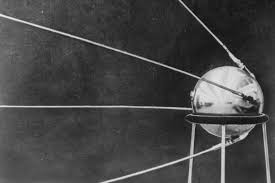
The Launch of Sputnik
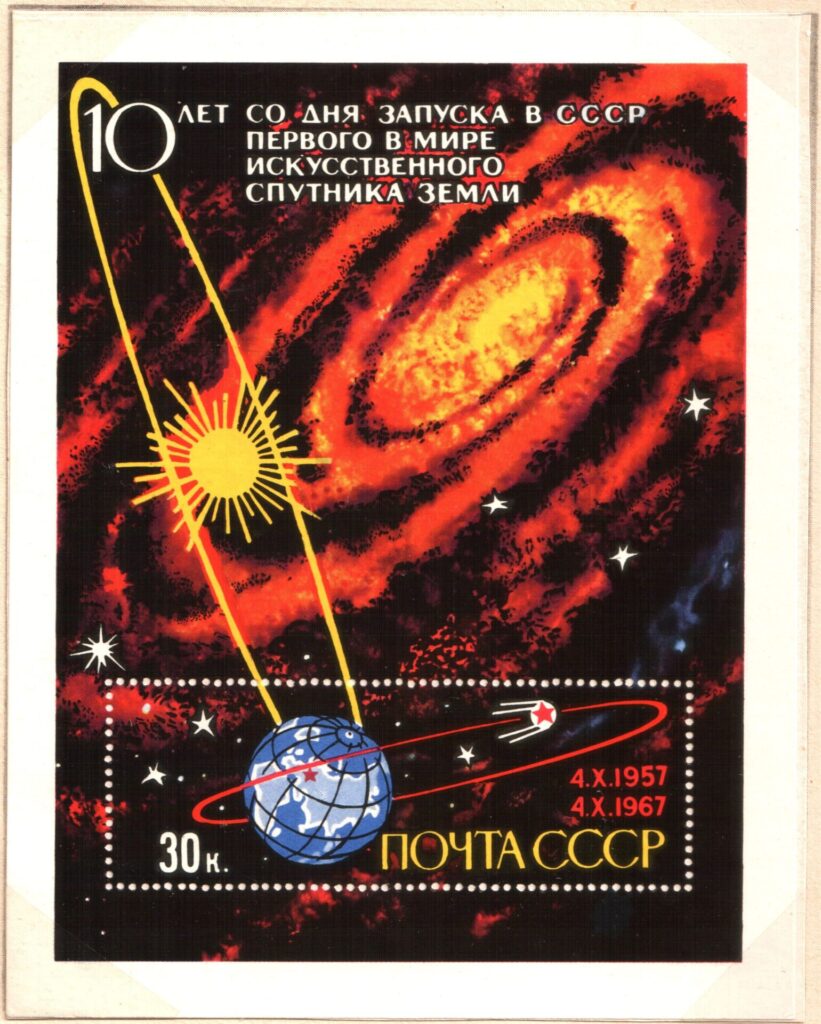
The launch of Sputnik on October 4, 1957, turned the world upside down. The Soviet Union sent this 184-pound metallic sphere—about the size of a beach ball—into orbit, and it went beep-beeping around the Earth, causing quite the buzz. Picture it: a sleek, silver satellite in the sky, its radio blips splitting the airwaves and America’s sense of control right down the middle.
Back in the United States, folks were living large in a post-World War fantasy. Then came Sputnik, and it was as if someone had thrown a wrench in the works. A simple transmitter aboard this space-age beach ball shouted out, “Look what we did!” Folks from sea to shining sea looked up with newfound anxiety.
Imagine Dwight Eisenhower, sitting in the Oval Office, probably with his morning coffee turning a bit lukewarm as he heard the news. Even if he didn’t outwardly panic, behind the scenes, the wheels were turning. Those in charge had all sorts of plans tucked away in drawers—like the CORONA spy satellite—waiting to be unveiled.
NASA wasn’t yet a twinkle in the nation’s eye, but this galvanized the country to spur into motion. Sputnik had set the pace, and the Americans had to jump to, or risk being left in the dust.
The launch didn’t just cause a ruckus in the US; it played a tune that was heard all over the globe. Nations started buzzing like a hive disturbed, rightfully nervous about what it meant for world balance. The stage was set for a grand showdown of science and ambition, and America had been given its cue to shine, ready or not.
American Reaction and the Space Race
It wasn’t all doom and gloom, though. In typical American fashion, the response to Sputnik was a mix of alarm and wonder. Picture folks gathering around their trusty, crackling radios or cathode-ray tube televisions, eyes wide with a mix of fear and fascination.
As the shock waves rippled, schools began hurried conversations about the importance of science and technology education. Parents nudged their kids toward math homework with a newfound urgency. Eisenhower recognized this cosmic wake-up call and urged for the creation of NASA in 1958. With its establishment, the space race was officially on.
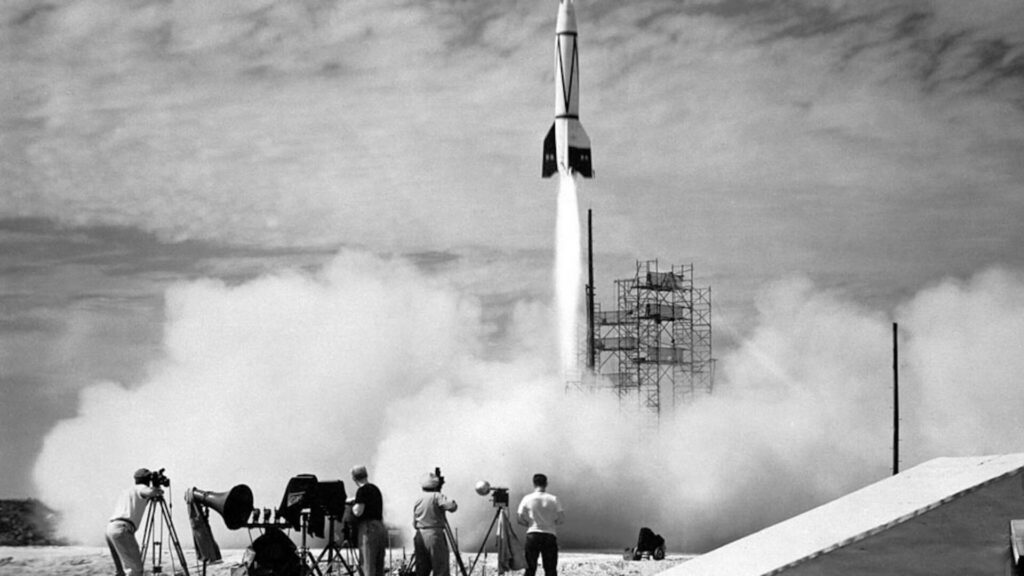
The activity was frenetic. Rockets were going up like they were sent skyward at a county fair, and the U.S. logistic machinery whirred into overdrive. It was not just about catching up but taking the lead, with “Man on the Moon” now a goal every bit as pressing as two chickens in every pot and a car in every garage.
On the communal front, there was a shift in how people thought about technology. Those sleek automotive tail fins suddenly seemed a bit trivial compared to mastering the technological dance necessary to reclaim the space race lead.
The reactiveness of American society, from government halls down to living rooms, transformed an initial jolt into a series of strategic strides. Schools got better at preparing scientists, and engineers were the new rock stars. It was a new era, and America, with its typical can-do spirit, was keen on winning this uphill marathon.
Political and Military Implications
When news of Sputnik reached Capitol Hill, politicians scrambled like a game of musical chairs. The word of the day? Anxiety, with a capital A.
In the late ’50s, the notion of a “missile gap” crept into the American consciousness. The thought that the Soviet Union had an arsenal ready to rain down doom and gloom shook the stars and stripes to its core. And so, the debate raged: was there truly a gap? Was America lagging behind in missile development?
Cold War tensions reached a boiling point. Political figures brought out the big guns in terms of military funding and strategy revisions. The United States upped its ante with a heavy investment in the arms race.
Military funding became the national hot topic, and leaders were all in on closing this so-called “missile gap.” Defense budgets ballooned, and the military-industrial complex saw a sort of renaissance, pulling resources toward missile development.
The implications oozed into politics, reshaping electoral stories, and even helping propel John F. Kennedy to the presidency. The country allowed for a shift from complacency toward vigilance, tying national pride in with cutting-edge tech and the young, shining promise of JFK.
Eisenhower’s prior emphasis on budgetary caution went the way of the dinosaur. The story shifted to one of unabashed readiness, wrapped up neatly in the American flag.
Though everybody had different roles to play, there was a shared sentiment—an understanding that facing this new frontier with determination and ingenuity might just lead the way out of the shadow of that Soviet Sputnik.
Cultural and Educational Shifts
In the wake of Sputnik streaking across the sky, America stood at the brink of a cultural revolution. This silver marvel from the Soviet Union wasn’t just orbiting high above; it was sending signals that rippled across the cultural landscape of the ’50s.
Schools across the country shuffled their chalkboards and lesson plans. Suddenly, the three R’s—reading, ‘riting, and ‘rithmetic—were spiced with talk of science fairs, rocket clubs, and all things spacey. Parents nudged their offspring towards those newly critical subjects like mathematics and science.
The National Defense Education Act of 1958 was like a shot of adrenaline to America’s academic pulse, setting the stage for future generations to grab their lab goggles and slide rulers, ready to dive headfirst into the mysteries of the universe.
Across the nation, educators threw open their doors to the idea that students needed to be more than just consumers of knowledge; they had to be the pioneers and pilots of tomorrow. Curriculums were infused with innovation, leaping from the classic lessons of yesterday to the promise of tomorrow’s space odyssey.
With these shifts, the American culture at large caught the space bug. Popular media started churning out sci-fi tales and space adventures. Movies and TV shows painted galaxies far, far away on screens country-wide, and comic books featuring steel-jawed astronauts often landed right in the hands of eager young dreamers.
Space wasn’t simply a cold, empty void; it was becoming more like the new wild frontier, a place where dreams could take flight and America could lead the charge into the unknown.
So as the Sputnik shockwaves hummed through the American cultural fabric, they spun tales of scientific prowess alongside human curiosity—an optimistic blend that pushed the nation steadfastly forward.
Sputnik’s launch was more than just a scientific milestone; it was a catalyst for change. It awakened a nation to the possibilities of space exploration and ignited a spirit of innovation that would propel America forward. This little satellite reminded us that with determination and creativity, we could reach for the stars and shape our own destiny.
- McDougall WA. The Heavens and the Earth: A Political History of the Space Age. New York: Basic Books; 1985.
- Ramo S. The Business of Science: Winning and Losing in the High-Tech Age. New York: Hill and Wang; 1988.
- Launius RD. Sputnik and the Origins of the Space Age. NASA History Division. 2007.
- Bemis SF. The United States as a World Power: A Diplomatic History, 1900-1962. New York: Holt, Rinehart and Winston; 1962.