
Background and Production
The African Queen began as a novel by C.S. Forester before its transformation into a Hollywood adventure classic. Director John Huston took on the project, with the screenplay passing through several writers before reaching its final form.
Filming in the Congo presented numerous challenges:
- Crew hauled camera gear through mud and swamps
- Massive insects were a constant nuisance
- Huston and Humphrey Bogart reportedly used cigars to ward off mosquitoes
Bogart and Katharine Hepburn’s on-screen chemistry was undeniable. Their sparring made hearts flip like pancakes on a hot griddle. Despite the jungle’s challenges, Bogart’s performance earned him his first and only Oscar.
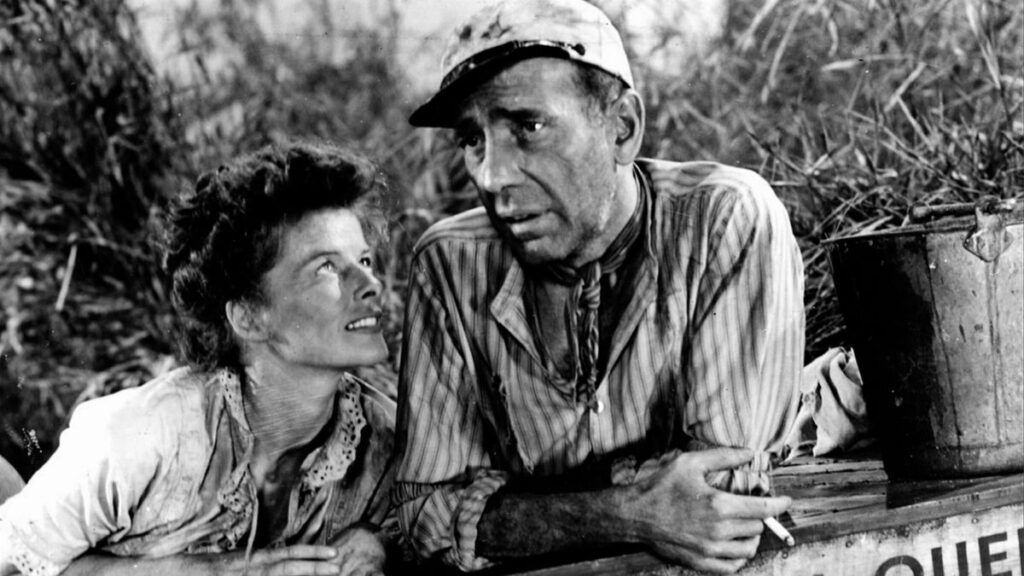
Behind the scenes, Huston and Bogart enjoyed a friendly rapport, their banter as lively off-screen as on. Hepburn, known for her prim demeanor, adapted surprisingly well to the wild settings.
While not technically flashy, The African Queen packed a punch with its heart and soul, leaving an indelible mark on audiences.
Cast and Characters
Humphrey Bogart embodied Charlie Allnut with ease, finding humor and heart in the boozy riverboat captain. This role finally earned him the coveted Oscar after years of gritty performances.
Katharine Hepburn’s Rose Sayer, a proper missionary discovering her wild side, was a whirlwind of determination and sass. Her character could hold its own against the fiercest of storms.
"Charlie and Rose, thrown together by fate and war, sparked and bantered like mismatched shoes that somehow danced beautifully."
Their on-screen chemistry blended prickliness and warmth, allowing audiences to see beyond the squabbles to the heart beneath. As they navigated the Ulanga River, their unlikely romance blossomed amidst shared struggles and humor.
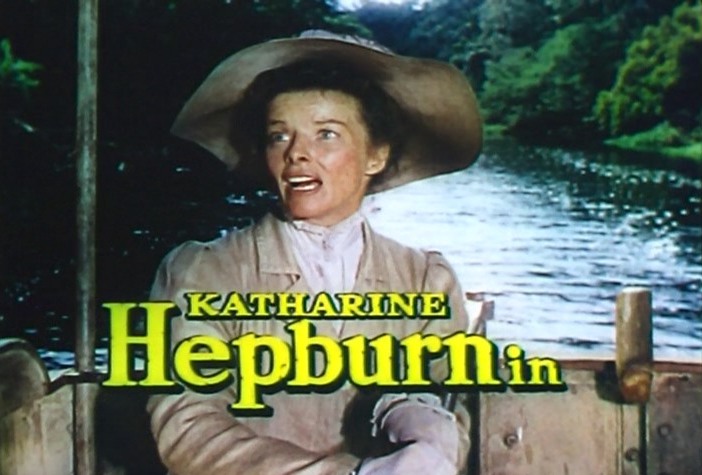
Rose aimed to transform Charlie into an instrument of vengeance, while Charlie sought to steer her to safety. This dynamic created a compelling narrative arc that kept viewers engaged throughout the film.
Bogart and Hepburn’s off-screen camaraderie mirrored their on-screen journey, gifting audiences with a rare cinematic gem that roared like a lion but touched gently like a kitten’s purr.
Premiere and Reception
The Hollywood premiere of The African Queen on December 26, 1951 was a buzzing affair. Movie stars mingled with everyday folks, all eager to witness the magic unfold on the silver screen.
As the lights dimmed and Bogart and Hepburn came to life, the audience was captivated. Viewers found themselves on the edge of their seats, swept along by the riverboat’s journey and the stars’ undeniable chemistry.
Critics were equally charmed, praising:
- Huston’s masterful direction
- The leading duo’s stellar performances
- Bogart’s Oscar-winning portrayal, which showcased more than his usual gruff demeanor
Financially, The African Queen steamed ahead, becoming the 12th most-seen film of 1952. Audiences were eager to lose themselves in a story that, despite its roots in war and wilderness, made them grin, laugh, and perhaps shed a tear or two.
Over time, the film has remained a beloved classic, resonating with viewers and reminding them of simpler times when courage and love charted uncharted waters. It stands as a testament to the magic of moviemaking in Hollywood’s golden age, carving its legacy in the hearts of those who watched Charlie and Rose set sail.
Legacy and Influence
The African Queen’s enduring legacy has inspired countless adventure films, all eager to capture its unique blend of danger, romance, and wit. It set the stage for cinematic escapades by highlighting the potent mix of rugged landscapes and character chemistry.
The film’s influence can be felt in more recent blockbusters featuring unlikely duos braving untamed wildernesses. It demonstrated to Hollywood that an adventure film could pack a punch with its human element at the core.
For Bogart, The African Queen marked a transformative moment:
- Showcased his comedic chops and vulnerability
- Finally crowned him an Oscar champion
- Cemented Charlie Allnut as one of his most iconic characters
Hepburn’s Rose Sayer showcased her indomitable spirit and range. Her portrayal continues to inspire audiences and future performers with its strength, grace, and humor.
The film’s mystique hasn’t tarnished with age. Each generation finds something new to love, whether it’s the rich African scenery or the timeless tension woven through every scene. Where adventurous rivers and romance intertwine, this movie stands as a cornerstone of Hollywood’s golden age.
As we look back on The African Queen, it reminds us of a time when storytelling was both heartfelt and thrilling. With Bogart and Hepburn’s unforgettable performances, this cinematic gem remains a cherished piece of Hollywood history, inviting viewers to experience its timeless magic again and again.
- Huston J. An Open Book. New York: Knopf; 1980.
- Variety. News items. Variety. 1949.
- Huston J. Remarks on actors. Unpublished interview. Date unknown.