
Imagine settling into your favorite armchair on a cool 1950s evening, the television’s soft glow lighting up the room as a young Richard Nixon steps into the national spotlight. On September 23, 1952, amid swirling controversy and the buzz of a rapidly modernizing America, Nixon faced a crisis that could have ended his political journey.
With the charm of a friendly neighbor and the resolve of a true patriot, he used this newfound medium to speak directly to millions, turning scandal into an unforgettable moment of trust and transformation. His candid revelations – and that heartwarming nod to his beloved cocker spaniel, Checkers – captured the spirit of an era, reminding us that even in the midst of political storms, sincerity and a touch of nostalgia could win the hearts of a nation.
Background and Context
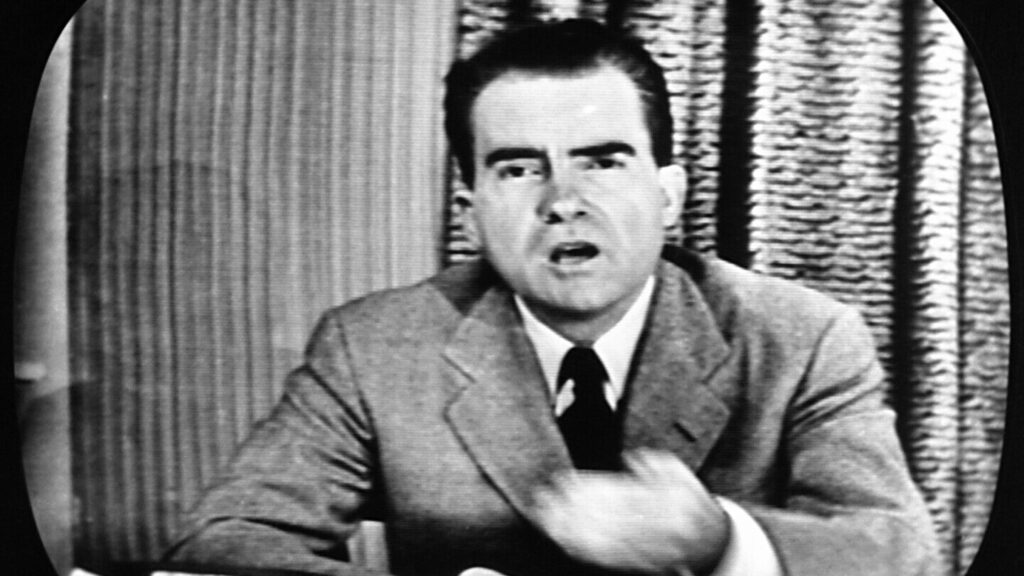
On September 23, 1952, Richard Nixon faced a critical moment in his political career. Accused of misusing a “secret fund” for personal gain, the 39-year-old Senator’s position as Dwight D. Eisenhower’s vice-presidential nominee hung in the balance. With his political future at stake, Nixon made a bold decision to address the nation directly through the relatively new medium of television.
The allegations stemmed from a fund set up by Nixon’s supporters to cover political expenses. While legal, the fund’s existence raised questions about Nixon’s integrity. As pressure mounted, even some within the Republican Party urged Eisenhower to drop Nixon from the ticket.
Determined to fight back, Nixon and his team secured a 30-minute slot on national television. The stakes were high: this unprecedented move would either save his career or end it. As Nixon prepared to face millions of Americans from the El Capitan Theatre in Los Angeles, he knew this moment would define his political future.
The Speech and Its Delivery
Nixon’s address, now famously known as the “Checkers Speech,” was a masterclass in political communication. He skillfully blended transparency with emotional appeal, presenting himself as a man of modest means with nothing to hide.
- Nixon detailed his finances, including his $41,000 home with a $20,000 mortgage
- He emphasized his wife Pat’s “respectable Republican cloth coat” instead of a mink
- The speech’s most memorable moment came when Nixon mentioned Checkers, a cocker spaniel gifted to his family
The Checkers reference, seemingly unrelated to the allegations, proved to be a stroke of genius. It humanized Nixon and created an emotional connection with viewers. “You know, the kids, like all kids, love the dog,” Nixon said, “and I just want to say this, right now, that regardless of what they say about it, we’re gonna keep it.“

By the end of the speech, Nixon had transformed the narrative from one of potential corruption to a story of an honest, hardworking American family under attack. His clever use of television set a new standard for political messaging, proving that sincerity and relatability could be powerful tools in the political arena.
Immediate Aftermath and Impact
The public response to Nixon’s speech was overwhelming and immediate:
- An estimated 60 million Americans watched or listened to the address
- The Republican National Committee was flooded with calls and telegrams supporting Nixon
- Public opinion swiftly shifted in Nixon’s favor
Eisenhower, seeing the change in public sentiment, fully embraced Nixon as his running mate. The General’s support was captured in his memorable statement to Nixon: “You’re my boy!” This affirmation solidified their campaign’s unity and set the stage for their eventual victory.
The Checkers Speech didn’t just rescue Nixon’s career; it fundamentally changed political communication. It demonstrated how a well-crafted television appearance could sway public perception and orchestrate a dramatic comeback. Nixon’s success with the medium set a precedent for future political strategies, highlighting television’s power to build trust and connection with voters.
Long-term Significance
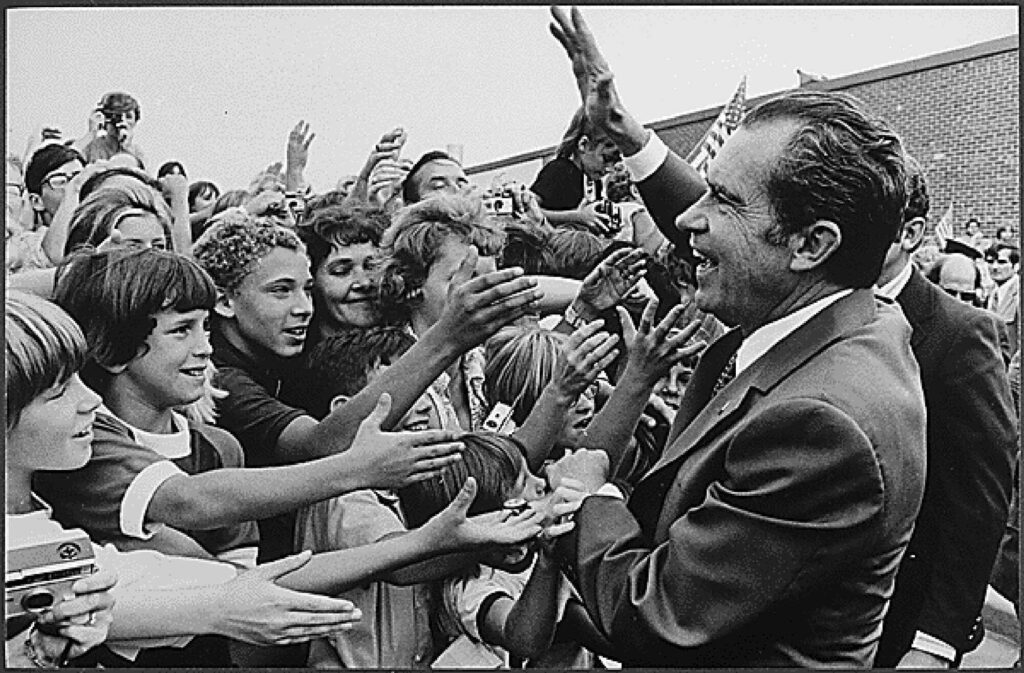
The Checkers Speech’s impact extended far beyond the 1952 election. It established television as a crucial tool in politics, allowing leaders to speak directly to voters and bypass traditional media filters. This moment transformed political campaigns, making TV presence as important as policy positions.
Key long-term effects included:
- The rise of television as a kingmaker in American politics
- A shift towards more personal, emotionally-driven political messaging
- The emergence of a conservative populism emphasizing social and cultural identities
According to former Nixon speechwriter Lee Huebner, the speech “led to the emergence of a conservative populism in America emphasizing public appeals to social and cultural identities rather than economic interests.” This shift contributed to the end of FDR’s New Deal coalition and paved the way for a conservative realignment that Nixon himself would lead two decades later.
The Checkers Speech marked the beginning of an era where television and politics became inseparable. Nixon’s pioneering use of the medium set a precedent that politicians continue to follow today, shaping the way leaders connect with the public in the modern age.
In the 1950s, television began to weave itself into the fabric of political life, with Nixon’s Checkers Speech standing as a testament to its newfound power. This moment wasn’t just about clearing a name; it was about reshaping how politicians connected with the public. The real takeaway? Television became a cornerstone of political strategy, forever changing the landscape of public engagement.
- Nixon R. Six Crises. Doubleday; 1962.
- Huebner L. The Checkers Speech after 60 Years. The American Spectator. September 22, 2012.
- McGrath D. Checkers. Vineyard Theatre; 2012.