
Origins of the 1952 Topps Collection
Picture a Brooklyn kitchen table in 1951. Sy Berger and Woody Gelman weren't cooking up a feast, but whipping up something just as tasty – the 1952 Topps baseball card collection.
Before this, baseball cards were pretty dull. But these guys jazzed them up with:
- Bright colors
- Player bios
- Team logos
- Hard-to-come-by statistics
This 407-card set became a kid's dream. Topps started out selling gum, with cards as a bonus. But once kids got hooked, trading cards became the main event.
Berger and Gelman turned these cards into mini billboards of hope and heroism. Take the Mickey Mantle card – nobody knew it'd be a collector's gold mine. But Sy Berger had a twinkle in his eye that said he was onto something big.
As the collection spread across America, kids became mini-moguls, swapping cards faster than you could say "Play ball!" The 1952 Topps set was more than cardboard – it was a slice of post-war America's love for baseball.
Bowman couldn't keep up with Topps' home run. By the mid-'50s, Topps ruled the roost, while other companies struggled to stay in the game. Even today, those 1952 cards still sparkle, proving that sometimes, the best ideas come from cluttered kitchen tables, not fancy boardrooms.

Cultural Significance of Bubblegum Cards
Bubblegum cards weren't just pictures of athletes – they were mirrors of a hopeful post-war nation. As TVs flickered to life in living rooms, these cards became a bridge between baseball dreams and everyday life.
More than a pastime, they were windows to heroes who embodied America's ideals. Kids across the country held these cardboard treasures like tickets to a world of wonder. Icons like Mantle, Berra, and Robinson became household names, their cards coveted keepsakes.
TV only turned up the heat. Suddenly, games weren't just heard on the radio but seen in living color. A Jackie Robinson card wasn't just collectible – it was a slice of progress, representing a step toward equality.
For young fans, these cards revolutionized fandom. Players weren't just names in the paper anymore – they were colorful portraits with stories. Every card swap was a moment of connection, a small piece of Americana passed from hand to hand.
"The fact it was produced by Topps certainly helps further cement their brand as THE brand when you think about card collecting."
You could say those cardboard treasures were like glue, bringing communities together one stick of gum and one card at a time. Just as America found its groove in a new era, these cards reminded everyone of the power of dreams and the thrill of the game.

Evolution and Legacy of Card Collecting
Back in the 1950s, card collecting was more backyard fun than big business. No fancy dealers – just kids swapping cardboard treasures on stoops and playgrounds. Want a specific card? Time to put on your bargaining hat!
Companies like Topps didn't just change the game – they hit it out of the park. By adding snazzy photos and fresh stats, they made collecting irresistible. Despite some bumps (like the '90s market flood), the hobby kept swinging for the fences.
From holograms to online trading, card collecting's kept up with the times. Each new twist is like another inning in this long-running game of nostalgia and fun.
Think of Jefferson Burdick, the collector who turned his passion into history. Folks like him made sure cards didn't just fade away like old memories. They turned cardboard and ink into time capsules of America's favorite pastime.
Today, card collecting's still going strong, as American as apple pie at a ballgame. Even in our high-tech world, these little cardboard squares keep the spirit of the game alive, connecting fans young and old to the magic of baseball.
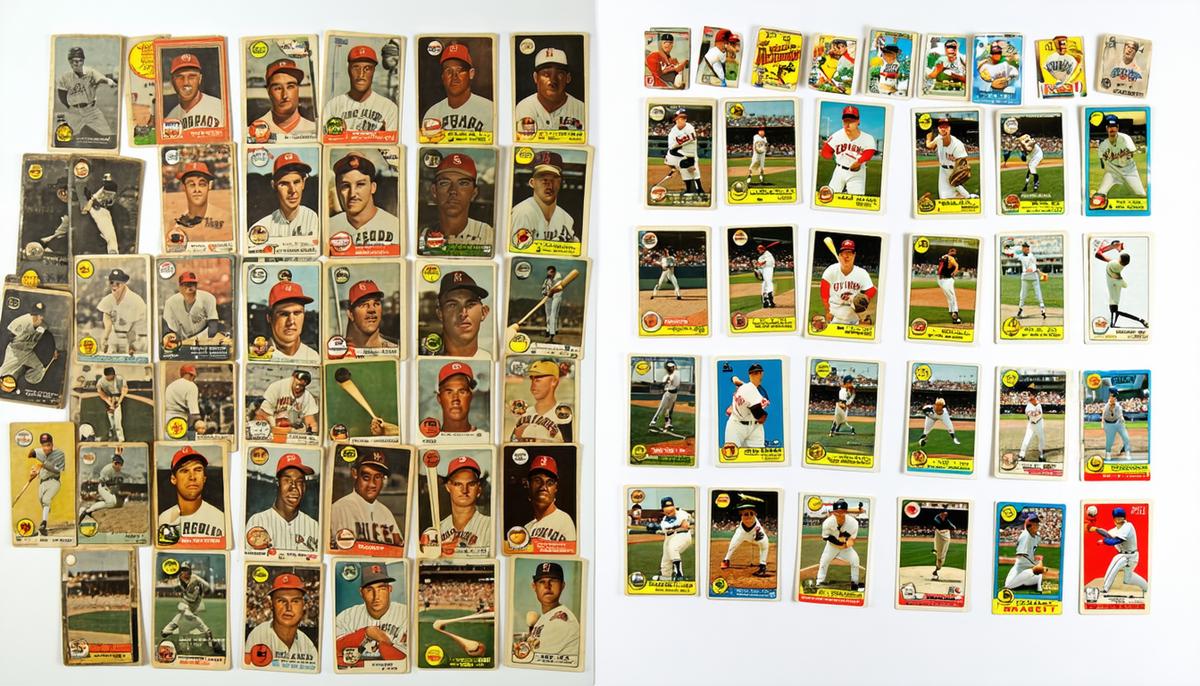
In the story of American history, few elements shine as brightly as the 1952 Topps baseball cards. These little pieces of cardboard captured more than just players; they encapsulated an era's dreams and aspirations. As we look back, it's clear that their legacy is not just about collecting but about connecting generations through a shared love for the game.
-
1. Pitoniak S. The story of how Topps became the Babe Ruth of baseball card companies. Baseball Hall of Fame. 2020.
2. Zappala T, Zappala E, Molori J. Baseball & Bubble Gum: The 1952 Topps Collection. Peter E. Randall Publisher; 2020.
3. The Metropolitan Museum of Art. On the Ropes: Vintage Boxing Cards from the Jefferson R. Burdick Collection. 2018.