
Design and Functionality
Tin Coca-Cola bottle carriers from the 1950s were like a snapshot of post-war America. Made from metal, they were sturdy enough to withstand everyday use yet light enough to carry around town. Each carrier was decorated with vivid red and white graphics that showcased the iconic Coca-Cola logo.
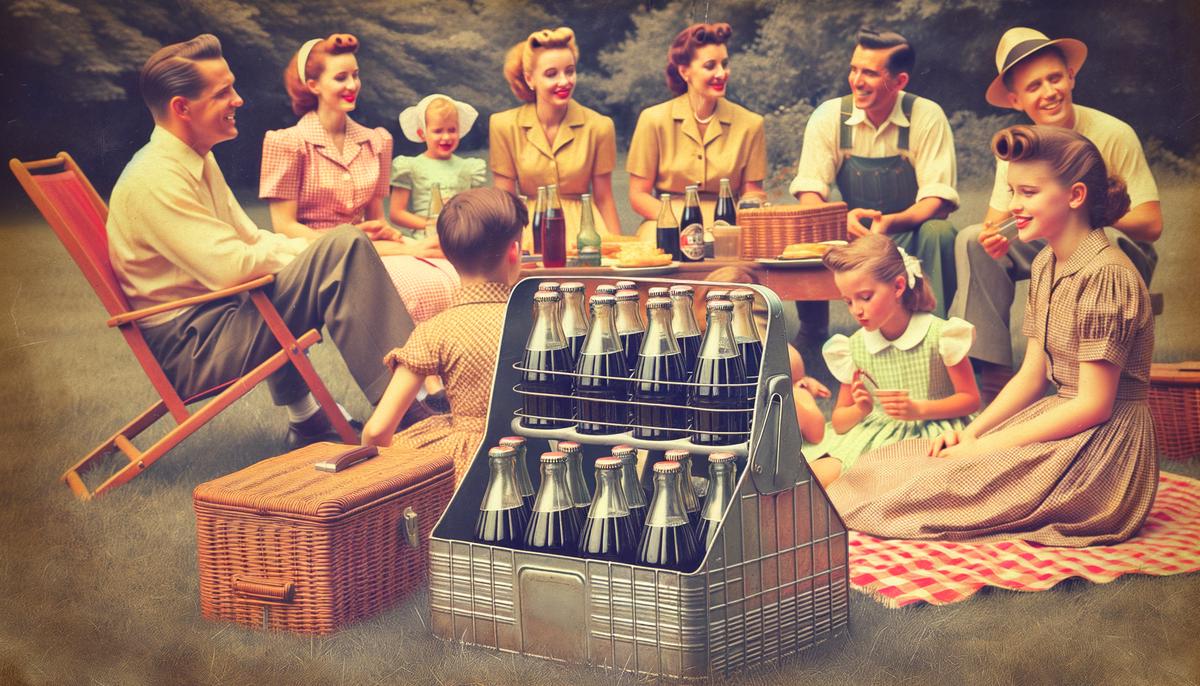
Holding six to eight bottles, these carriers were created with both utility and style. They had a strong handle for easy gripping, ensuring each Coke made it from store to doorstep safely. Imagine bringing one to a summer picnic, the bottles clinking together in a rhythm familiar to any Coke fan.
The graphics were straight out of a mid-century ad. Red and white was the palette, bold and unmissable, a color combination that reminded folks of Coca-Cola's dominance in the beverage world. Today, these carriers are collectibles, like little pieces of history you can touch. They remind us that back then, even something as simple as a bottle carrier could have style and flair.
Key Features:
- Made of durable metal
- Capacity for 6-8 bottles
- Strong handle for easy carrying
- Vivid red and white Coca-Cola branding
Cultural and Historical Significance
These tin carriers weren't just functional; they were cultural icons that showed the power of branding in shaping everyday life in the 1950s. Coca-Cola was more than a drink; it was a statement, integrated into social gatherings and family picnics. These carriers made it easy to bring home a bit of that magic.
Coca-Cola's branding strategy was clever, and these tin carriers played a central role. They didn't just hold bottles; they carried the brand's spirit, becoming ambassadors of sorts. Every time you picked one up, you were part of a larger story—a chapter of post-war optimism where Coca-Cola positioned itself as a staple of American life.
Beyond their role in marketing, these carriers were embedded in the rhythm of mid-century life. Bringing home a six-pack wasn't just about the beverage itself, but about taking part in a shared experience that was all Americana—filled with backyard barbecues and drives to the local diner.
"Every man in uniform gets a bottle of Coca-Cola for five cents, wherever he is, and whatever it costs the company." – Robert Woodruff, Coca-Cola President during WWII
Today, collecting these carriers is like owning a piece of that vibrant cultural history. They tell stories not only of personal moments but of how Coca-Cola cleverly expanded beyond traditional packaging and made a mark on popular culture. When you spot one now, you're looking at a time capsule that speaks to the ingenuity and spirit of an era that valued connection and branding smarts.
Timeline of Coca-Cola Packaging Innovation:
- 1923: Six-pack bottle carrier introduced
- 1950: Coca-Cola becomes the first commercial product on Time magazine's cover
- 1955: Expansion to 10-, 12-, and 26-ounce contour bottles
- 1957: White label printing on contour bottles
In the end, those tin Coca-Cola bottle carriers from the 1950s remind us of a time when everyday items were made with care. They carry stories of an era that celebrated simplicity and connection, leaving a lasting impression on our cultural memory.
- Coca-Cola Company. The Coca-Cola Bottle: An American Icon at 100. Atlanta, GA: Coca-Cola Company; 2015.
- Pendergrast M. For God, Country, and Coca-Cola: The Definitive History of the Great American Soft Drink and the Company That Makes It. New York, NY: Basic Books; 2013.