
Church and Family Dynamics
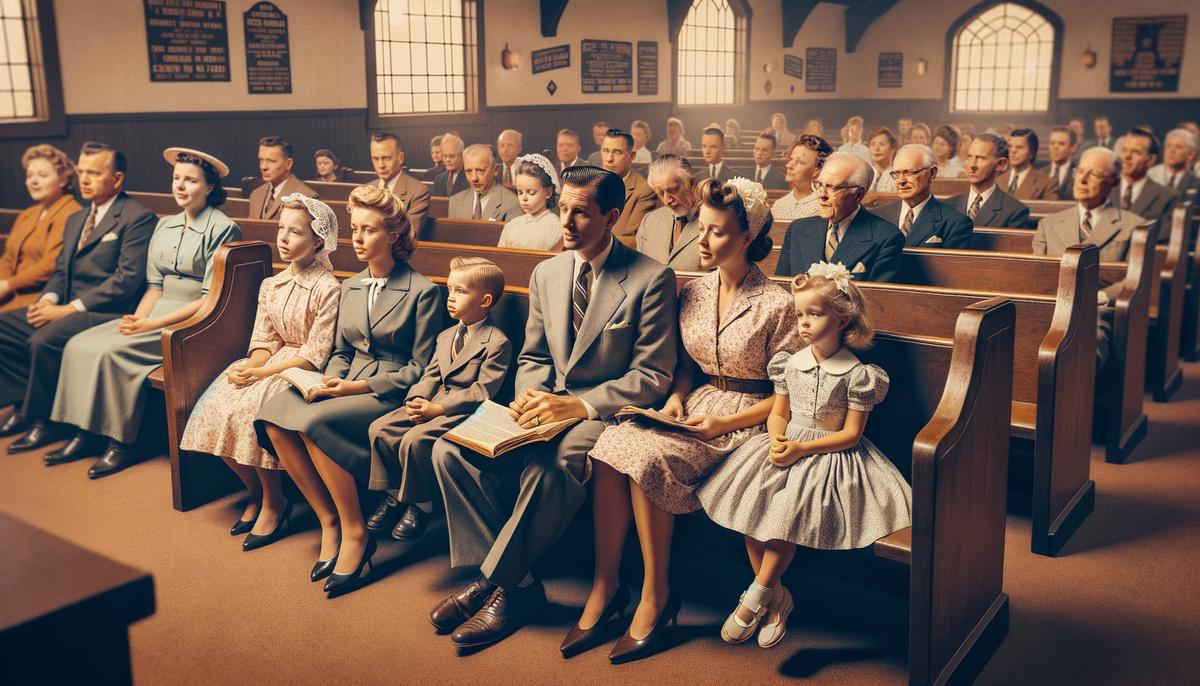
Sunday mornings in the 1950s were like a well-rehearsed play. Families lined up in the pews, dressed in their best. Society expected Sunday to be sacred – a day for worship and reflection, not for chores.
Post-church, families gathered at home. Sundays weren't for exhausting chores or TV – they were for reconnecting. Meals were often simple, like a roast prepared the day before. Afternoon drives were common, giving families a chance to enjoy scenery together.
These moments built family bonds. The focus was on who the family was becoming together, not on tasks. Sundays were about slowing down and cherishing time spent with loved ones.
Cultural and Social Shifts
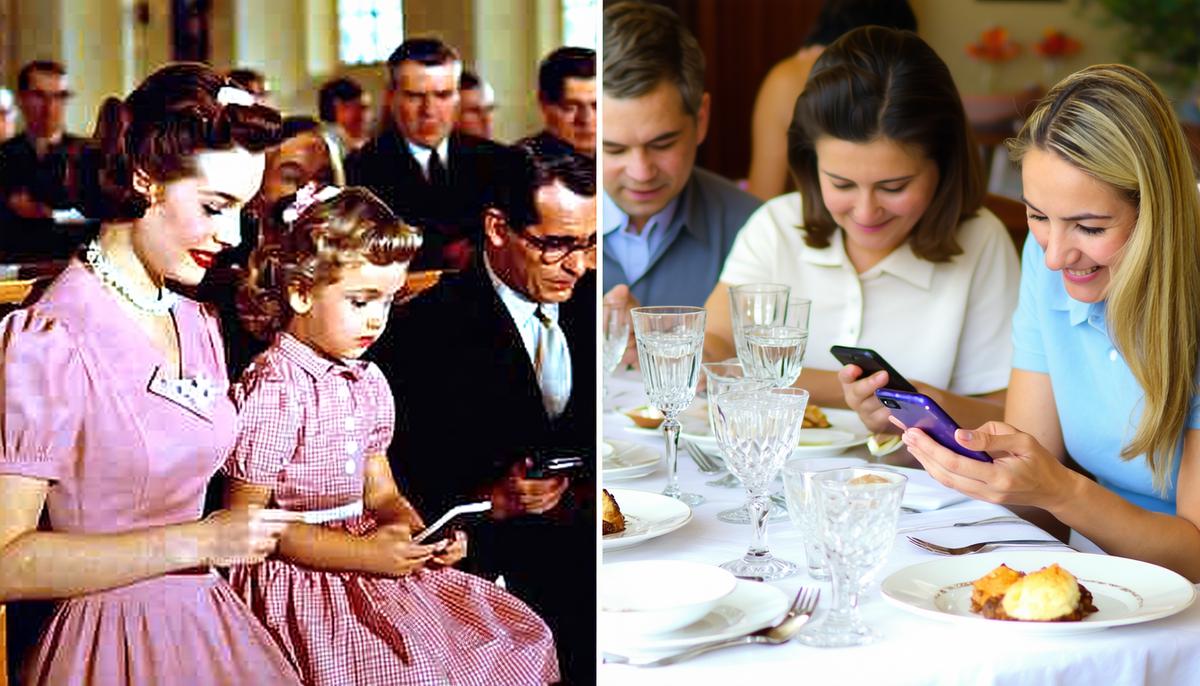
The family dynamics of the 1950s have changed dramatically. Back then, Sundays were a pause button on life. Now, you're more likely to find folks on smartphones at brunch than at church.
Gender roles have shifted too. The 1950s had clear job descriptions for moms and dads. Today, those roles have blurred. Women juggle careers and families, while fathers often handle bedtime stories and school pickups.
Family structures have diversified beyond the predictable 1950s model. Technology has turned our tight-knit communities into global networks. But the values of togetherness and connection remain, just in new forms. Whether it's a digital family reunion or a picnic in the park, the spirit of family time adapts with each generation.
Lessons from the Past
While we can't go back to the era of milkmen and jukeboxes, we can borrow some ideas from the '50s for family life today. Quality family time deserves attention. Back then, fewer distractions meant family members engaged with each other more.
Reducing screen time could help us rediscover little joys around us. Instead of scrolling through social media, we might enjoy cooking together or exploring outdoors.
Consider setting aside a family day each week, like a mini-vacation for the spirit. It's a chance to relax, reflect, and bond. Everyone benefits – minds clear, creativity sparks, and hearts grow closer.
Incorporating these old-school traditions might just add a touch of charm to our busy modern lives. The past wasn't perfect, but some of its values are worth revisiting.

As we look back, it's clear that family connection is still important. While times have changed, the spirit of togetherness from 1950s Sundays lives on. We can still embrace it through shared stories or simple moments with loved ones.
- Bendroth ML. Growing Up Protestant: Parents, Children, and Mainline Churches. Rutgers University Press; 2002.
- McDannell C. The Christian Home in Victorian America, 1840–1900. Indiana University Press; 1986.
- Mather C. Help for Distressed Parents. B. Green and J. Allen; 1695.
- Abbott JS. The Mother at Home. American Tract Society; 1833.
- Dwight T. The Father's Book. J. Leavitt; 1834.