
The Iconic 1952 Topps Card
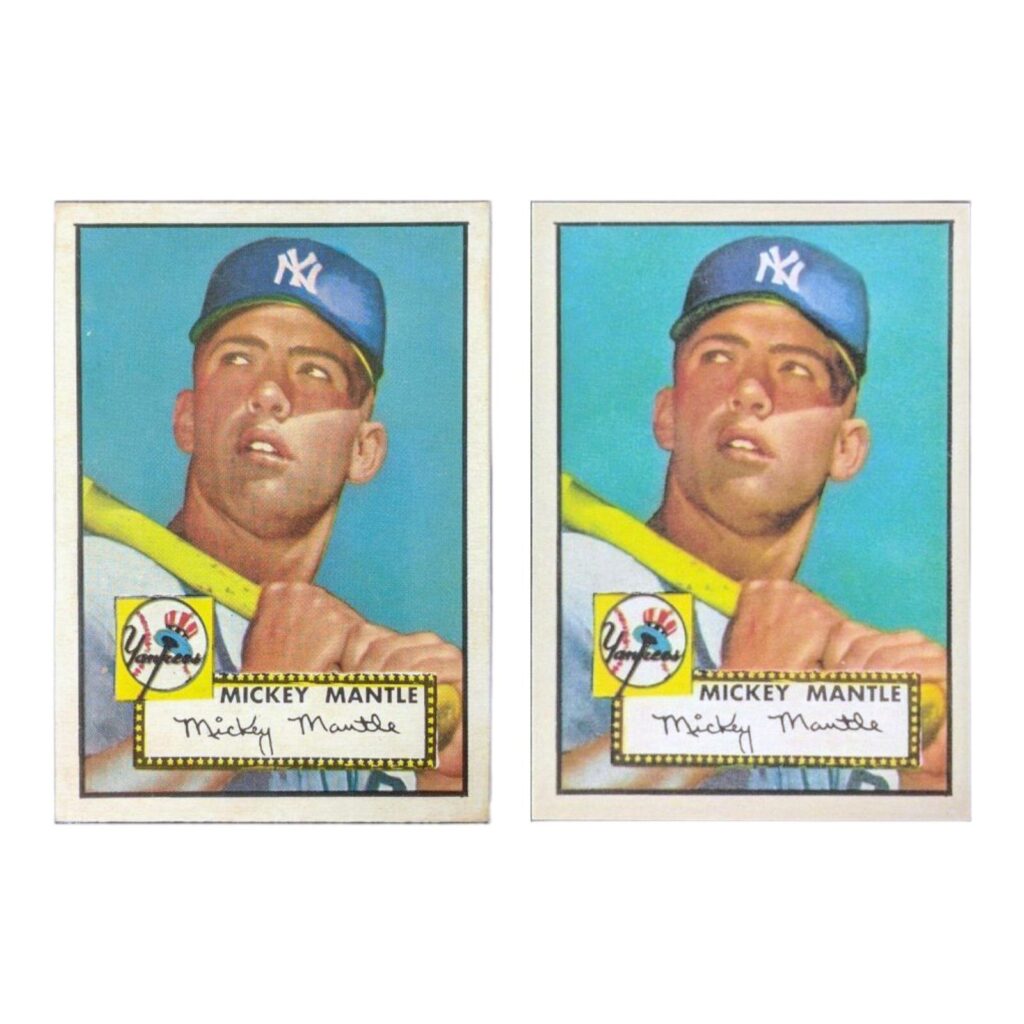
The 1952 Topps Mickey Mantle card is a true gem in the world of baseball card collecting. Back then, the trading card scene was changing fast, and the 1952 Topps set led the charge. These cards were bigger, bolder, and packed with stats, reshaping how collectors viewed their hobby. At the heart of it all was card #311, Mickey Mantle.
Mantle’s card, though not his rookie, became the holy grail for baseball enthusiasts. There’s a bit of legend attached to it too. Topps had so many leftover cards that year, they ended up tossing stacks of them into the Hudson River. That’s enough to make anyone’s jaw drop!
This card captures Mantle as he was on the cusp of becoming a legend. For those who grew up in the 1950s, holding that card is like shaking hands with their heroes, a tangible connection to a golden age of America’s pastime.
In today’s collecting world, it’s not just a card. It’s a cornerstone of baseball history. The whispers of its myth have echoed through the decades, elevating it beyond its origins.
A copy sold in August, 2022, set a record for the highest price ever paid for a sports card, going for $12.6 million.
Mickey Mantle’s Rookie Card
The 1951 Bowman Mickey Mantle Rookie Card is a hidden gem that often gets overshadowed by the 1952 Topps. It’s like the B-side of a record that turns out to be a sleeper hit. This card doesn’t come with the bells and whistles of its later Topps counterpart, but its allure is just as compelling for those who appreciate the charm of beginnings.
Picture getting your hands on this card, with its beautifully painted, almost dreamlike depiction of Mantle in those early days. Here, Mantle is a young talent fresh from the farms of Oklahoma, his destiny just a whisper in the winds of Yankee Stadium.
Collectors treasure it not just for rarity but for its simplicity and the story it begins to unfold. While it might not fetch the staggering sums of its 1952 sibling, the 1951 Bowman has carved out its own niche. It’s an unsung hero, much like those doo-wop songs that linger in the background of ’50s memories.
For the romantics, it’s a slice of nostalgia, a recollection of the days when baseball cards and bubblegum were the essentials of after-school bliss. It’s the moment before the curtain rises on greatness, and for many, it’s as captivating as the marquee glow that followed.
Mantle’s Card Evolution in the 1950s
Mickey Mantle’s cards throughout the 1950s are like snapshots of an era, capturing not just the man himself, but the changing face of the baseball card world. Let’s take a stroll through this cardboard evolution:
- 1953 Topps: A beauty painted with all the grace of a Rockwell canvas. Mantle’s features are brought to life with a rich, warm palette that echoes the simplicity and charm of those mid-century years.
- 1956 Topps: We see a shift to action-packed photography. It’s as if the card is calling out, “Hey, look at what’s new and exciting!” The dynamic image captures not just Mantle’s prowess, but reflects the burgeoning emphasis on authentic action shots in the industry.
- 1959 Topps: The vibe is quintessential late ’50s: cleaner, brighter, and more focused. The card’s design feels fresh, almost futuristic, symbolizing a new chapter not just in baseball, but in the way America was telling stories through collectibles.

Throughout these years, Mantle’s cards were more than just collectibles—they were cultural artifacts. They chronicled an industry that was coming into its own rhythm, just like a Buddy Holly track finding its way onto the charts. Each new Mantle card release was like another hit record, something fans eagerly awaited.
The Market for Vintage Mantle Cards
The market for vintage Mickey Mantle cards is as vibrant as a jukebox playing all the hits from the ’50s. Collectors both seasoned and new find themselves pulled into this engaging area, a treasure hunt where pieces of cardboard hold the key to childhood memories and cherished stories of a bygone era.

At the forefront is the 1952 Topps Mantle card, still commanding eye-popping prices. Auction results continue to soar, with some sales reaching into the millions. But it’s not just the marquee attraction that keeps collectors on their toes. Lesser-known cards like the 1951 Bowman also garner significant interest, capturing those who favor a deeper look into Mantle’s early journey.
What stirs this passionate pursuit? Beyond the jaw-dropping auction prices, there’s a potent cocktail of nostalgia and scarcity. The mere mention of Mantle evokes visions of ballparks under sunlit skies and buddies trading cards in the fading glow of the afternoon. Such memories send collectors on a quest akin to reliving their youth.
Scarcity adds a dash of allure. With fewer pristine copies available, the value of these cards remains buoyant. And let’s not forget the influence of the legacy these cards represent. For many, possessing a Mantle card feels like holding a tangible piece of legend—a bridge between the past and present.
The Cultural Impact of Mantle Cards
Mickey Mantle baseball cards are more than mere collector’s items; they’re cultural icons etched in the annals of American nostalgia. In the 1950s, as neat little subdivisions sprang up and cars cruised the highways with their shiny fins, kids were slipping Mantle cards into their back pockets, forever linking America’s favorite pastime with the ascent of pop culture in the post-war era.
Mantle’s cards became conduits for dreams, transporting countless fans to the stadium seats. For a nation looking to dream big and bask in the glow of prosperity, these cards were a ticket to hope and the celebration of talent at its peak.

Decades later, these cards evolved into prominent symbols of nostalgia. As boomers looked back at their sugar-coated youth, they found Mantle cards were like a time capsule. Collectors didn’t just see a legend in uniform; they saw their childhood, their heroes, and the echoes of neighborhood baseball games.
In the landscape of the sports memorabilia market, Mantle’s cardboard treasures provide fertile ground for the cultivation of memories and investment. They’ve become an emblem of Americana—more than memorabilia, they represent an era when baseball was the social currency and Mantle was its king.
So, there it sits: a modest piece of cardstock, aged but no less potent, forever encapsulating not just American baseball, but an era that danced with dreams and possibilities.

In the end, Mickey Mantle’s baseball cards stand as cherished links to a golden era of baseball and American culture. They capture the spirit of a time when heroes were immortalized on cardboard, offering a nostalgic journey back to the days when baseball was king and dreams were limitless.
- Osacky M. Baseball in the Attic. Baseball Card Appraisals and Valuations. 2022.
- Topps Company. Topps Baseball Card Sets, 1952-1969. New York: Topps Chewing Gum, Inc.; 1952-1969.
- Bowman Gum Company. Bowman Baseball Card Sets, 1951-1955. Philadelphia: Bowman Gum, Inc.; 1951-1955.