
Standardization of Telephone Production
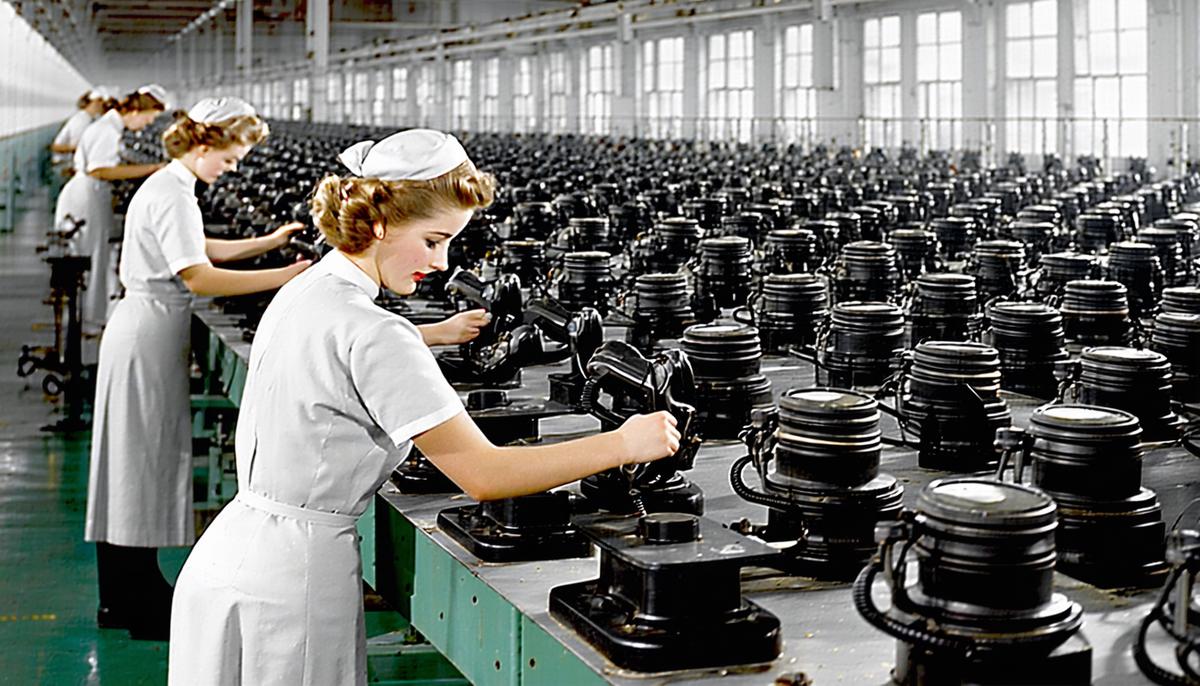
Mass production in the 1950s didn’t allow much room for creativity, especially with telephones. Efficiency and cost dominated, necessitating standardization. Black was the preferred color, chosen for its practicality and durability. A black finish on a product conceals wear and tear well.
Why black instead of a variety of colors? Adjusting dyes and paints meant increased time and expenses. Factories weren’t eager to switch paint cans mid-shift to cater to consumer preferences. The fixed black kept production costs low while maintaining consistency. It also meant if one phone malfunctioned, it could be easily replaced.
Beyond economics, black telephones blended seamlessly into homes and offices. Natural and neutral, black didn’t clash with décor, making it suitable for any setting. Like a little black dress, these phones were always stylish without being flashy.
While today we might appreciate color options, in the 50s, practicality reigned supreme. Telephones needed to be durable and dependable. Black simply met all the requirements.
Technological Limitations of the Era
Let’s look at the plastic production landscape of the 1950s. Back then, technology was far from what it is today. The ability to create a wide range of vibrant hues in plastics was limited. The materials used for phone casings weren’t easily adaptable to diverse colors.
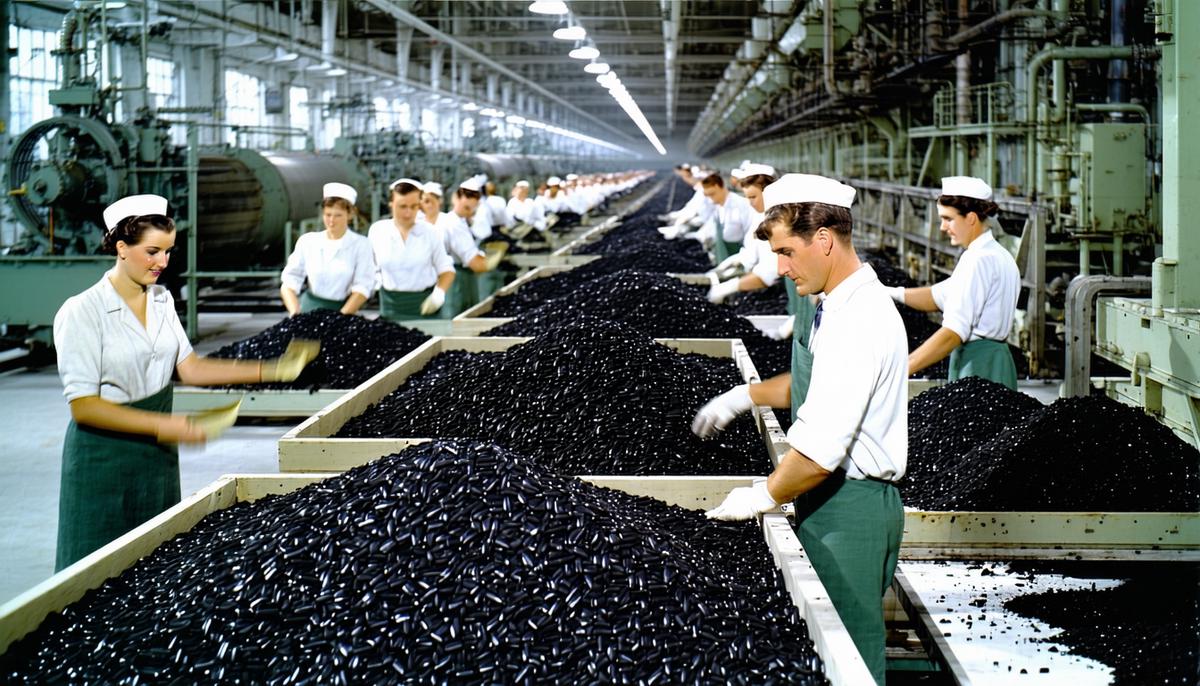
At that time, the development of durable, color-fast plastics was still in its early stages. Black was straightforward; the pigments were more stable and provided uniformity in production, with less chance for odd shades or discolorations to appear. Any deviation from this proven formula involved additional processes that could lead to inconsistencies.
The economics of color were surprisingly complicated. Color formulations involved more intricate chemistry and testing, resulting in higher prices and potential complications. Considering that telephones were among the first utilitarian gadgets in households, the argument for a more conservative approach becomes clear.
As plain as a standard black phone might appear now, it shows how necessity shaped simplicity and function. The 50s telephones reflect an era where reliability, not flash, was key.
Cultural Preferences and Marketing Trends
Picture the post-war 1950s, a decade where stability and uniformity were highly valued. Households embraced routine like a comforting blanket. Similar to the perfect suburban lawn, people wanted their homes to reflect order and predictability. The telephone—often in black—fit perfectly into this landscape.
The telephone’s monochrome style was partly driven by marketers’ understanding of the era’s tastes. With society enjoying newfound prosperity, there was a desire for goods that symbolized stability. Television advertisements often highlighted the practical aspects, presenting the simple black phone as a reliable home tool.
The mass appeal for uniformity wasn’t just about keeping up appearances but also about the reassurance a consistent design provided. For consumers, embracing this trend was like placing faith in a silent guardian ready to connect distances at the push of a button.
Marketing also favored avoiding too much variety. Retailers and manufacturers realized that offering phones in every color could potentially dilute their brand message of trust and reliability. A specific color choice might not suit some homes, while trusty black complemented everything.

Exceptions and Variations in Telephone Colors
Although the 1950s might seem like an era where telephone color varieties were scarce, there were indeed some exceptions that challenged the monotone trend.
An interesting example was the introduction of pastel-colored phones in the late 1950s. This colorful twist responded to changing fashion trends that blended nostalgia with optimism. As people began to explore more playful expressions in their home décor, a few telephone companies decided to experiment with the color spectrum, offering phones in shades like:
- Pink
- Blue
- Green
How did this bold splash of color emerge? As consumer demand grew, so did the desire to stand out from the neighbor’s predictable furnishings. Technology had also progressed, with advances in plastic manufacturing that allowed new hues without compromising durability.
These colorful phones weren’t just a marketing gimmick; they resonated with a shifting culture edging toward personal expression. Special editions were often released during promotional events or for limited occasions, offering a touch of vibrancy for those willing to break from the standard.
These special editions weren’t mere anomalies; they were the first steps into a future filled with more individuality and expression. Even then, as the notes of swinging jazz filled the air, some bold individuals were ready to dial into something a bit more colorful.

As we reflect on the 1950s, it’s clear that telephones were more than just devices; they symbolized an era rooted in simplicity and practicality. The choice of black as the dominant color wasn’t solely about manufacturing ease—it mirrored a society that valued stability and uniformity. While today’s phones showcase a variety of colors and innovations, those monochrome models remind us that sometimes, less is more.