
Picture a time when television was fresh, bringing new experiences to American living rooms. The 1950s introduced game shows that captured viewers’ imaginations, offering a glimpse into a world where knowledge could lead to fortune. These shows were more than entertainment; they were a cultural phenomenon. Yet, beneath the surface, there was more to these shows than met the eye, leading to revelations that would change television forever.
The Rise and Fall of 1950s Game Shows
Imagine it’s the 1950s, and families are huddled around their TV sets watching game shows. Shows like “Twenty-One” and “The $64,000 Question” were all the rage, promising big money and showcasing everyday people hitting the jackpot. TV was still finding its feet, with few rules governing what people saw on their screens.
Ratings were king, and network execs wanted them sky-high. Some producers took a sneaky shortcut by feeding answers to contestants to keep viewers hooked. Herb Stempel and Charles Van Doren were embroiled in drama fit for a soap opera. Stempel was prepped to lose to Van Doren in what seemed like an epic battle of wits, but in reality, it was just an elaborate show.

When the truth came out, viewers felt betrayed. Television trust plummeted, and Congress jumped into action, laying down laws to keep game shows honest. As networks yanked shows off the air, viewers were left wondering what else on TV might be fake.
The fallout was huge. Careers were ruined, reputations damaged, and trust shattered. This incident changed the rules of TV land, leading to the oversight and regulations we see today.
The Scandal Unveiled
The scandal broke wide open when Herb Stempel, who’d been promised glory for playing along, couldn’t keep quiet anymore. He let the world know that “Twenty-One” was rigged. Charles Van Doren, the golden boy of the show, was caught in the middle of it all.
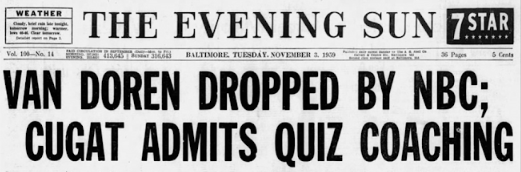
As rumors spread, authorities got involved. The New York County grand jury started investigating, and soon the U.S. Congress held hearings. Testimonies revealed scripted outcomes and lies spun by those behind the camera.
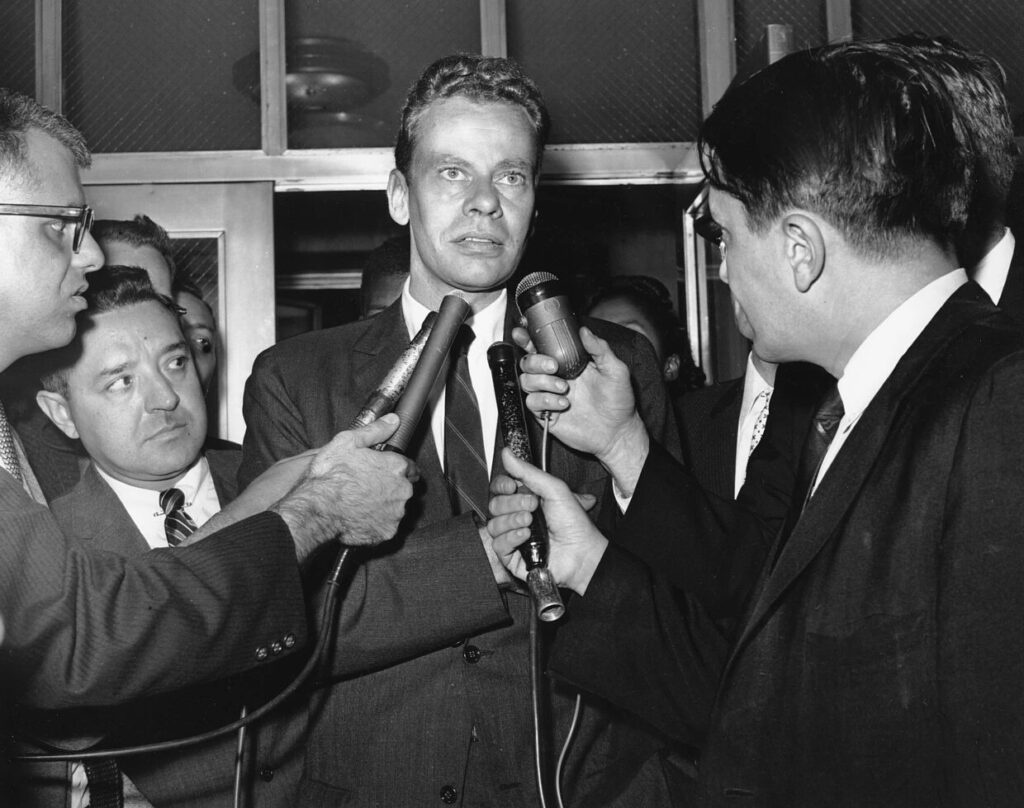
"I was involved, deeply involved, in a deception," Van Doren told the Harris Committee. "The fact that I too was very much deceived cannot keep me from being the principal victim of that deception, because I was its principal symbol."
Van Doren’s confession was like the climax of a gripping play. Producers and contestants tried to dodge the truth, but the investigations cleared the fog, revealing a landscape of fraud.
The exposure of the quiz show scandal was more than just peeking behind the curtain; it was a lesson on trust and ethics in broadcasting. It forced TV to look at itself more closely, a reality check that still echoes today.
Impact on Television and Society
The quiz show scandals left a big mark on 1950s television and society. Networks scrambled to pull game shows off the air. The public felt let down, their trust in TV shaken.
These events sparked real changes:
- The government amended the Communications Act of 1934 to outlaw fixing television contests.
- Game shows became subject to stricter oversight, ensuring fairness for contestants and viewers alike.
- TV executives shifted towards more trustworthy programming.
Shows that educated as well as entertained, like “Jeopardy!”, grew in popularity. The scandals paved the way for positive changes in how TV was made and watched.
In true 1950s fashion, television rose from the ashes of its past, ready to redefine itself and win back the public’s trust. The essence of wholesome entertainment shone through, as bright as a sunny Sunday afternoon.
The Legacy of the Scandals
As the dust settled, the TV industry faced a turning point. Regulations tightened, and the FCC kept a close eye on things. The industry took these changes seriously, working to restore faith and integrity.
Game shows gradually returned to the spotlight, but with a new emphasis on genuine competition. “Jeopardy!” became a symbol of this new era, with its clever answer-and-question format. Shows like “Wheel of Fortune” and “The Price Is Right” became household names, bringing back the fun of game shows without the drama.
By the turn of the millennium, networks dared to try big-money quiz shows again. “Who Wants to Be a Millionaire?” arrived with a blend of excitement and honesty, proving that fortunes could be won fairly on TV.
The quiz show scandals taught the industry a valuable lesson: entertainment should never compromise ethics for glamour. It led to a golden era of programming that valued fairness and integrity, a fitting tribute to the resilient spirit of American television.

The lessons from those game show days have left their mark on television. While the scandals caused trouble, they also led to positive changes. This era shows that even when things go wrong, there’s always a chance to improve and start fresh, just like the can-do spirit of the 1950s.
- Anderson K. Television Fraud: The History and Implications of the Quiz Show Scandals. Westport, CT: Greenwood Press; 1978.
- Stone J, Yohn T. Prime-time and Misdemeanors: Investigating the 1950s TV Quiz Scandal: A D.A.’s Account. New Brunswick, NJ: Rutgers University Press; 1992.
- Halberstam D. The Fifties. New York, NY: Villard Books; 1993.
- DeLong T. Quiz Craze: America’s Infatuation with Game Shows. New York, NY: Praeger; 1991.